






































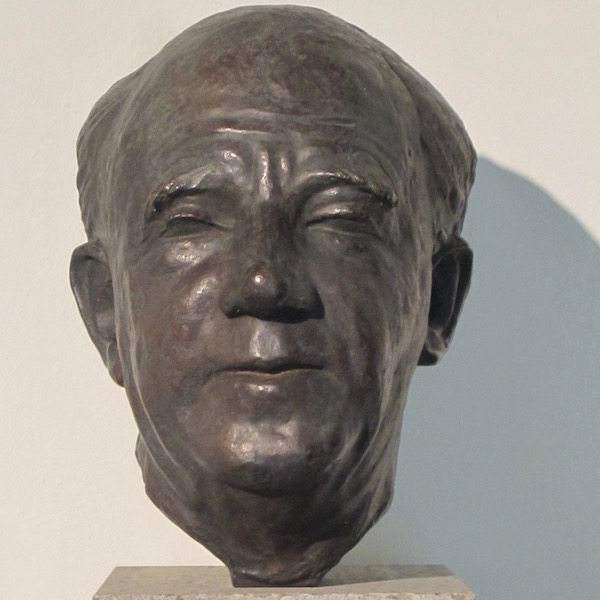
Over at Mind Matters, Michael Egnor continues his argument with fellow neuroscientist Anil Seth, highlighting Seth’s point about the brain as a “machine,” or “machines.” Here is Dr. Seth on how consciousness arises: “[S]omehow, within each of our brains, the combined activity of many billions of neurons — each one a tiny biological machine — is generating our conscious experience…”
Dr. Egnor makes an important and fundamental point, derived from Werner Heisenberg. From “Yes, Your Brain Is a Machine — If You Choose to See It That Way”:
What the brain “is” depends on how you study it. We live in a mechanical age, so we study it as a machine. But our method of study determines what we learn. Theoretical physicist and Nobel laureate Werner Heisenberg noted perceptively that “…what we observe is not nature itself but nature exposed to our method of questioning” (Physics and Philosophy: The Revolution in Modern Science, 1958, p. 78).
By its nature, the brain is an organ. It is a functional part of a living being. We can draw analogies to it in order to help us understand it, but we must remember that what we then learn about the brain is only that aspect of its nature that is exposed to our method of questioning.
In other words, the brain will seem like a machine if we study it like a machine. We live in a mechanical age so it is no surprise that the brain seems like a machine to us. It is not entirely illogical to study the brain as a machine but we must remember that the answers we obtain will be as biased as the questions we ask.
One has a sense that, like many neuroscientists, Dr. Seth doesn’t really understand his own bias. The brain is an organ in a living being, not a machine. It is irresponsible to compare it to a machine without an emphatic proviso that such study will mislead us unless we understand our own (largely unwarranted) mechanical bias.
One might add that this analysis applies to the world of life as a whole. If I may appropriate and adapt Mike Egnor’s words: Life will seem like the product of blind chance and natural selection if we study it like the product of blind chance and natural selection. Such study, with its unwarranted bias, will mislead us.