






































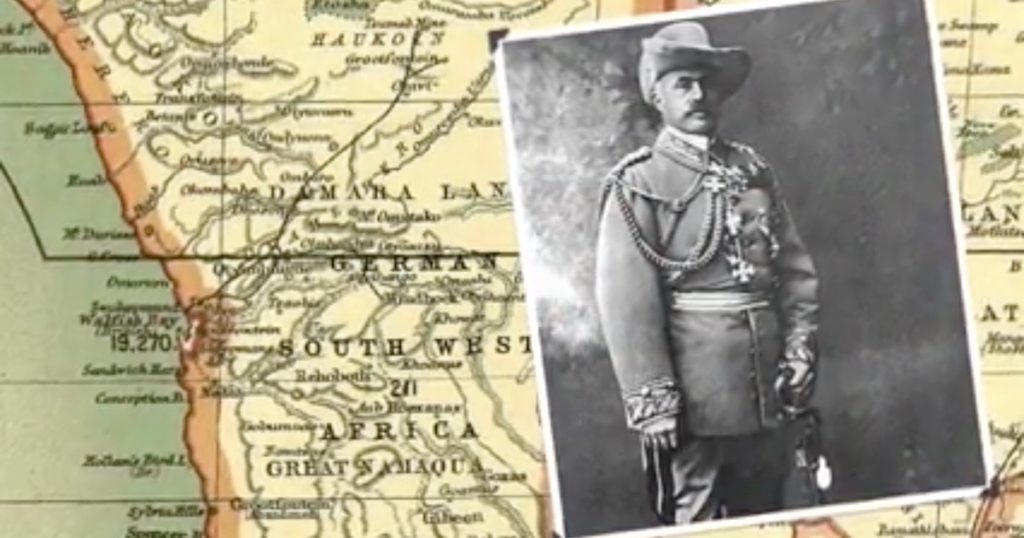
Good for the New York Times, but only up to a point. John Eligon writes from Berlin that black Germans (there are some) and sympathetic activists are calling for a change in street names that derive from the nation’s racist past. In this case, that’s not the Nazi past, but the still earlier genocide of native peoples in Africa.
Germany colonized several nations on the continent in the late 19th and early 20th century. Among other atrocities, German colonizers exterminated “four-fifths of the Herero, a native people of what is now Namibia, using a tactic that resurfaced decades later: concentration camps.” They wiped out “half the Nama, another ethnic group” and brutally mistreated others.
Unfortunately, there’s a giant elephant in the Times’s story. The piece teases us with this:
German colonizers took skulls and human remains from Africa back to Germany for research, using a junk science that claims to be able to judge personality, intelligence and other characteristics by the shape of one’s skull. That also became part of the racist Nazi ideology.
Yes, yes. But where did German racist science get its justification? From Darwin, Timesmen!
The Rest of the Story
Why can’t you explain that? The best accounts of the race theories in Germany that pre-dated the Nazis are found in the various books of Dr. Richard Weikart (such as, From Darwin to Hitler), with scholarship that simply cannot be countered. John G. West’s video, The Biology of the Second Reich, is a gripping visual account and is easily found online.
You will not find any mention of these resources or of Darwinian influence that spread in Germany under Ernst Haeckel, the most popular German scientist of the period, and whose work also was employed in the eugenics movement in America. Darwinists of today simply cannot stand to connect these dots. The New York Times editors show over and over that, while they cannot dispute proven history, they can ignore it.
Who put that elephant in the New York Times newsroom?
“What elephant?”