







































Science and Culture Today Discovering Design in Nature
Topic

Ribosome

star-dissolves-in-tub-2400x1500

Another Claim by Origin-of-Life Researchers Dissolves on Inspection

This experiment, like all previous ones, reinforces the view that life was the product of intelligent design. Read More ›
kinesin
Image at top: Kinesin at work in the cell, from "Kinesin: The Workhorse of the Cell," via Discovery Institute.

Natural Machinery Operates Without Intervention; But How?

We’re going to need a new philosophy: one that can handle realities the Elizabethans and Victorians could never have imagined. Read More ›
RNA
Image: RNA, via Illustra Media’s documentary Origin.

Fact Check: Did University of Tokyo Researchers Explain the Origin of Life?

The research paper avers, “These results support the capability of molecular replicators to spontaneously develop complexity through Darwinian evolution.” Read More ›
remote control
remote control
Photo credit: Piotr Cichosz, via Unsplash.

Allostery: How Cells Do Remote Control

Cells have perfected action at a distance: not by magic, but by control of distant sites through carefully arranged functional intermediates. Read More ›
Descartes
René Descartes
Image: René Descartes, after Frans Hals, Public domain, via Wikimedia Commons.

Why the Design in Living Things Goes Far Beyond Machinery

French philosopher René Descartes conceived of living things as complex machines, a concept now known as the “machine metaphor.” Read More ›
Falcon_eye

Modern Software and Biological Organisms: Object-Oriented Design
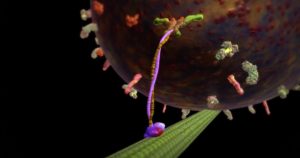
Let’s consider the eye, which is but one of many subsystems (along with the brain, heart, liver, lungs, etc.) in higher animals that coordinate their tasks to keep an organism alive. Read More ›
Workhorse of the Cell
nanotechnology
Image source: “The Workhorse of the Cell: Kinesin,” via Discovery Institute.

Design in Living Things Goes Far Beyond Machines
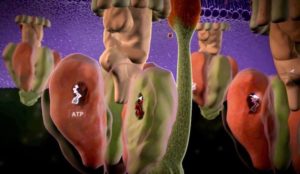
René Descartes conceived of living things as complex machines, a concept now known as the “machine metaphor.” Read More ›
ATP-synthase

Irreducible Complexity in Molecular Machine Assembly

We know that many molecular machines are irreducibly complex in their operation. Even more IC is the process of assembling them in the cell. Read More ›

Leading Biologists Marvel at the “Irreducible Complexity” of the Ribosome, but Prefer Evolution-of-the-Gaps

A roundtable symposium was recently held at by John Brockman entitled, “Life: What A Concept!” discussing how life arose. Participants included some huge names in origin of life research and genomics, such as Freeman Dyson, J. Craig Venter, George Church, Robert Shapiro, Dimitar Sasselov, and Seth Lloyd. None of the participants are favorable towards intelligent design, but the transcript of their conversations suggested that the ribosome may exhibit “irreducible complexity” (their words). It’s clear that these anti-ID scientists don’t even understand exactly how life works, much less do they know how it arose naturally, but that they are nonetheless taking an evolution-of-the-gaps approach, assuming that complex micromolecular machines like the ribosome will (despite their present appearances) indeed turn out to Read More ›

© Discovery Institute