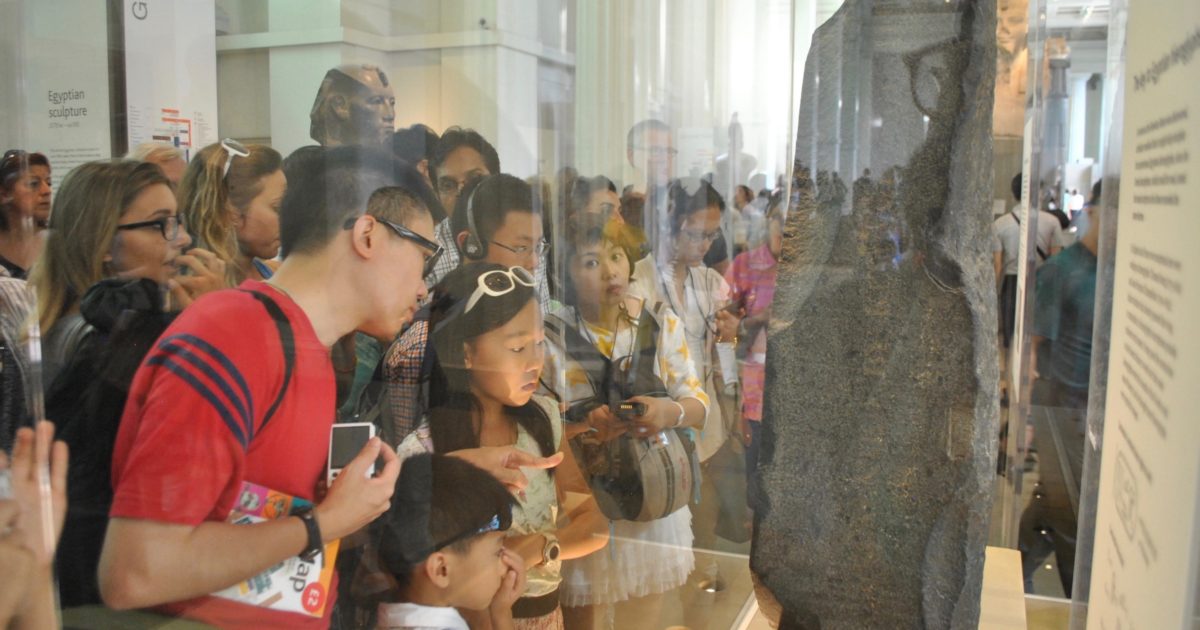
Rosetta Stone Type post Date February 11, 2024 CategoriesEvolutionNeuroscience & Mind Tagged , Anthony Esolen, Arabic, artificial intelligence, books, brains, Chinese, Discover Magazine, editors, English, evolution, French, German, Hebrew, Italian, languages, linguists, quantum physics, Scientific American, software, Spanish, writers Top Five Questions on the Origin of Language — Answered! Science & Culture February 11, 2024 Evolution, Neuroscience & Mind 6 We aren’t even sure which is the world’s oldest spoken language, though Hebrew, Arabic, and Chinese have impressively long histories. Read More ›
bacteria Type post Author David Coppedge Date December 13, 2023 CategoriesEvolutionIntelligent Design Tagged , Arabic, bacteria, biofilm, bioluminescence, Darwinian evolution, Denyse O'Leary, engineers, Finland, GUT, intelligent design, Jonathan McLatchie, languages, microbes, migration, MIT, quorum sensing, rocks, slime molds, The Design Inference, words, World War II Quorum Sensing: A Clever Trick by Microbes David Coppedge December 13, 2023 Evolution, Intelligent Design 9 Robot designers are learning tricks from bacteria: how to communicate with and respond to other unseen members of a swarm. Read More ›
University of Bologna Type post Author Mike Keas Date January 22, 2019 CategoriesFaith & ScienceMathematicsScientific Reasoning Tagged , __k-review, Age of Reason, Arabic, atheism, cathedrals, Euclid, eyeglasses, Galileo Galilei, Greek, Jerry Coyne, Johannes Kepler, Latin, Myth of the Dark Ages, Ptolemy, Roger Bacon, Rome, Saint Augustine, scientific revolution, Unbelievable, universities Atheism’s Myth of a Christian Dark Ages Is Unbelievable Mike Keas January 22, 2019 Faith & Science, Mathematics, Scientific Reasoning 5 Did Christianity really drag the West into an anti-scientific “Dark Ages,” a period said to stretch from the fall of Rome to 1450 AD? Read More ›
Mike Keas Type post Author Sarah Chaffee Date January 7, 2019 CategoriesScientific Freedom Tagged , __k-review, academic freedom, Arabic, Darwinian evolution, Dean Kenyon, Eric Hedin, free speech, Galileo Galilei, Germany, Giordano Bruno, Granville Sewell, Greek, Günter Bechly, Latin, Michael Keas, Myth of the Dark Ages, Richard Sternberg, Roman Catholic, Rome, Scott Minnich, State Museum of Natural History, Stuttgart, Unbelievable In Unbelievable, Mike Keas Highlights Myths and Realities of Anti-Science Persecution Sarah Chaffee January 7, 2019 Scientific Freedom 5 The point of Dr. Keas’s book is historical but also very timely: Scientists who challenge materialism today face discrimination as heretics that squelches their research and teaching. Read More ›