






































Science and Culture Today Discovering Design in Nature
Author

Michael Egnor

National Center for Selling Evolution Science Education’s Policy Director Josh Rosenau: It’s Hard to Distinguish Unborn Children From Cancer

National Center for Science Education official Josh Rosenau has chosen to pick up the pro-abortion mantle from P.Z. Myers, who despite expressing the wish that more women would abort their children, seems to have developed writer’s block since I asked him to define the characteristics that a human being must acquire before Myers would grant him/her the right to life.
Rosenau, the Programs and Policy Director at the NCSE, is less reticent to publicly defend the pro-abortion cause. He begins his post by botching even the rudiments of the pro-life argument:

Rosenau:

“[Egnor] declares by fiat that every fertilized egg is a human and entitled to all the rights associated with personhood.”

No. Biological science affirms that every fertilized human egg is a human (it has its own gender, unique DNA, and is no other species but Homo sapiens). The question is not whether a zygote (or embryo or fetus) is human. It is. The question is whether a human at that stage of life has any rights.

Contra Rosenau, I have never asserted that human zygotes have “[a]ll the rights associated with personhood,” which would include the right to freedom of speech, to freedom of assembly, freedom of the press, trial by jury, etc. I do not assert that human beings at conception have all rights of personhood. Some rights of personhood depend on age, citizenship, acquisition of skills, condition of legal peril, etc.

I assert that all human beings have at least one right of personhood — the right to life.

Human life is a continuum from conception to natural death. At every stage there is a human being with a right to life. The right to life is not affected by age, size, appearance, intelligence, race, creed, or condition of dependency. The right to life depends only on being human.

Next, Rosenau goes off the deep end. Rosenau denies that human beings in the womb have a right to life by comparing them to cancer:

Read More ›
NCSE’s Program Director Josh Rosenau: Human Dependency Obviates the Right to Life

National Center for Selling Evolution Science Education’ s Program and Policy Director Josh Rosenau has made disturbing arguments in favor of abortion. On his personal blog Thoughts from Kansas, Rosenau, who has been a doctoral candidate in evolutionary biology at the University of Kansas, asserted that children in the womb were nearly indistinguishable from… cancer.
Later in his post, Rosenau defends abortion by asserting:

Is an embryo a discrete human being? I think not. An embryo is dependent on its living host…

An old-fashioned term for the “living host” of an embryo is… mother. Rosneau frames the mother-child relationship charmingly: he compares the relationship between a mother and her unborn child to the relationship between a host and a parasite.

Rosneau:

An embryo is dependent on… a woman whose nutrients it relies upon, whose immune system protects it, whose lungs provide it with oxygen, and whose body carries out every other essential function. If the woman dies, an embryo cannot survive (medical intervention alters this case somewhat, but a reliance on medical life support hardly vitiates questions about the embryo’s discreteness).

Actually, we have entire institutions devoted to children who rely on others to provide support for their vital functions. They’re called hospitals. I work in several of them. Many of the children for whom I provide care (I’m a pediatric neurosurgeon) need artificial feeding, antibiotics to augment their immune systems and protect them from infection, and need respirators to help them breathe. I assure Mr. Rosenau: hospitalized children are quite discrete human beings, tubes and machines notwithstanding. I do not consider their condition of dependence on vital support a basis for denying them the right to life. In fact, their condition of dependence is in my view justification for protecting their lives with increased vigor.

Read More ›

Why Doesn’t the NCSE Have an Atheism Project?

Jerry Coyne has an amusing post on the National Center for Science Education’s outreach effort to Christians. Coyne, in a post titled “NSCE Becomes BioLogos,” laments the rigorous efforts of the NCSE’s Faith Project, which is a major outreach program to Christians and other people of faith.

Coyne quotes the NCSE:

The National Center for Science Education (NCSE) is a not-for-profit, membership organization providing information and resources for schools, parents and concerned citizens working to keep evolution in public school science education. We educate the press and public about the scientific, educational, and legal aspects of the creation and evolution controversy, and supply needed information and advice to defend good science education at local, state, and national levels….The National Center for Science Education is not affiliated with any religious organization or belief. We and our members enthusiastically support the right of every individual to hold, practice, and advocate their beliefs, religious or non-religious. Our members range from devout practitioners of several religions to atheists, with many shades of belief in between. What unites them is a conviction that science and the scientific method, and not any particular religious belief, should determine science curriculum.

Coyne asks, perceptively:

Read More ›
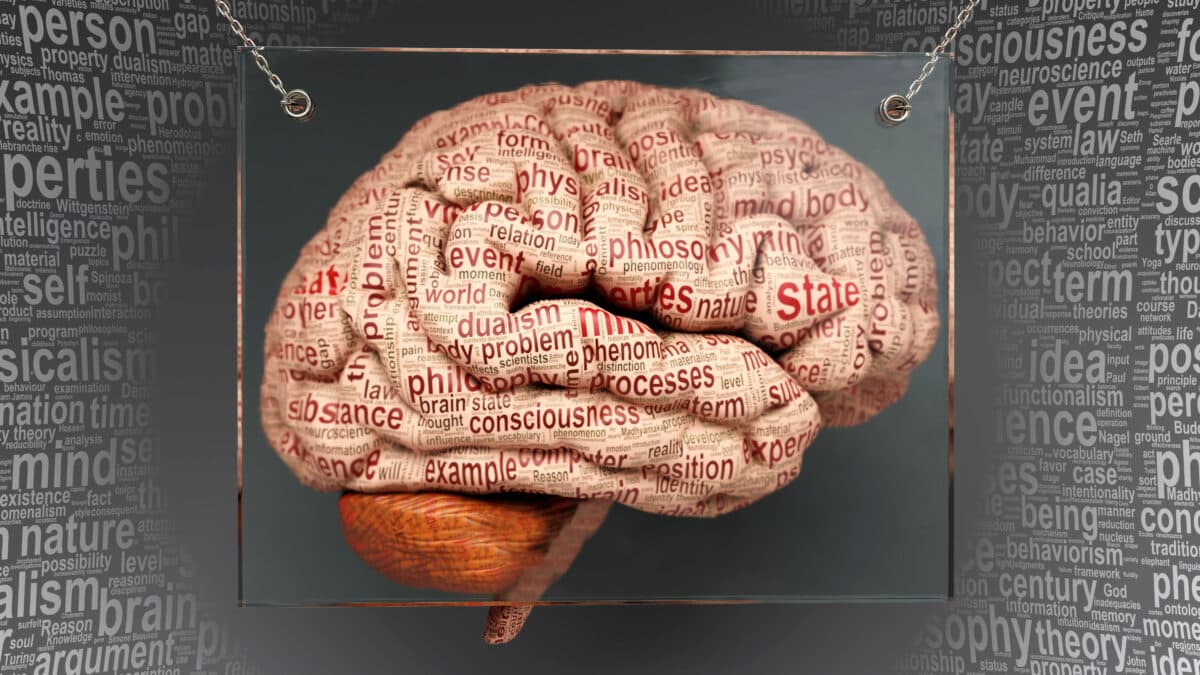
brain
Image credit: GoodIdeas - Adobe Stock

Another Reason to Doubt the Relevance of Jeffrey Shallit

Materialist mathematician Jeffrey Shallit has a post on an article in the Globe and Mail about philosophy and the immateriality of the mind. Shallit’s post is titled “Another Reason to Doubt the Relevance of Philosophy”. Shallit doesn’t think much of philosophy: If philosophers think the view that “The brain is not an organ of consciousness. … The brain has no cognitive powers at all” deserves anything more than a good horselaugh, this simply shows how irrelevant philosophy has become … Our future understanding of cognition will come from neuroscience, not from Wittgenstein. Philosophy is plainly irrelevant to Shallit, which is the problem. Wittgenstein may not inform Dr. Shallit’s understanding of cognition, but Descartes, Kant, Hume, James, Skinner, Block, the Churchlands, Read More ›

My Question for P.Z. Myers: What Endows a Human Being With the Right to Life?

P.Z. Myers has responded to my post about his views on abortion and personhood. In reply, Myers posted pictures of a zygote, an embryo, and a group of young women. He asserted that differences in appearance between these human beings was an ethical basis for denial of the right to life to humans in utero.

I take it for granted that Myers, being a competent biologist, agrees with me on this point: a living human embryo/fetus is a member of the species Homo sapiens (it is no other species). That is, a distinct human life begins at conception and ends at natural death. That is not to to say that Myers and I agree on rights, personhood, etc., but merely to say that a human life is a continuum that begins at conception. That is a fact of biology.

Myers makes the bizarre assertion that devaluing some human beings adds value to the life of others:

Huh. I don’t know about you, but to me, that [recognizing that humans in utero have a right to life] doesn’t exalt human life at all — it seems to do the opposite, and devalue the life of women.[my ellipsis]

Every stage of human life is…human life. Each young woman in Myer’s picture looked like a “blob of cells” when she was an embryo. An embryo is what a human being looks like 20 days after conception. A young adult is what a human being looks like 20 years after conception. An elderly adult is what a human being looks like 80 years after conception. All are human beings of different ages. Of course, abilities, appearance, etc. differ radically, but a human being is a human being. And all human beings have a right to life. To respect and value one human being despite his/her immaturity is not to denigrate a mature human being. Respect for life protects and respects all human beings.

Read More ›

P.Z. Myers on Abortion

P.Z. Myers on a faux online abortion poll:

“I’m about as pro-choice as you can get…”

Unsurprisingly, Myers is “pro-choice”. But Myers’ advocacy of “choice” goes further:

“…I’m even willing to say that I’m pro-abortion…”

“Pro-abortion”? Even committed pro-abortion zealots don’t generally endorse abortion explicitly, except to assert the right to ‘choice,’ as if one were choosing a salad dressing rather than deciding to take a human life.
Myers:

“[I] would like to encourage more people to abort…”

Read More ›

“…unlike Egnor I am interested in critical thought…”

My eight questions and answers for New Atheists have generated some amusing replies. Most just criticize me for asking, calling me ‘dishonest’ (that’s for my questions, not just for my answers). ‘No matter what, God didn’t do it’ is the typical reply.

One dyspeptic New Atheist was uncommonly amusing. Chuck O’Connor at Battling Confusion writes:

Michael Egnor (a fellow of the Discovery Institute – the PR organization that tries to deny biological evolution for the sake of Judeo/Christian creationism and theocracy – see their aims articulated in “The Wedge Strategy”) offers excellent evidence of this obsessive psychological quirk towards certainty when he creates a “strawman” argument against “New Atheism” at the Discovery Institute Web-site.

My “obsessive psychological quirk” was to ask important questions and to answer them coherently. After posting my questions, he asserts:

First off, Eignor’s [sic] unwillingness to enable comments at his blog post indicates he does not want to know what “New Atheists” believe.

We don’t take comments on ENV because much of what New Atheists believe is expressed in 4-letter parcels. They have their own blogs for that.

Read More ›

New Atheist Atheology

P.Z. Myers answered my eight questions about what New Atheists really believe. Myers provided his “fast and flippant” answers; yet he provides a fine synopsis of New Atheist atheology. More detailed book-length New Atheist apologetics (Dawkins, Harris, etc) are less fast but no less flippant.

My original questions are followed by Myers’ answers, then by my reply.

1) Why is there anything?

Read More ›

Theologians nice to Myers…naaasty little Theologians…

P.Z. Myers was at his hissing best in reply to my recent philosophical questions for New Atheists:

…the graveyard of rotting ideas that the Discovery Institute calls a blog…a particularly crusty and dogmatic alchemist stirring beneath the cobwebs of his dead discipline …imposing the cracked and cloudy lens of his superstition…

Imagine my surprise when a couple of days later Myers pens a post lavishly extolling…theologians(!):

I would never deny that there are many smart people among the believers, some are incredibly brilliant and thoughtful scholars. Theology is also awesomely sophisticated and complex…

“Awesomely sophisticated…”? Myers goes on with an unusually long post, part man-crush on Aquinas, part hissing rage, alternately praising theology and excoriating it for twenty five paragraphs.

Read More ›

What I Really Believe

Recently I asked Larry Moran of Sandwalk: what do you, as a New Atheist, really believe? To focus the discussion I asked eight fundamental philosophical questions. The insistent New Atheist claim has been that belief in the supernatural in any form- traditional Christian belief seems to rile them the most- is nonsense and has been shown to be such by modern science. New Atheists claim the mantle of logic and reason, as against irrationality and superstition of theists.

Dr. Moran replied to my questions, courteously, and as I have promised I will answer the questions in the same spirit. For clarity, I will give the original question, then Dr. Moran’s answer, and then mine.

A little background on my perspective: I am a Roman Catholic. I converted from agnosticism to Catholicism about 6 years ago. My answers to the eight questions will draw on traditional Catholic teaching. Much about existence and God can be understood by reason, by philosophical reflection and by contemplation of nature, although some truths can only be discovered by revelation through Scripture. The fullest understanding is a harmony of both. Although my answers are from a Catholic perspective, I believe that many of them are in substantial agreement with those of my Protestant, Jewish, and Islamic friends. It’s worth noting that the original forms of many of these answers were proposed by Aristotle, who was a pagan.

The philosophical views that I summarize have been held by most educated men for a couple of millennia. After Aristotle, this philosophical tradition was further developed in the High Middle Ages by Aquinas, Averroes, Maimonides and many others. Today it is the kernel of the New Essentialism school of philosophy of nature. This philosophy represents the foundation of Western thought.

Over the past couple of centuries these explanations have largely been forgotten by atheists and by scientists with a dogmatic materialistic view of nature, as classical philosophy did not prove congenial to a mechanistic atheist view of the world. It’s an impoverished view; most New Atheists don’t even understand the questions that the classical explanations have addressed. Unsurprisingly, the classical explanations have never been successfully refuted.

I am very much a theological and philosophical amateur. In my brief summary of my beliefs, I will do little justice to these remarkable insights.

1) Why is there anything?

Read More ›

© Discovery Institute