








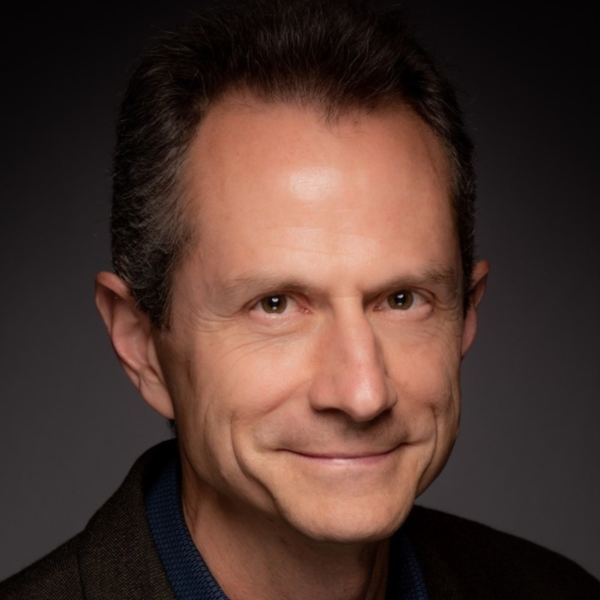



Editor’s note: Biologist Michael Denton’s classic Evolution: A Theory in Crisis will be out soon in an updated 40th anniversary edition from Inkwell Press. For the occasion, Dr. Denton sat down with ID the Future’s Andrew McDiarmid recently to talk about, among other things, how Darwinists have no explanation at all for the pattern of discontinuities in life or the origin of organic forms. In the conversation, Denton mentioned that he and his daughter would have front-row VIP tickets soon to see a lecture by Richard Dawkins in Perth, Australia. He said he would like to ask Dr. Dawkins a few questions.
Dawkins is still giving lectures on the selfish gene, a notion Denton says just doesn’t make sense given what we now know about the complexity and information layers governing the cell. We asked him how the lecture went. Denton answered:
A Rock Star’s Reception
Well, I did attend the Dawkins event with my daughter on November 17, here in Perth, ready to engage him in debate if possible. It turned out that questions were limited to one per attendee and follow-up comments were not allowed. So his answers were left unchallenged and no serious debate was possible.
It was quite a show. His presentation was intended to celebrate his book The Selfish Gene. It attracted a sold-out audience of close to 2,000 in the Perth Convention Centre’s main auditorium. His reception at age 85 was more like that of a rock star than an aging scientific guru. Many had come, or so it seemed by the rapturous response to every jibe he made at religion, to have their own agnostic or atheistic worldview reinforced. From his presentation, it was evident that his Darwinian worldview — which holds that everything is explained by natural selection — remains just as it was in the 1970s and ’80s, in his early books including The Selfish Gene and The Blind Watchmaker.
I noted the absence of any significant evidence for the evolutionary worldview — with its obvious challenges such as the absence in the fossil record of any meaningful transitional forms.
Darwinism’s Foundational Assumption
In the question session, I was able to get in my own query. It was about the foundational Darwinian assumption that all organic order (or a major part of it) exists to serve some function. I asked him how secure he feels in assuming that all or nearly all biological order, such as the unique shape of the leaves of flowering plants, is there to serve a function. He replied that his father, who was a botanist at Oxford, had often raised the same question. He then speculated that perhaps shapes do not serve particular functions but that the genes involved in the development of leaf shapes, for example, might well perform a function. And that was it. It was a non-answer, of course! For if leaf shapes don’t serve a function, how could the unique developmental processes that determine their shapes be performing a function? So much for Dawkins’s defense of pan-adaptationalism.
A Thoroughgoing Materialist
There was a lot of general discussion about AI. Dawkins said he had no idea if AI could be conscious, but that he thought it was possible. He uses Claude and says at times he does get the feeling that Claude is conscious.
In that context, my daughter, who has done some philosophy courses as part of her premedical program at Notre Dame University in Fremantle, asked Dawkins if he viewed the interaction between body and consciousness through a monistic or a dualistic lens. He replied, as one might expect from a thoroughgoing materialist, that he views the matter through “a monistic lens.”
My daughter continued, “I am personally a dualist as envisaged by Descartes, believing that mind and body are two different substances linked together somehow,” supposedly via the pineal gland, as Descartes believed. She then added: “I also believe that not all truths can be empirically tested. What are your thoughts on this?” He replied as expected, “I am definitely not a dualist but you are in good company, as a top neurologist [whom he did not name] shares the same views as you.” He went on to stress that he thinks “dualism is an illusion,” but provided no further thoughts on the rationalist belief that “not all truths can be empirically tested.”
My Unanswered Questions
Here are other questions that I would have asked if given an opportunity.
1. In the Origin, Darwin lamented that “The distinctness of specific forms, and their not being blended together by innumerable transitional links, is a very obvious difficulty.” Is it not the case that the defining traits of all the major groups or taxa — such as hair in mammals, the wasp waist of the higher Hymenoptera (bees and wasps), the amniotic membrane of the Amniota (reptiles, birds, and mammals) — are still,160 years after Darwin, not led up to via transitional forms, leaving many groups in the natural system still isolated and distinct?
2. How do you respond to the structuralist critique of pan-adaptationalism or functionalism, namely that a great deal of biological order appears to serve no function — or has never been shown to serve any function? That is the case from the shape of a maple leaf to the body plans of the major animal and botanical types, such as the nested whorls of the angiosperm flower, the insect body plan, other Bauplans and homologs such as the pentadactyl limb? How do you see this universe of apparently nonadaptive forms as having come about?
3. Before Darwin, many biologists, including Richard Owen, saw much of the biological order (particularly the basic body plans and other homologs such as the pentadactyl design of terrestrial vertebrate limbs) as generated by a special set of natural laws — the celebrated “laws of form.” Do you think the discovery during the 20th century of what Lawrence Henderson termed “the bio-centricity of nature” — the extraordinary fine-tuning of nature for life on earth and even for specific types of life such as terrestrial air-breathing organism like ourselves — might lead to a renewed interest in pre-Darwinian biology?
4. Recent research has shown that many unique homologs are generated by different genes and different developmental mechanisms. Do you see this trend as threatening the traditional claim that the possession of a unique homolog by a group of species implies that they have inherited the unique homolog from a common ancestor? Alternatively, might such homologs turn out to be the result of convergence from different ancestral species, threatening the notion of common descent?
5. The past few decades have witnessed a vast number of spectacular advances in chemical knowledge, particularly in supramolecular chemistry as well as in our understanding of the properties of condensed matter. Yet still, as of 2026, the origin of the cell remains one of the great unsolved enigmas in modern science. Do you think that a solution will necessitate the discovery of new laws of nature?
6. Darwin conceded that if his model of gradual natural selection was true, “the number of … transitional links, between all living and extinct species, must have been inconceivably great.” You yourself concur, as you admit in The Greatest Show on Earth, that “Evolution not only is a gradual process as a matter of fact; it has to be gradual if it is to do any explanatory work.” How do you reconcile gradualistic models of evolution with the rarity of transitional forms in the fossil record, affirmed by most paleontologists including George Gaylord Simpson, Norman Newell, Stephen Jay Gould, and Colin Patterson? Indeed, Darwin himself conceded this in the Origin. Famously, Patterson went as far as pointing out about fossil ancestors that “they exist not in nature but in the mind of the taxonomist, as abstractions … yet they are always discussed as if they have some reality.”
Work Left to Do Yet
All in all, as I mentioned, the restriction to only one opportunity to take the mic and pose a question meant that it was difficult to initiate any significant discussion.
Dawkins holds resolutely to his old claims. Sadly, judging from the comments and questions, few if any in the audience had any significant doubts about the validity of Dawkins’s evolutionary model. Seeing his rapturous reception and the almost universal belief in evolution on the part of the attendees, I reflected that intelligent design still has plenty of work to do.