






































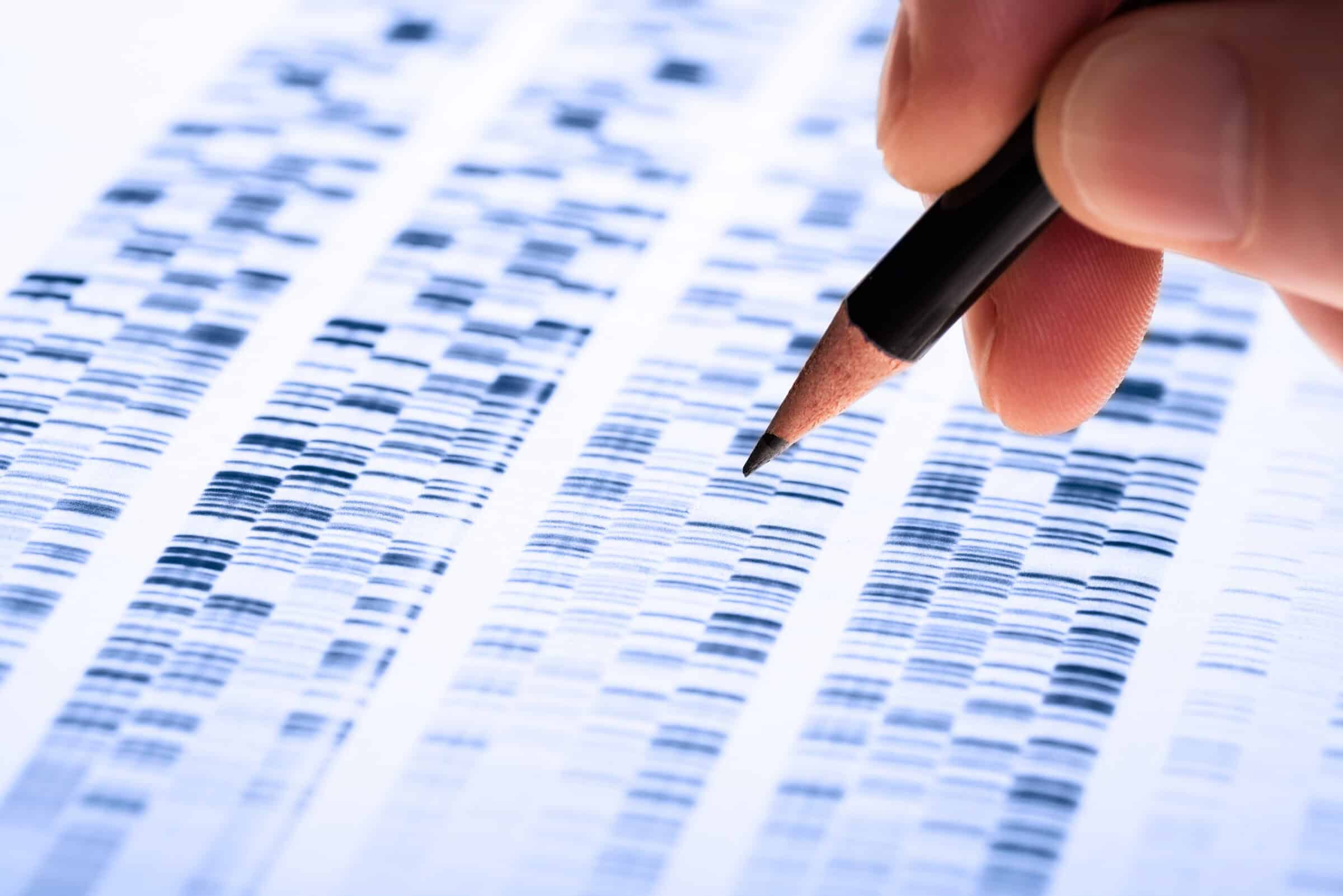
My co-authors and I have been discussing our recent paper in BIO-Complexity on the heuristic value of intelligent design to guide scientific research. In this article, I will discuss how intelligent design encourages research into the functions of non-coding genetic elements — in particular, what was at one time considered to be “junk DNA.”
Using ID Logic to do Research: Junk DNA
The hypothesis of intelligent design begins with the observation that intelligent agents tend to produce components that have a function. This generates the expectation that function will be prevalent in DNA and that what was once thought to be “junk DNA” will ultimately turn out to be largely functional. This expectation can then be tested experimentally.
Two Paradigms, Two Expectations
Evolutionary theory and intelligent design both lead to different sets of expectations about what we should discover. On the hypothesis of evolution, the existence of large amounts of “junk” in the genome is unsurprising, since genomic debris is expected to accumulate through trial-and-error and neutral mutations. On the other hand, intelligent design naturally leads to the expectation that function should be the norm, since intelligent agents generally produce systems with function or purpose. This expectation therefore motivates looking for function rather than presuming its absence.
How Strong Was the Historical “Junk DNA” Expectation?
It is sometimes claimed that “junk DNA” was not historically predicted by evolutionary scientists. However, as we document in our paper, this is revisionist history.
King and Jukes (1969) proposed that “99 percent of mammalian DNA is not true genetic material” and Ohno (1972) predicted that “at least 90%” of mammalian DNA could be “nonsense”. Indeed, this has been used as an argument against intelligent design, since it seems implausible that a conscious engineer would purposefully place useless, nonfunctional sequences into genomes. Or, as Miller (1994) wrote, “The human genome is littered with pseudogenes, gene fragments, ’orphaned’ genes,’ junk’ DNA, and so many repeated copies of pointless DNA sequences that it cannot be attributed to anything that resembles intelligent design”. This is not at all surprising on the hypothesis that our genome is the end result of a mindless, unguided process of random mutations acted on by natural selection. For example, Dawkins (2009) asserted that “the greater part (95 per cent in the case of humans) of the genome might as well not be there, for all the difference it makes”. Doolittle and Sapienza (1980) proposed that “Natural selection operating within genomes will inevitably result in the appearance of DNA with no phenotypic expression whose only ’function’ is survival within genomes”. They proposed that the search for function for junk DNA may be “folly” and “prove, if not intellectually sterile, ultimately futile.” Orgel and Crick (1980) similarly assumed that “much DNA in higher organisms is little better than junk” and noted that “The idea of selfish DNA is firmly based on this general theory of natural selection”.
Many other authors have made similar claims. Francis Collins, who headed the Human Genome Project, maintained prior to ENCODE that “roughly 45 percent of the human genome” consists of “genetic flotsam and jetsam”. Kitcher (2007) summarized the logical basis for why evolution predicts junk: “The most striking feature of the genomic analyses we now have is how much apparently nonfunctional DNA there is … From the Darwinian perspective all this is explicable — the molecular equivalent of the tinkering that is pervasive in the history of life at the anatomical level”. More recently, Moran (2023) has claimed that “90 percent of [the human] genome is junk”.
From “Junk” to a More Functional Genome
Research over the last few decades has revealed function for an increasing amount of genetic material that was once considered junk. For a sample of this literature, see this article I co-published with Richard Sternberg and Casey Luskin where we list scientific papers that identify functions for various classes of non-coding DNA.
While it is certainly not the case that specific functions have been assigned to the majority of the human genome, the trend warrants that we exercise caution before asserting that a genetic element is “junk” because we have not yet identified its function, particularly in view of ENCODE’s finding that more than 80 percent of the human genome undergoes transcription. As we wrote in the paper,
Though there is still much work needed to gain a full understanding of the non-coding regions of the genome, the research trend over the past two decades has been toward the discovery of functions for an increasing number of non-coding elements, with reports in the literature of a paradigm shift away from the concept of junk DNA.
The Heuristic Value of Intelligent Design
These results demonstrate the heuristic value of intelligent design, since the expectation that non-coding DNA is functional falls very naturally out of a design paradigm. As we wrote in the paper,
Intelligent design has led scientists to anticipate these discoveries and to expect that the preponderance of the genome is functional (with non-function being the exception rather than the norm), and there are researchers in the ID community investigating function for “junk” DNA. Intelligent design, therefore, has strong heuristic value in motivating research into functions of “junk” DNA, and this field represents another useful application of the theory of intelligent design.