




























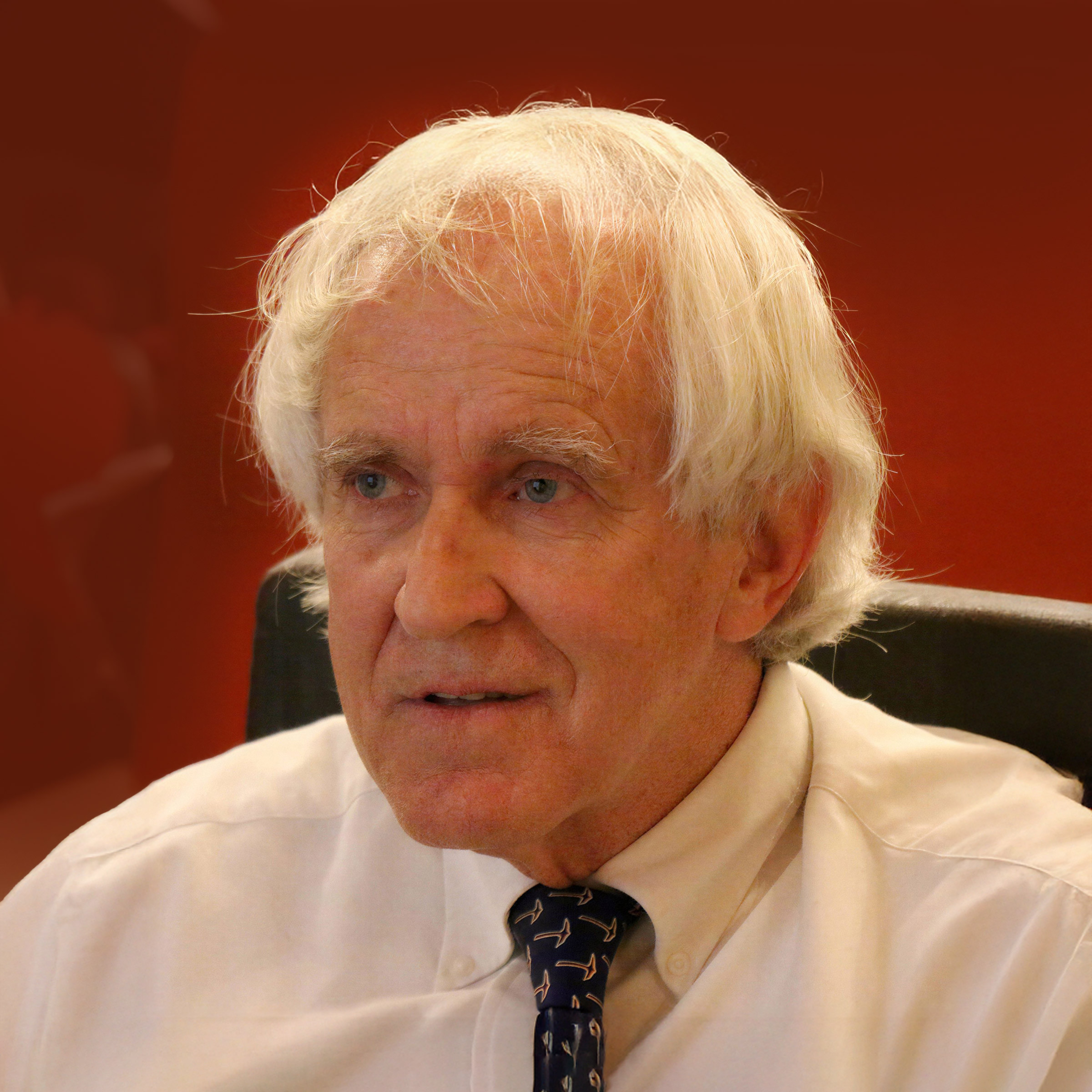









There’s been a surge of chatter around Richard Dawkins recently, with the marking of 20 years since he published his most bombastic work, The God Delusion. Jamie Q. Roberts, Lecturer in Politics and International Relations at the University of Sydney, chimed in at The Conversation, reflecting on its content, the impact it had at the time, and how criticisms of Dawkins have evolved since then:
Rereading Richard Dawkin’s The God Delusion, which turned 20 this year, I’m reminded of this time. The God Delusion offers a sustained critique of religion, and Christianity, in particular. Its arguments are presented across ten chapters, the most significant being the fourth, titled “Why There Almost Certainly is No God”.
The book was a huge bestseller — it sold more than three million copies and was translated into more than 30 languages. It struck at the heart of the religious leviathan, at least for its educated, secular readership.
The “Argument from Improbability”
The heart of that “sustained critique of religion,” as he notes, resides in Chapter Four: “Why There Almost Certainly Is No God.” Roberts doesn’t go into it or summarize it (and if I were defending it, I wouldn’t either), but here is the gist of it, as articulated by Dawkins at the end of the chapter:
- One of the greatest challenges to the human intellect, over the centuries, has been to explain how the complex, improbable appearance of design in the universe arises.
- The natural temptation is to attribute the appearance of design to actual design itself….
- The temptation is a false one, because the designer hypothesis immediately raises the larger problem of who designed the designer.
Certainly, (1) and (2) are true enough. But then there’s (3). Most Science and Culture readers will recognize this as the “Who made God?” defense of atheism, which is not an argument at all but a mindless, knee-jerk retort. Dawkins calls it his “argument from improbability” because, as he sees it, it is too “improbable” that such a God exists. On this, see Stephen Meyer’s recent post, “Three Replies to the ‘Who Designed the Designer?’ Objection.”
A Defense of Science that Misses the Mark
As I wrote recently in this space, Dawkins’s rhetorically zealous but rationally weak campaign for atheism turned out to be so unpersuasive that many people have now gone on record crediting him with helping them become Christians.
But Roberts is not one of them. In the final section of his hagiography lauding Dawkins, he relates his “favourite Dawkins moment.” Dawkins had given a talk during which he’d commented (rightly) that we are justified in holding a belief if there is evidence for it or if there are logical arguments that support it. This is basic epistemology, and no one with a reasonably trained mind would object to it. During the Q&A, someone brought this up and posed a follow-up question about the nature of scientific evidence:
It seems like this [basic epistemological tenet], in itself, is a belief that requires some form of evidence to believe it. If so, I’m wondering what you think would count in favor of that? … How do you justify choosing that heuristic without appealing to the same standard that we’re trying to justify?
This is not an unreasonable question. Is Dawkins espousing scientism, which is itself a kind of faith position? If not, isn’t he exercising a measure of faith in prior beliefs about science? For, even to do science, we must presuppose a set of prior beliefs related to, among other things, its chosen methodologies and the reliability of our own reasoning faculties. These prior beliefs are not established by evidence or by the scientific method. Astute philosophers have written whole books addressing this. See for example, Scientism and Secularism: Learning to Respond to a Dangerous Ideology, by J. P. Moreland, or Can Science Explain Everything?, by John Lennox.
But while it was a reasonable question, it wasn’t the best venue in which to pose it. Dawkins had the microphone and a friendly audience. And so, in classic Dawkinsian fashion, he answered with a smug smackdown. We trust the scientific method, he said, because:
It works. Planes fly, cars drive, computers compute. If you base medicine on science, you cure people. If you base the design of planes on science, they fly. If you base the design of rockets on science, they reach the moon. It works … bitches.
Of course his audience erupted in laughter and applause. Roberts ends his article with this retort, as if enough had been said — science had been successfully defended; case closed.
The Engineering Factor
But, no, not so fast. Notice Dawkins’s use of the term “design” — the “design” of planes, the “design” of rockets. Clearly, even an avowed Darwinian can make the design-detection connection when it suits his purposes.
And there’s a further point to be made here that the “Because science!” crowd is not going to make, though they should know it, at least intuitively. Planes fly, cars drive, computers compute, and rockets reach the moon because of — wait for it — engineering. To say that they work “Because science!” exhibits either gross ignorance or willful obscurantism.
Robert J. Marks of the Walter Bradley Center explains the difference between the “Because science!” atheists and scientists who understand engineering:
Those who believe that there is such a thing as settled science are members of the Church of Scientism. Some are filling their God-shaped vacuum with a belief in science….
Scientists embrace a theory, place it on a throne and worship her like a queen. Engineers make the queen step down from the throne and scrub the floor. And if she doesn’t work, we fire her.
If you’ve been following the ID discussion for a while, you’ve seen reports of fruitful discoveries being made by applying engineering principles to research. For a layman’s report, see this overview by Casey Luskin and Brian Miller, and if you want to keep abreast going forward, consider connecting with the CSC’s Engineering Research Group.
The point to note here, especially in connection with Dawkins and the ID debate, is that progress in science and knowledge is now being made as a direct result of rejecting the Church of Scientism and dethroning Darwinism. And for that, you can thank Discovery Institute and her supporters.