

































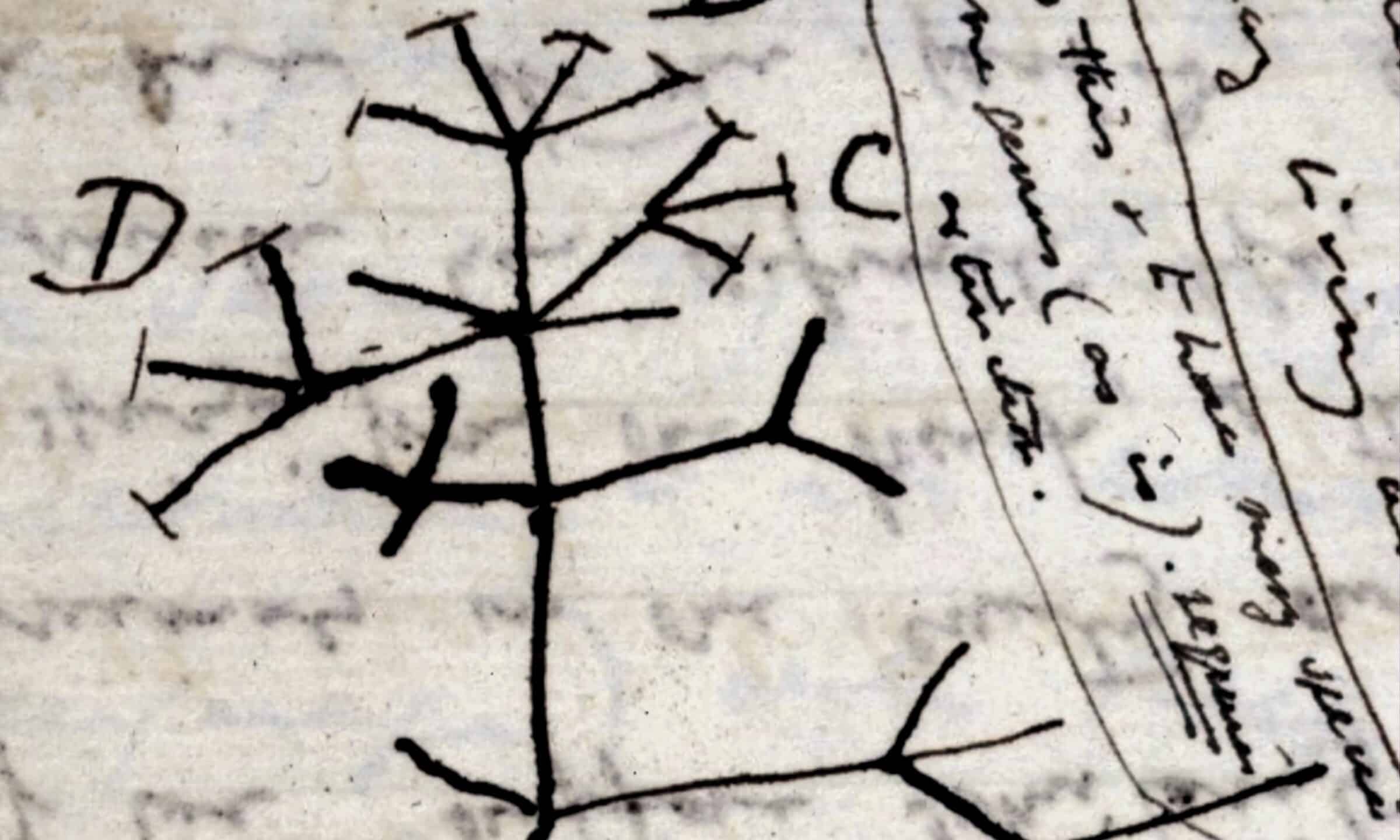
Did Charles Darwin settle the question of biological design once and for all? That’s certainly the impression given by some of his modern defenders, including Richard Dawkins. But the actual history of Darwin’s theory tells a different story about the dominant theory of biological origins and why it fails to explain the complexity and specificity and purpose of life.
On this episode of ID the Future, I continue my conversation with author and scholar Neil Thomas. In his books Taking Leave of Darwin and False Messiah, Thomas examines the intellectual influences behind Darwin’s theory, the objections raised by his contemporaries, and the larger philosophical assumptions that have shaped modern evolutionary thinking.
In this second conversation, Thomas explores what Darwin really accomplished, what questions his theory left unanswered, and why the debate over design continues today. Scientifically, it’s a new day in biology, and we now know much more about what life requires than Darwin did. For Dawkins to suggest, then, that Darwin demolished the design argument 150 years ago is a stretch of the imagination.
Thomas also provides clarity on the historical response to Darwin’s theory. Far from gaining instant consent, Darwin’s 1859 On the Origin of Species faced immediate pushback. Major scientific contemporaries rejected natural selection as a creative mechanism, most notably Britain’s leading geologist, Sir Charles Lyell, and Darwin’s colleague Alfred Russel Wallace. Thomas also points out that Darwinism was initially embraced more by literary and historical figures than by scientists, while the general public rejected its bleak depiction of nature as purely competitive.
Add all that to what we’ve learned about life in the last century and a half and it adds up to a decisive refutation of Dawkins’s recent claim in The Telegraph. Download the podcast, listen to it, or watch it here.
Dig Deeper
- In False Messiah, longtime Darwinist and agnostic Neil Thomas looks at how Darwinism triumphed, and he challenges the official story with an exploration richly informed by his expertise in rhetoric and cultural history.
- In Taking Leave of Darwin, Thomas offers a wide-ranging history of the evolution debate and the story of why, after decades as a card-carrying Darwinist, he decided it was time to walk away from the theory.
Read the Telegraph articles that inspired this conversation:
- Stephen Meyer, “How New Atheism Rose, Triumphed, and Lost the Argument.”
- Richard Dawkins, “Twenty Years Since I Wrote the Book, the God Delusion Won’t Die.”