






































An ideologue should hate paleontology. It is always turning up something new. And sometimes the new stuff is really inconvenient.
At one time, Neanderthal man was our dumb cousin. His stupidity caused him to lose the Darwinian battle for survival. National Geographic has the story from back then.
Perfect for Popular Culture
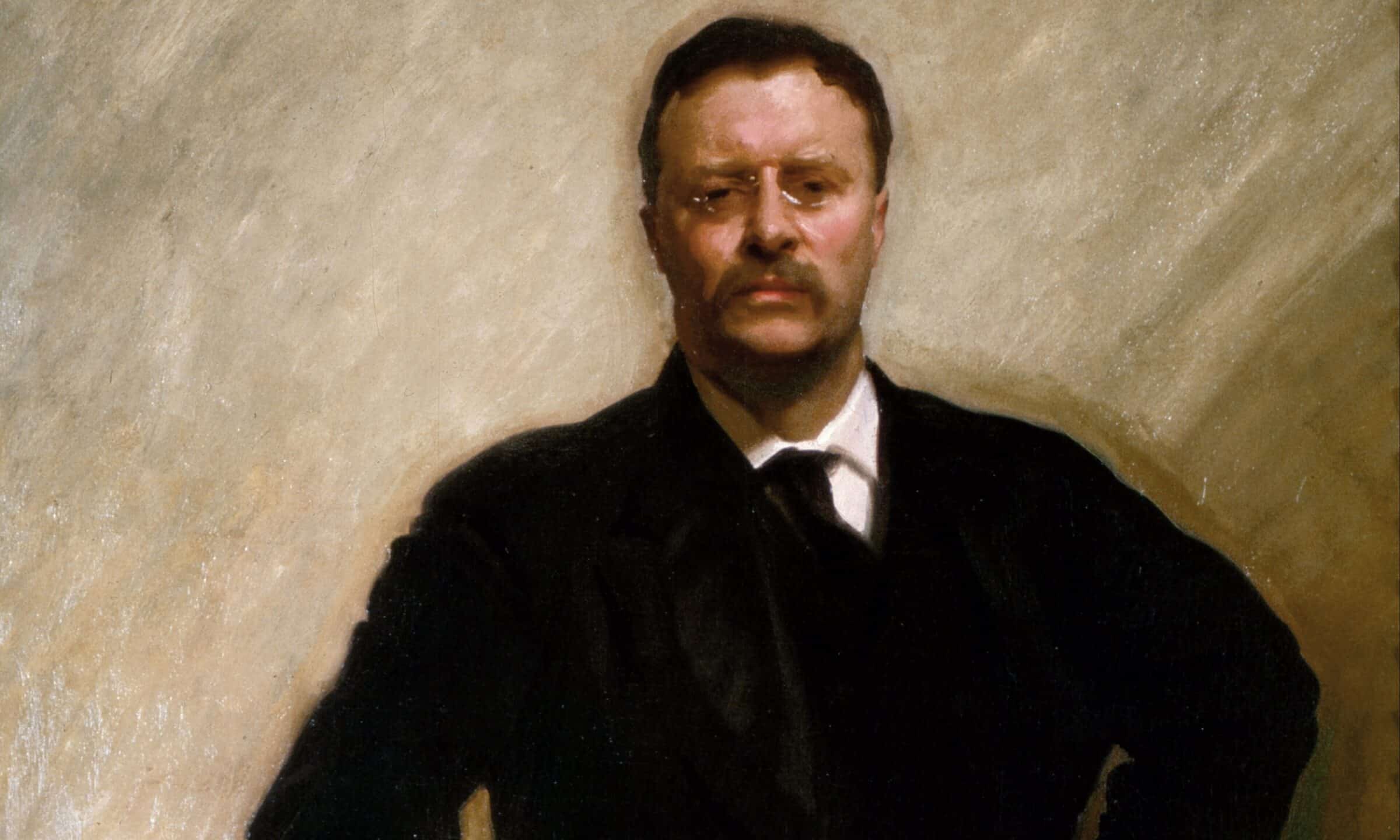
In February 1916, Theodore Roosevelt, U.S. President from 1901–1909, wrote in that publication,
These Neanderthal men were squat, burly, big-headed, thick-skulled savages, with brows projecting over cavernous eyes, knees permanently bent, and jaws almost chinless. Their brains were of good size, but the portions which represent the higher intellectual attainments were poorly developed.
NG science editor Nicholas St. Fleur comments,
Both Roosevelt and Knight [an illustrator] were echoing the scientific sentiment at that time that Neanderthals were dumb and brutish, imagery that has plagued Homo neanderthalensis to various degrees since its discovery in 1856. But now, more than a century after America’s “Rough Rider” president maligned Neanderthals within our yellow borders, scientists are giving the archaic species some long-overdue justice.
The stupid Neanderthal was perfect for popular culture.
One figure who helped crystallize Neanderthals’ brutish image in popular media was H. G. Wells, says Peter Sahlins, a historian of science and author of the upcoming book Neanderthals Among Us: The Making of a Prehistoric Human. The British evolutionary theorist — sometimes referred to as the father of science fiction — portrayed Neanderthals as ugly, inarticulate, lumbering idiots to be vanquished by real humans in his early 1920s book The Outline of History and short story The Grisly Folk. That helped set the stage for future Neanderthal portrayals in films and novels throughout the 20th century.
From “The Grisly Folk” (1921): “One of the most startling results of this recent work is the gradual realisation that great quantities of these flint implements and some of the earlier fragments of bone that used to be ascribed to humanity are the vestiges of creatures, very manlike in many respects, but not, strictly speaking, belonging to the human species.”
But Brute Theory Did Not Last Out a Century
Much later we learned that Neanderthals (who have since died out as a separate group) share almost all DNA with current humans. Also that they behaved pretty much like other humans of their time.
Just recently, paleontologists have found Neanderthal wooden tools (62-40 kya) preserved in stone:
The choice of materials suggests Neanderthals knew their wood. Scots pine is easy to work and dries quickly, so tools were cheap to make and replace. Juniper’s fibrous bark suited the trays. Firewood tended to be dry wood, while tools were made from fresh wood. “When they went to look for wood, it was like when they went to look for stone; they knew exactly what they wanted to make,” says [M. Gemma] Chacón. “This implies not only planning, but a bit of complexity in the brain to organize your activities.”
Chacón adds, for emphasis, “Neanderthals are no longer perceived as Homo sapiens’ dumb cousins.”
Similarly, in the July 20 edition of Scientific American, we read, “A new skull-based analysis of Neanderthal brains suggests that these ancient hominins’ range of intelligence largely overlapped with our own.”
One hundred and ten years later, Neanderthals seem to get smarter every time we dig them up.
The Rougher Side of Life Back Then
From the University of Cambridge: “A round hole in the shoulder blade (scapula) of a Neanderthal whose partial remains were unearthed in a cave in Iraqi Kurdistan may be the earliest known example of lethal interpersonal violence with a wooden spear in the hominin fossil record”:
“It’s extraordinary to have a perfectly preserved scapula from 75,000 years ago. These bones are so thin that you often don’t get complete scapulae from modern burials,” said Dr Emma Pomeroy, study lead author from Cambridge’s Department of Archaeology. “We were able to lift it out in one piece from under almost eight metres of rock and sediment.”
A Bigger Question: The Human Mind
One difficulty is that the human mind has no history. We see evidence where we see it. Whether that evidence is the lethal spear wound or the Venus of Hohle Fels (40,000 BCE), it comes without footnotes. As a result, claims about the evolution of the human mind are generally works of the imagination.
That said, if we are discussing evidence of intelligence, we should keep this in mind: Most of the technological advances by which we usually measure human intelligence awaited the discovery of metal working. A very smart human 20,000 ago would be greatly handicapped by not having a hammer or a nail, let alone a microscope or a telescope. Or a computer or the internet. Such a person could live and die without leaving a trace in the non-living world.
That is a hard limit on what we can really know about the origin of the human mind.
Cross-posted at Mind Matters News.