





































A computer lies silent on the desk. Nothing is happening. Inside it are fans, a CPU, memory chips, a power supply, and gigabytes of software. At the flick of a switch, the power supply operates the fan and the boot sequence. Operating system processes begin and within a minute, multiple applications appear on the monitor, ready to respond to user input. Any applications scheduled for immediate startup are already operating at full capability.
Expand this familiar experience to a factory assembly line with robotic machines powered down for the night. The morning crew arrives to punch in, flicks a switch to turn on the lights. After a few more switches, the entire factory floor is operational, ready for the crew to put in the day’s work. The machinery was all in place through the night. It just needed the signal to run.
A Dormant, Simple Thing?
This is the new picture of what goes on in a humble seed. Scientists had assumed that the seed is a dormant, simple thing that, upon germination, would build all its parts from scratch. Yes, it had DNA instructions in its cells, but germination would require finding and transcribing genes, building a ribosome to translate them, and slowly assembling all the organelles — especially the mitochondria, since growth would require a great deal of energy. But what if those mitochondria were like that silent factory in the dark, all ready to operate at full speed when switched on?
To their surprise, that’s what Noah Ditz and 21 other German scientists found when they took a closer look inside the seed. Writing in Current Biology, they announced that “Seed mitochondria are equipped with cristae and a full proteome to kickstart germination.” Cristae are the folds in mitochondria where the five complexes for oxidative phosphorylation (OxPhos) reside. These complexes, climaxing in the rotary engine ATP synthase, produce the voluminous amounts of ATP that the seedling will require for energy.
The earlier “promitochondria” model assumed that primitive mitochondria-like organelles without cristae would slowly generate a little ATP till the OxPhos factory was fully constructed. Ditz et al. found that everything was already in place. News from the University of Münster, one of three German universities involved in the research, explains that mitochondria, the “powerhouses” of cells, “are already fully functional in dry seeds to enable rapid germination.” They are basically pre-built and on standby till switched on.
Their complex internal structure with an outer and an inner membrane as well as numerous infoldings of the inner membrane is already fully developed and not just present in an incomplete preliminary stage, as previous studies had suggested…
As the study shows, the seed mitochondria already contain the complete inventory of proteins that the seedling needs for cellular respiration. This allows the plant embryo to supply itself with energy from the very first moment of germination.
Present and at the Ready
Even the TIM and TOM transport systems that ferry molecules in and out of the mitochondrial membranes were found, along with subunits for ribosomes and other organelles, and catabolic enzymes for digesting food stores (fats, sugars, and proteins) in the endosperm. Using multiple advanced methods, the research team detected numerous proteins and enzymes for such things as antioxidant defense, repair, and translocation. Look at the subsection titles in their open-access paper to appreciate the variety of cellular systems they found present and at the ready.
Maybe this is just a specialty in Arabidopsis, the common lab plant. No: Ditz et al. checked other seeds and found the same. They believe it is a widespread phenomenon in most if not all seeds:
The consortium of experts in plant mitochondria also examined the onset of cellular respiration in further plant species, including rapeseed, millet, and tomato. The observations suggest that the rapid activation of mature mitochondria, triggered by the first water uptake by the seed, is widespread in flowering plants with dry (“orthodox”) seeds. This property has obviously proven valuable and is evolutionarily conserved.
Little to Say About Evolution
You have to love that phrase “evolutionarily conserved.” It just means unevolved. In fact, the authors have very little to say about evolution in the press release or the research paper. They simply assume these properties “have evolved” and that seeds represent a “major innovation in plant evolution.”
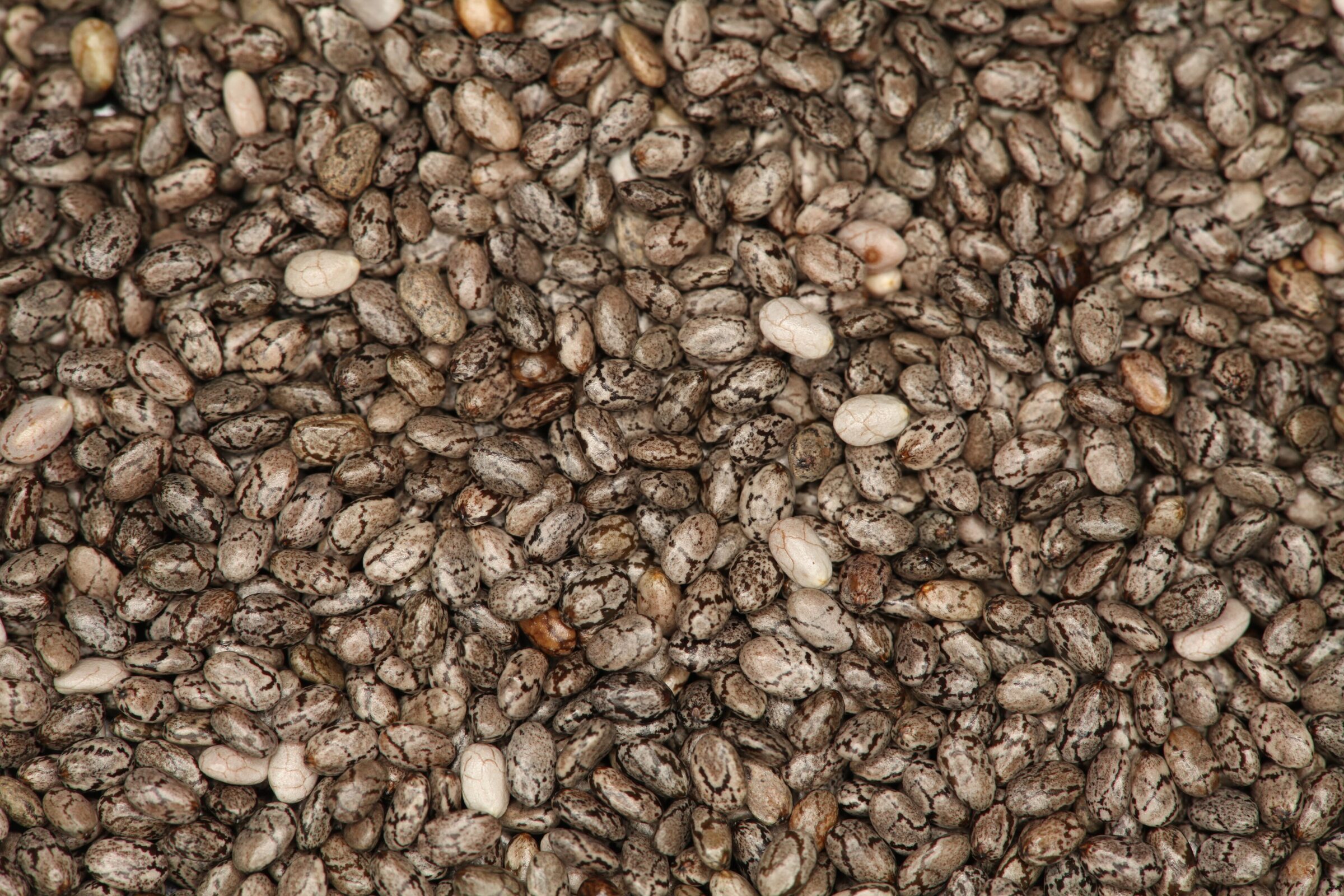
When done yawning over those lines, think about what this finding means. When you hold a dry seed in your hand — even a tiny seed like a chia seed — you are holding a virtual factory of molecular machines that will switch into high gear as soon as the right signals arrive. That may be water, temperature, day length, or some other combination of switches. I’ll never look at a tiny seed the same way again. To think that at the nanometer scale, complex rotary engines and levers and pumps sit there prefabricated and ready to roll — it’s almost too much to fathom.
Here’s a research project for a design scientist: is this true also of spores? Fungal spores are as tiny as dust particles. If the metabolic machinery is ready to roll in those, too (as it must be), that puts the awesomeness of microminiaturized factory readiness into unimaginable dimensions.
Seeds of all sizes and shapes get carried by wind, water, and wildlife to distances sometimes far from the parent plant. Some seeds are launched with explosive power. Others descend like helicopters or float like parachutes. Some drill themselves into the soil. Some are released after a wildfire has passed. The varieties of seed dispersal methods are themselves awe-inspiring. Now we have just learned that each seed comes preloaded with a factory of complex machines, all prebuilt, lined up, and ready for action. That should put a spring into the step of every farmer, gardener, and intelligent design advocate.