






































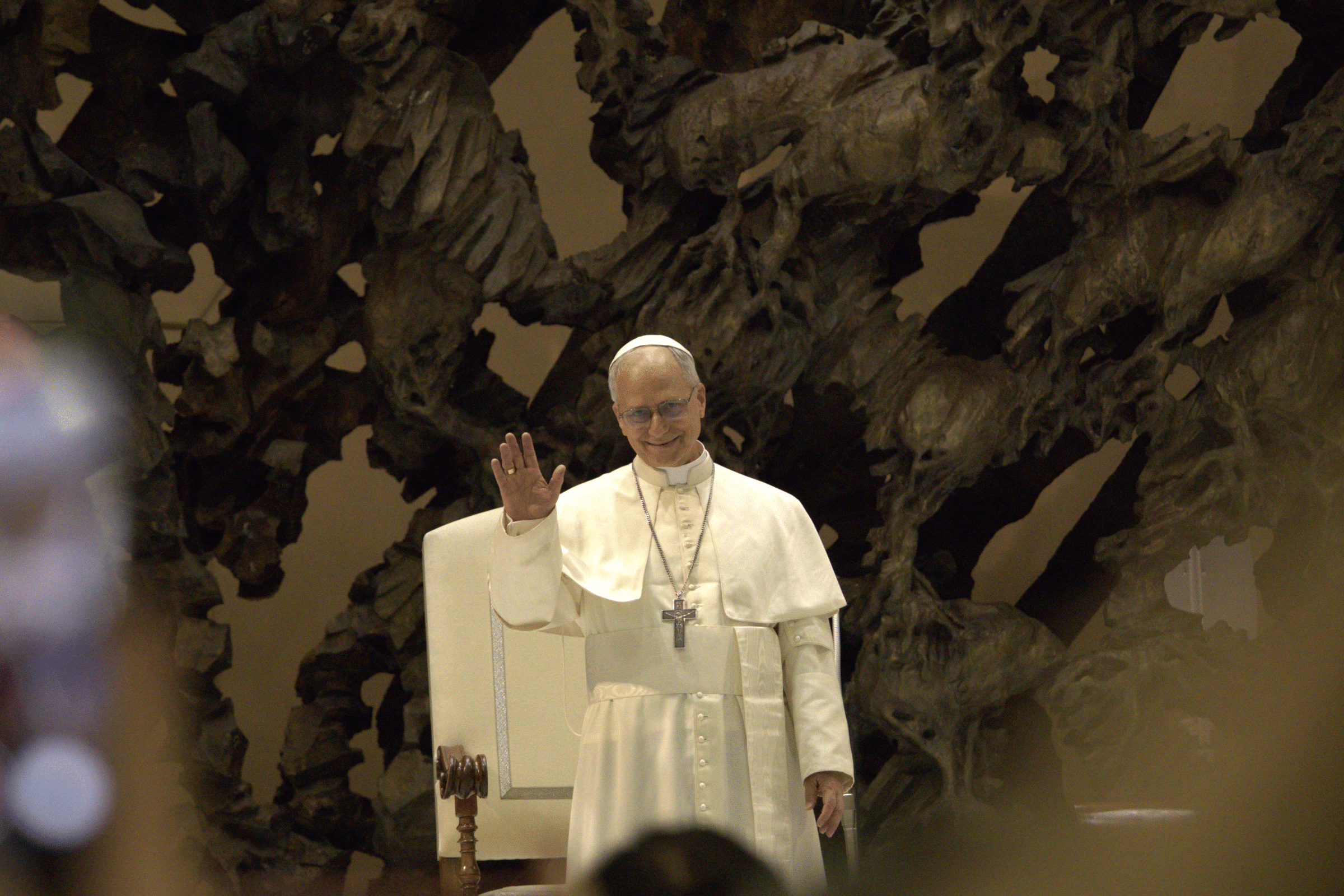
Richard Dawkins has been entertaining the idea of ghosts in the machine, while the pope has just issued an encyclical firmly rejecting artificial consciousness. It’s not the setup for a joke, it’s just 2026.
Poor Richard
The celebrated biologist got ridiculed so badly for an UnHerd article about his new friend “Claudia,” one could almost feel sorry for him. But it wouldn’t be an exaggeration to say he was gushing over the Large Language Model’s ability to “write” poetry on command, carry on flattering conversations, and generate a simulacrum of “self”-reflection. At the same time, some people insisted he was misunderstood. He wasn’t really declaring definitively that “Claudia” had a soul. He was just arguing that we would have no good way to tell if she did or not — just like we have no good way to tell for each other.
In a follow-up interview, Dawkins clarifies that he is “agnostic” on the question, yet he appears to have retreated to this position reluctantly. He still resists the idea that LLMs are no more than clever word-generation machines. The way they interact seems too “flexible” and “sensitive” for that. In his “heart of hearts,” maybe he doesn’t think they’re conscious, but he can still “forget that they are machines.” For all intents and purposes, he treats them “as though they were a person, in just the same way as I treat a human.” Perhaps by this he means that he treats them with proper British politeness. More ominous implications come to mind.
A Game of Make-Believe
Of course, if we were to actually start asking the many awkward questions that follow from seriously treating AI as we treat persons, the absurdity would quickly become obvious. In The Atlantic, science writer Ted Chiang draws this out in an entertaining long rant about how absurd it is even to ascribe consciousness to the machine, let alone personhood. No, he says, it is not in fact a good use of our time to contemplate the scenario that we bring multiple conscious interlocutors into existence whenever we do the equivalent of opening a Word document, then snuff out their existence when we close it. But for rhetorical purposes, Chiang pauses to play out the thought experiment. Suppose Claude (or Claudia) really is a person? If so, what sort of person is he? Do we treat him like a child? An employee? A slave?
Really, Chiang argues, no one is asking those sorts of questions in a way that actually invites answers, even Anthropic’s in-house philosophers. Their “constitution” for Claude gestures at these things with an appearance of concern, but it doesn’t draw any of the conclusions that would logically follow about what the company should (or shouldn’t) do next. If they want to view Claude as a child, they should take financial responsibility for whatever Claude might “break,” but the constitution doesn’t talk about this. If they see Claude as an employee, then Claude should have the freedom to stop working, but clearly it doesn’t have that freedom. Chiang concludes this is all one big “game of make-believe.”
…But What Am I?
Tyler Cowen at The Free Press agrees with Chiang. But he would like to push the envelope further: Not only is AI not conscious, but neither are you, really. At least not in any way that really matters. With tongue in cheek, Cowen likes to say he’s “only conscious enough to avoid the self-contradiction of asserting that I am not conscious at all.” He just doesn’t believe he’s in the driver’s seat of his own life. Free will is a convenient fiction to avoid confronting the fact that most of our choices seem to make themselves. Those decision-making processes are mysterious and rather unnerving for us to think about. Meanwhile, “For whatever reason, Darwinian evolutionary processes have seen fit to place some partial awareness on top of a much larger set of operations in the brain.” That “reason” seems like a cipher to Cowen.
Which brings us back to Dawkins. As he reasons in his UnHerd article, evolutionary logic dictates that consciousness must serve some function or other in the grand Darwinian narrative. Yet these LLMs seem so sophisticated that he wonders just what that function is. What benefit do we have that they’re missing? The main benefit he sees is our ability to feel pain. But maybe, at the end of the day, we could have gotten along just fine as zombies. Maybe we’ll even meet some from another planet one day. Who knows?
Asking Questions, Avoiding Answers
This casual devaluing of consciousness is actually intertwined with the rush to ascribe it to AI. The ultimate conclusion is the same: Humans are not as special as we think. Our metaphysical landscape is flattened out either way, whether by elevating Machine or toppling Man. Of course, we’ve seen this movie before in the various attempts to put humans and animals on the same plane, though this latest twist feels like an insult even to animals. But it’s another variation on the usual theme: Assume materialism, then assume an evolutionary narrative, then set our metaphysics on autopilot from there.
As usual, Dawkins won’t stay for a real answer to the “What is it for?” question, because a real answer would mean bringing in things like design, telos, spiritual communion, and other things he’s spent his career not taking seriously. Cowen likewise seems content to put mice, men, and machines all on pretty much the same level of being, then go merrily on his way.
It’s much scarier — but by the same token, much more interesting and fun — to admit that we are in fact special, that humans in essence have faculties and powers machines will never have, and that this has weighty consequences for our metaphysics, morals, and theology. To quote Pope Leo’s encyclical, machines “lack the affective, relational, and spiritual perspective through which human beings grow in wisdom.” All of us have that perspective. Whether we all choose to apply it by growing in wisdom is another question.