






































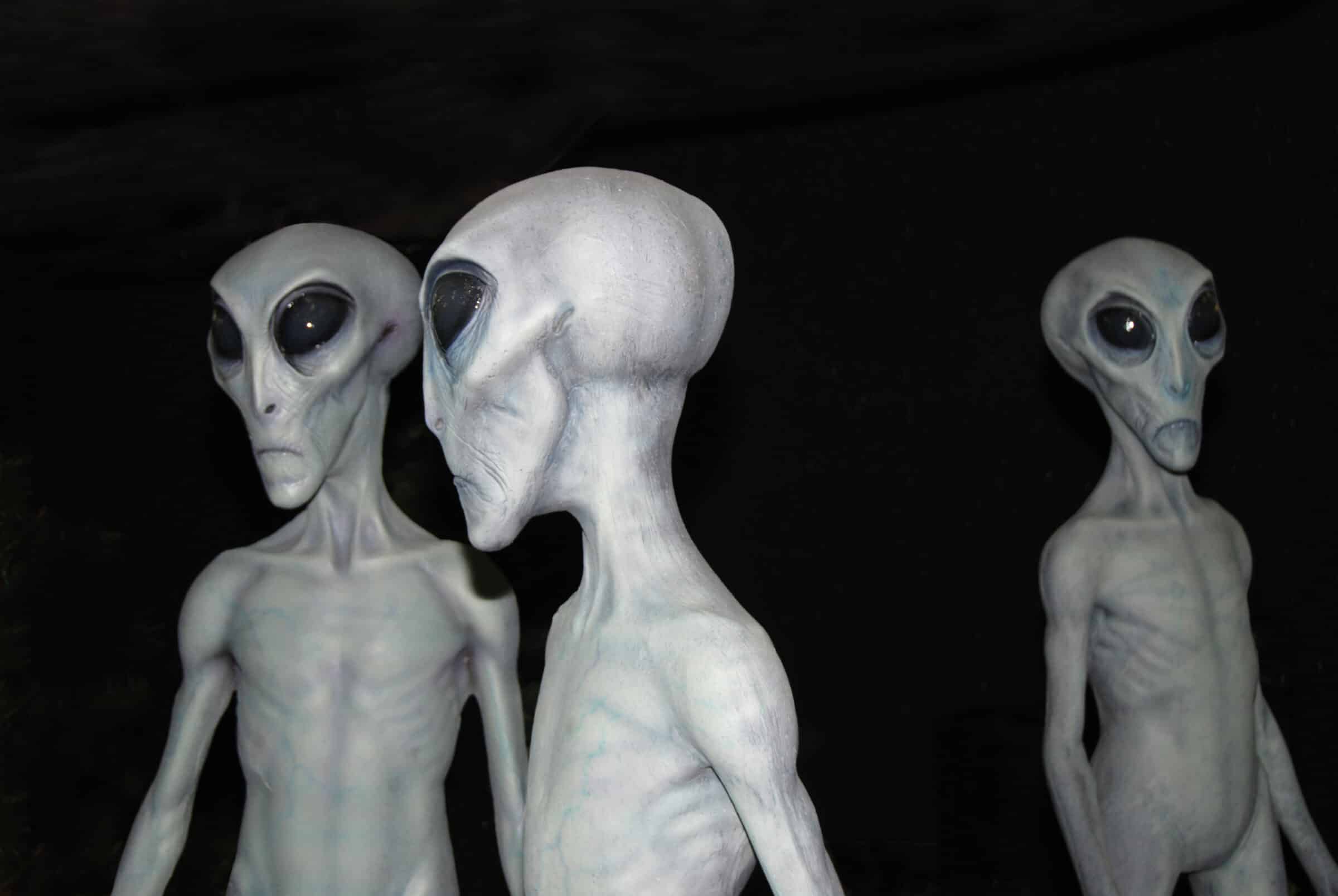
Writing for the Wall Street Journal, Spencer Klavan hits the right note about Steven Spielberg’s Disclosure Day. Spielberg has been marketing the film, which opens tomorrow, with hints that it will change many people’s views not only about aliens but about faith. Writes Klavan, “if there is something out there, that something need not disprove the existence of the Author of Life. If anything, it might be a credit to His name.”
Yes, and our colleague Casey Luskin, in an illuminating conversation with Sean McDowell, spends an hour explicating the scientific reasons why that is so.
What, asks McDowell, about another sci-fi movie, this one from 2012, Ridley Scott’s Prometheus? The premise there was that aliens “seeded” life on Earth. The seeding act itself is dramatically depicted. If that were true, would it make them our ultimate Creator?
Not at all, Dr. Luskin explains. Any hypothetical extraterrestrials, given the nature of life itself as it must be anywhere in the cosmos, could not have arisen through blind, purposeless forces. In a scenario of panspermia (i.e., life was seeded here), any aliens behind that must have been intelligently designed, or whoever seeded them must have been designed, and on backward. Ultimately, from the inception of space and time, life must be “credited” (in Klavan’s term) to a creator, outside space and time.
Dr. Luskin also discusses biologist Michael Denton’s striking argument that intelligent, technology-using aliens, anywhere in the universe, would — by the intent of the cosmic design — need to live on a planet like ours and would need to possess a physiology like ours. Therefore, if aliens are real, they are humanoid, air-breathing, and land-dwelling. Which seems to be what Spielberg’s imagination tells him as well.