






































On a new episode of ID the Future, enjoy the second half of a discussion between philosopher of science Dr. Stephen Meyer and synthetic organic chemist Dr. James Tour about the origin of life and the explanatory power of intelligent design. The conversation, hosted by Peter Robinson, transitions from the “dead end” of current origin-of-life research to the crucial concept of information.
First, the conversation highlights that current research has demonstrated more about how life didn’t form than how it did. Dr. Tour explains that those who think scientists have solved or are close to solving the problem of life are incorrect: “Those who think scientists understand how prebiotic chemical mechanisms produce the first life are wholly misinformed,” he notes. “Nobody understands how this happened.” He goes on to say that even Richard Dawkins acknowledges that no one knows how life evolved through undirected chemical processes.
Defining Information
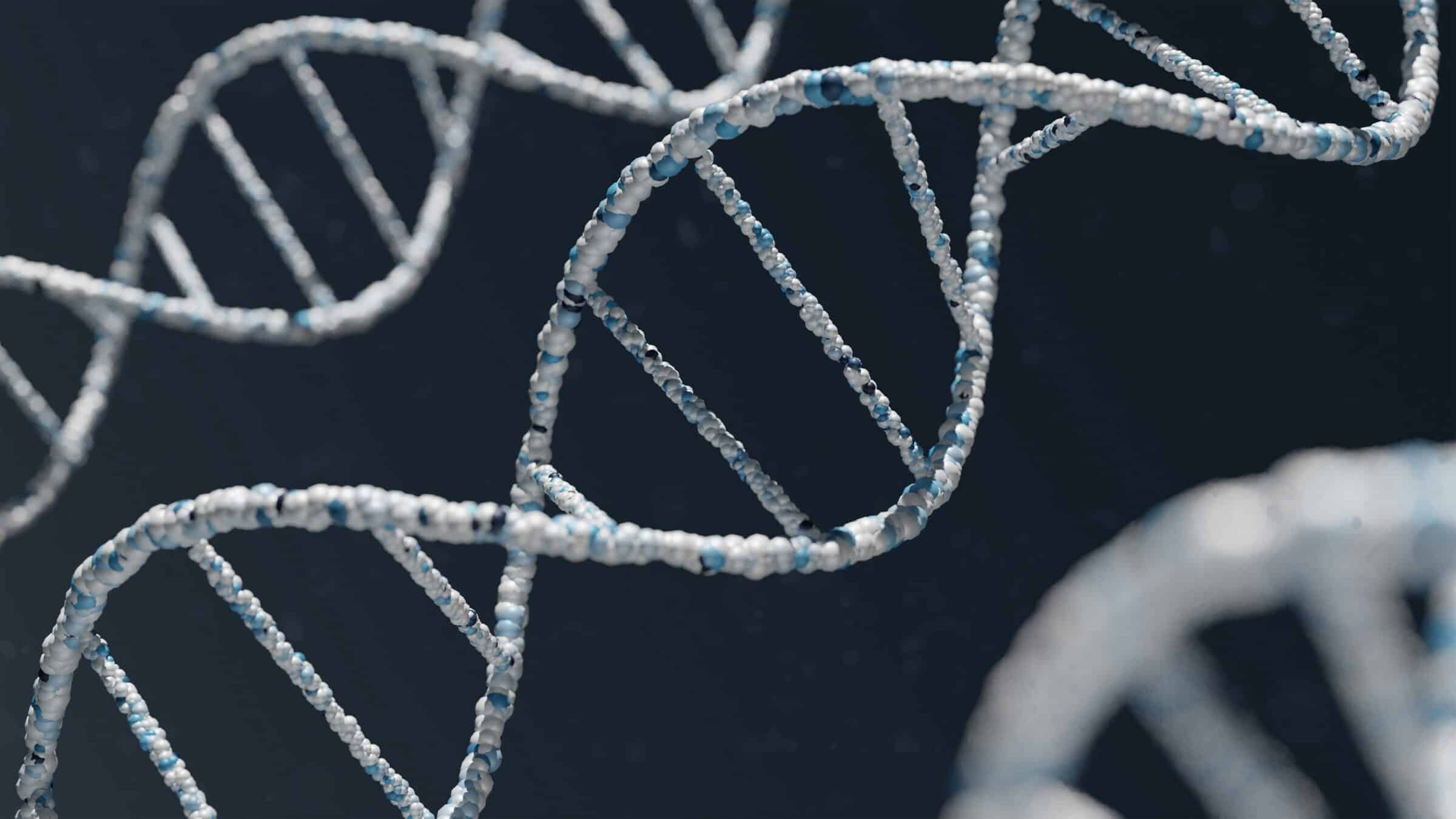
Next, the exchange turns to properly defining information. Meyer and Tour distinguish between Shannon information (a mathematical measure related to the reduction of uncertainty, like a coin flip or dice roll) and specified information or specified complexity. While Shannon information quantifies carrying capacity, it doesn’t address meaning or function. DNA, according to Francis Crick, possesses specified information, meaning its sequence of bases is arranged specifically to perform a function, much like a line of poetry is arranged to convey meaning. Dr. Tour further emphasizes that every piece of the cell is informational code, not just DNA. That includes saccharides, amino acids, and proteins. The information baked into every part of life’s design cannot be taken for granted.
ID as the Best Explanation
Finally, Dr. Meyer argues that the functionally specified information found in every living cell points to intelligent design as the best explanation for life’s origin. “Experience shows that large amounts of such information, especially codes and languages, invariably originate from an intelligent source,” he reminds us. And intelligent activity is the only known cause of the origin of functionally specified information. This conclusion is drawn from our uniform and repeated experience, which is the basis of scientific reasoning, particularly in historical sciences.
In the end, both men readily admit to the profound mystery of life itself. “Molecules,” Tour notes, “have “no propensity… to move toward life.” Beyond the hype and empty promises, origin-of-life researchers locked in a materialistic framework are not getting any closer to explaining the mystery of life’s origin.
Download the podcast or listen to it here. This is Part 2 of a two-part conversation. Check out Part 1.
We’re grateful to the producers of Uncommon Knowledge for permission to share this conversation here. Uncommon Knowledge is a production of the Hoover Institution at Stanford University.
Dig Deeper
- Dr. Meyer asks: can pre-biotic natural selection explain the origin of life?
- Check out the introduction to Dr. Tour’s video series on abiogenesis: