Science and Culture Today Discovering Design in Nature
Topic

The Myth of Junk DNA

Junk DNA
Photo credit: Hongtao Chen, Princeton University (screen shot), via EurekAlert!

Princeton Researchers Watch “Junk DNA” at Work

In “real time” they show the function of an enhancer in switching a gene from off to on. Read More ›
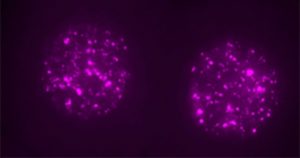
Single-two-cell-mouse-embryos-with-nuclear-LINE1-RNA-labeled-magenta-Credit-Ramalho-Santos-lab_1
Photo credit: Ramalho-Santos lab, via University of California, San Francisco.

As Research Advances, Debunking “Junk DNA” Is Almost Trendy

Why not treat the whole genome as functional? This is a radical concept, but perhaps the focus on genes distorts our understanding.  Read More ›
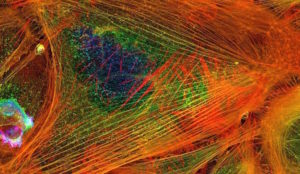
actin-filaments
Photo: Actin filaments, by Howard Vindin (Own work) [CC BY-SA 4.0], via Wikimedia Commons.

More Secret Codes in “Junk DNA”

Scientists find the most interesting things when they suspect function in poorly understood parts of the genome. Read More ›
C.-elegans
Photo credit: C. elegans, by Adam Klosin, via Centre for Genomic Regulation.

Nematodes Push Epigenetics to the Limit, as Another “Zombie” Bites the Dust

Isn’t DNA the one and only "secret of life"? Neo-Darwinism, a gene-obsessed doctrine, needs it to be. Read More ›

The English Translation of “New Work by Thornton’s Group”

Turning a protein shaped to do one particular job into a protein that does just a slightly different job (which most biologists, including myself, had thought would be as easy as pie) turned out to be much more difficult than expected. Read More ›

The Receding Myth of “Junk DNA”

Since I published The Myth of Junk DNA in May, there has been no response from the pro-Darwin authors I criticized in it. On September 23, 2011, however, John Farrell reviewed it for the Huffington Post. Read More ›

Heads I Win, Tails You Lose: HuffPost Reviews The Myth of Junk DNA

Yes, it's the venerable principle of Darwinian theory that says: Whatever turns out to be the case is retrospectively recognized as having been exactly what the theory predicted. Read More ›

© Discovery Institute