Jupiter Type post Author Elie Feder Date August 20, 2024 CategoriesFine-tuningIntelligent DesignPhysical Sciences Tagged , Bayesian reasoning, chance, design hypothesis, evil, intelligent cause, intelligent life, likelihood, natural disasters, physical constants, probabilities, suffering, universe Considering the Fine-Tuning Argument from Probabilities Elie Feder and Aaron Zimmer August 20, 2024 Fine-tuning, Intelligent Design, Physical Sciences 4 Many authors formulate the fine-tuning argument using probabilities and Bayesian analysis (e.g., Swinburne, Collins, Roberts, Barnes). Read More ›
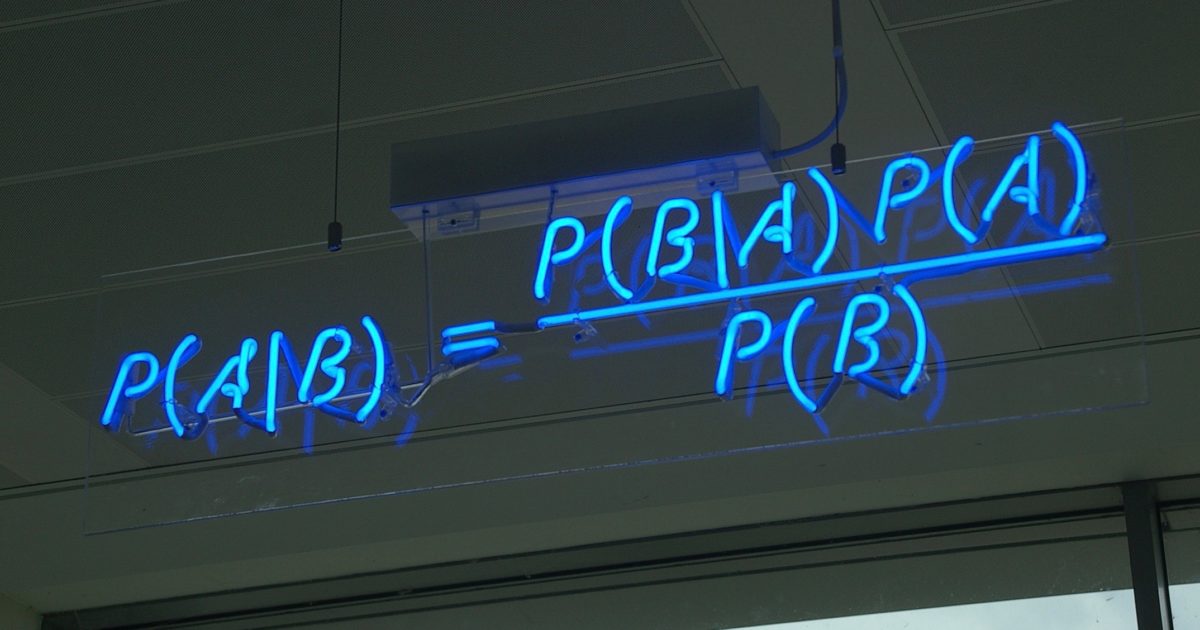
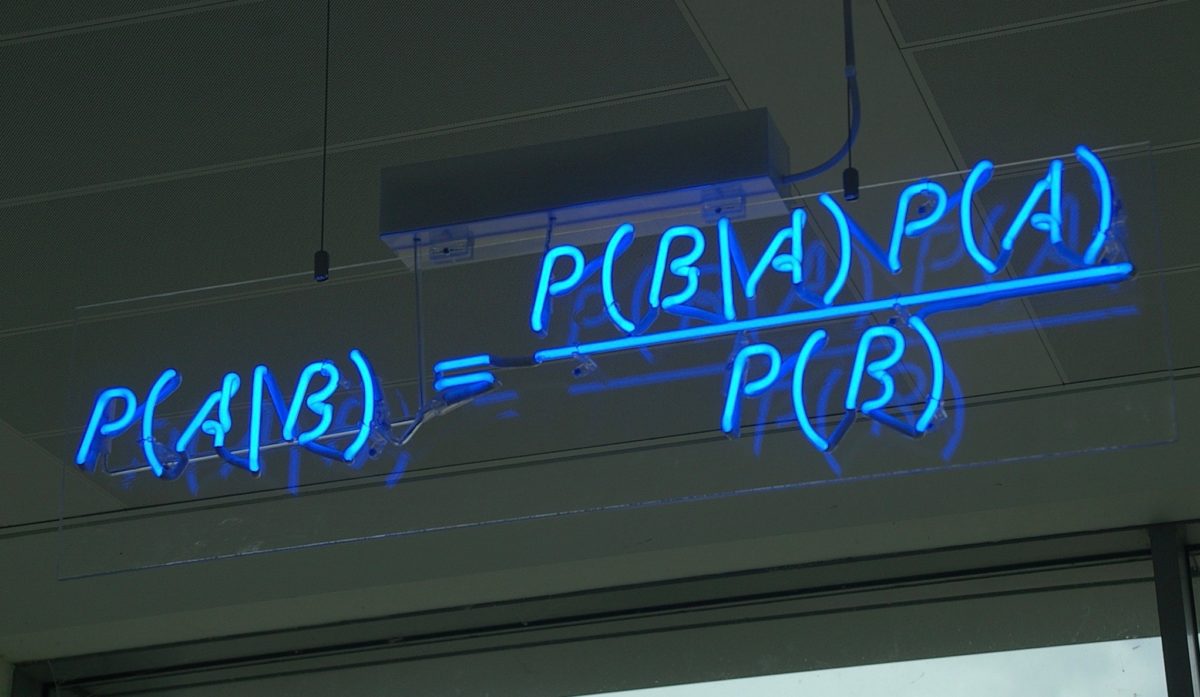
Bayes' Theorem Type post Author Andrew McDiarmid Date November 21, 2023 CategoriesBiologyEvolutionFine-tuningIntelligent Design Tagged , Bayes’s theorem, Bayesian reasoning, Big Bang, biological information, biosphere, cells, environmental fitness, evolution, ID the Future, information, information processing, intelligent design, Irreducible Complexity, Jonathan McLatchie, likelihood, Lydia McGrew, nature, Thomas Bayes Bayesian Probability and Intelligent Design: A Beginner’s Guide Andrew McDiarmid November 21, 2023 Biology, Evolution, Fine-tuning, Intelligent Design 3 If the phrase “Bayesian calculus” makes you want to run for the hills, you’re not alone! Bayesian logic can sound intimidating at first. Read More ›
Lenski’s terrific LTEE Type post Author Jonathan McLatchie Date June 22, 2023 CategoriesEvolutionIntelligent Design Tagged , bacteria, Bayes factor, Center for Science and Culture, citrate, Darwin Devolves, Darwin's Black Box, Dave Farina, Discovery Institute, eggs, embryos, Escherichia coli, evolution, goal-directedness, intelligent design, Irreducible Complexity, irreducibly complex systems, James Tour, likelihood, lizards, metabolites, Michael Behe, natural processes, Rice University, Scott Minnich, The Edge of Evolution, University of Idaho Answering Farina on Behe’s Work: Irreducible Complexity Jonathan McLatchie June 22, 2023 Evolution, Intelligent Design 14 The first exhibit is Lenski’s long-term evolution experiment, in which, after some 33,000 generations, bacterial cells evolved the ability to grow on citrate. Read More ›
Bayes'-Theorem Type post Author Jonathan McLatchie Date July 14, 2020 CategoriesEpistemologyFine-tuningIntelligent Design Tagged , Bayes’ Theorem, Big Bang, biological design, cosmic fine-tuning, evidence, helium, hydrogen, intelligent design, life, likelihood, Luke Barnes, Lydia McGrew, Stephen Meyer, Thomas Bayes, William A. Dembski, William Lane Craig A Bayesian Approach to Intelligent Design Jonathan McLatchie July 14, 2020 Epistemology, Fine-tuning, Intelligent Design 5 I have come to think of evidence in Bayesian terms and this has in turn impacted the way I think about the biological arguments for ID. Read More ›