Science and Culture Today Discovering Design in Nature
Topic

junk DNA

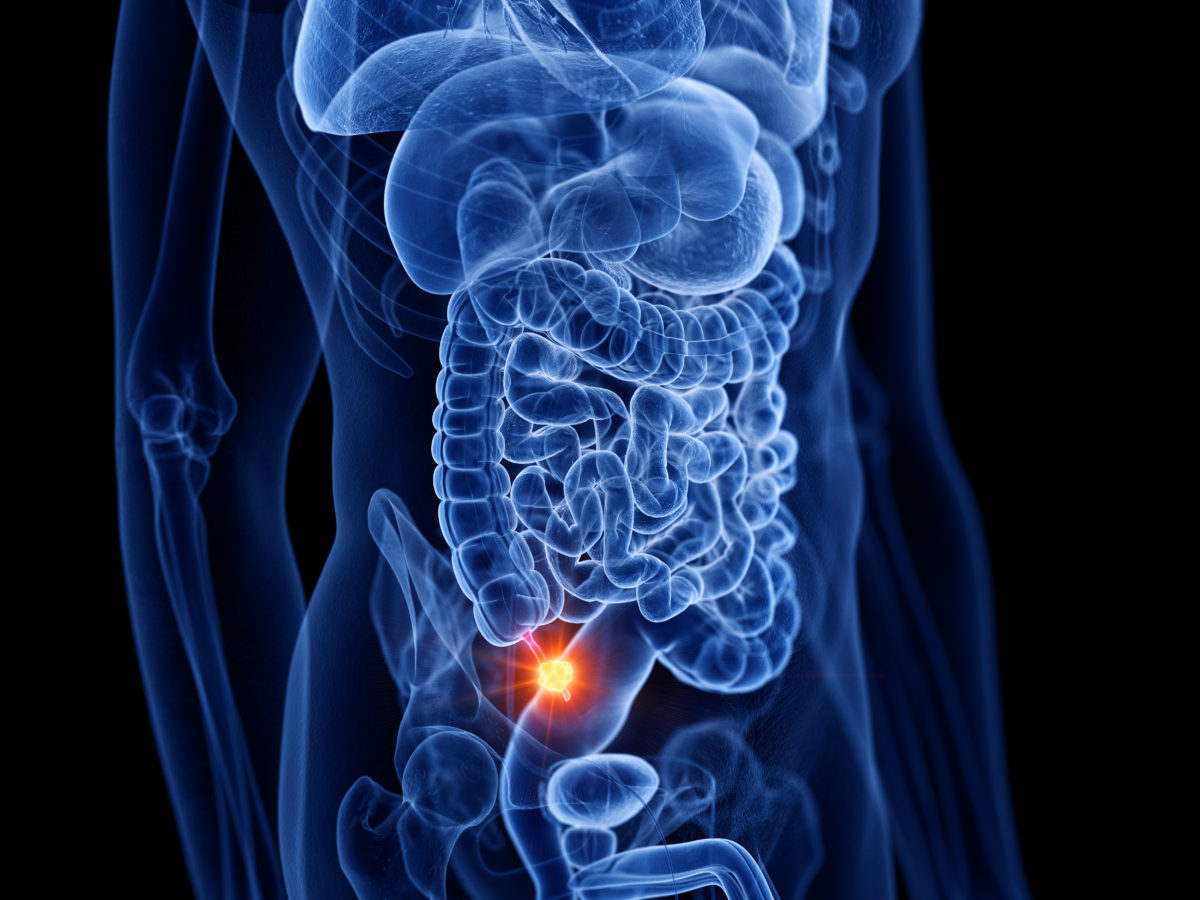
3d rendered medically accurate illustration of appendix
Image Credit: SciePro - Adobe Stock

The Myth of Vestigial Organs and Bad Design: Why Darwinism Is False

Note: This is Part 5 in a series reviewing Jerry Coyne’s Why Evolution Is True. Read Part 1 here, Part 2 here, Part 3 here, and Part 4 here. Darwin argued in The Origin of Species that the widespread occurrence of vestigial organs — organs that may have once had a function but are now useless — is evidence against creation. “On the view of each organism with all its separate parts having been specially created, how utterly inexplicable is it that organs bearing the plain stamp of inutility … should so frequently occur.” But such organs, he argued, are readily explained by his theory: “On the view of descent with modification, we may conclude that the existence of organs Read More ›

Shoddy Engineering or Intelligent Design? Case of the Mouse’s Eye

We often hear from Darwinians that the biological world is replete with examples of shoddy engineering, or, as they prefer to put it, bad design. One such case of really poor construction is the inverted retina of the vertebrate eye. As we all know, the retina of our eyes is configured all wrong because the cells that gather photons, the rod photoreceptors, are behind two other tissue layers. Light first strikes the ganglion cells and then passes by or through the bipolar cells before reaching the rod photoreceptors. Surely, a child could have arranged the system better — so they tell us.

The problem with this story of supposed unintelligent design is that it is long on anthropomorphisms and short on evidence. Consider nocturnal mammals. Night vision for, say, a mouse is no small feat. Light intensities during night can be a million times less than those of the day, so the rod cells must be optimized — yes, optimized — to capture even the few stray photons that strike them. Given the backwards organization of the mouse’s retina, how is this scavenging of light accomplished? Part of the solution is that the ganglion and bipolar cell layers are thinner in mammals that are nocturnal. But other optimizations must also occur. Enter the cell nucleus and “junk” DNA.

Only around 1.5 percent of mammalian DNA encodes proteins. Since it has become lore to equate protein-coding regions of the genome with “genes” and “information,” the remaining approximately 98.5 percent of DNA has been dismissed as junk. Yet, for what is purported to be mere genetic gibberish, it is strikingly ordered along the length of the chromosome. Like the barcodes on consumer items that we are all familiar with, each chromosome has a particular banding pattern. This pattern reflects how different types of DNA sequences are linearly distributed. The “core” of a mammalian chromosome, the centromere, and the genomic segments that frame it largely consist of long tracks of species-specific repetitive elements — these areas give rise to “C-bands” after a chemical stain has been applied. Then, alternating along the chromosome arms are two other kinds of bands that appear after different staining procedures. One called “R-bands” is rich in protein-coding genes and a particular class of retrotransposon called SINEs (for Short Interspersed Nuclear Elements). SINE sequence families are restricted to certain taxonomic groups. The other is termed “G-bands” and it has a high concentration of another class of retrotransposon called LINEs (for Long Interspersed Nuclear Elements), that can also be used to distinguish between species. Finally, the ends of the chromosome, telomeres, are comprised of a completely different set of repetitive DNA sequences.

Read More ›

When “Junk DNA” Isn’t Junk: Farewell to a Darwinist Standard Response

In the Darwinist repertoire, a standard response to evidence of design in the genome is to point to the existence of “junk DNA.” What is it doing there, if purposeful design really is detectable in the history of life’s development? Of course this assumes that the “junk” really is junk. That assumption has been cast increasingly into doubt. New research just out in the journal Nature Genetics finds evidence that genetic elements previously thought of as rubbish are anything but that. The research describes tiny strands of RNA, previously thought to be junk, that now turn out to play a role in gene expression. Another finding by Dr. Geoff Faulkner shows that “retrotransposons,” a further variety of “junk” as the dogma previously taught, play a similar role.

Nearly half of the mammalian genome (less than 45 percent) is comprised of DNA sequences thought for decades to be but evolutionary flotsam and jetsam or junk: retrotransposons. Found along every one of our chromosomes, retrotransposons mobilize within our cells via RNA copies, copies that are then converted into DNA and afterward pasted into different DNA sites. To be sure, the vast majority of these “jumping gene” duplicates, well over a million elements, appear to be little more than pseudogenes, defective images of master templates that merely drift by mutations into a phylogenetic oblivion.

Retrotransposons appear to fit the neo-Darwinian story perfectly. First, the master templates of these elements seem to serve no other purpose than to promote their own replication at the expense of the cell, and so, by the criteria of Richard Dawkins’s 1976 book The Selfish Gene, retrotransposons are selfish genes par excellence. Second, the DNA progeny of such “endogenous viruses” are without a doubt marred in various ways, as just mentioned. Relative to the original, in other words, they are junk. Third, a retrotransposon inserted into a chromosome can disrupt normal gene functions, and mutations due to these sequences have long been detected. Fourth, only a comparative few retrotransposons are conserved across different groups of mammals, with most of the DNA families being restricted to certain families, genera, or even species. Humans and mice as well as mice and rats can readily be separated solely on the basis of their retrotransposon profiles. So the bulk of these sequences do not merit being retained by natural selection.

Read More ›

Nature Paper Shows “Junk-RNA” Going the Same Direction as “Junk-DNA”

When large-scale function was detected for non-coding DNA (once called “junk” DNA) Darwinists, knowing that their viewpoint had long boasted that junk-DNA was evidence for common ancestry and that they were losing that argument, responded in one of two ways: Some sought to rewrite history by claiming that evolutionary biology predicted all along that we’d find function for junk-DNA. Others, however, pushed the “junk” back to RNA. They effectively argued, “Sure, we know that most of the genome is being transcribed into RNA, but that doesn’t mean that the RNAs have function. Much of the transcriptome might in fact be junk.” Evolutionist biochemist Larry Moran, for example, argued that either “[t]he so-called transcripts are just noise from accidental transcription” or Read More ›

illustration-of-man-playing-tennis-with-his-shadow-surreal-a-363822258-stockpack-adobestock
illustration of man playing tennis with his shadow, surreal abstract concept
Image Credit: fran_kie - Adobe Stock

Ayala Plays Both Sides

Many readers of Scientific American Magazine have recently written me about the new article, “The Christian Man’s Evolution: How Darwinism and Faith Can Coexist.” Most have pointed out how fatuous Ayala’s view of God comes across. As author Sally Lehrman writes, seeming to think this very clever, Ayala (and “science-savvy Christian theologians”) “present a God that is continuously engaged in the creative process through undirected natural selection.” (bolding added)This line, of course, prompted much talk of square circles and Christian atheists, as well it should. Writes one reader, “You mean: ‘a God who is continuously engaged’ by being completely unengaged?” But apart from the clear contradiction in this thinking, Ayala demonstrates an inconsistency we find repeatedly from Darwinists who are Read More ›

Study Challenges Two Icons of Evolution: Functional Junk DNA Shows “Surprising” Genetic Differences Between Humans and Apes

In 2004, cognitive scientist Keith E. Stanovich took the position that junk DNA “is essentially a parasite,” and that “junk DNA is a puzzle only if we are clinging to the assumption that our genes are there to do something for us.”1 In 2006, Michael Shermer asserted, “Rather than being intelligently designed, the human genome looks more and more like a mosaic of mutations, fragment copies, borrowed sequences, and discarded strings of DNA that were jerry-built over millions of years of evolution.”2 The following year, a human physiology textbook stated that “junk DNA” is “considered defective” and comprises “inherited sequences [that] perform no currently known ‘genetically useful’ purpose, yet they remain part of the chromosomes.”3 These sources promoting the classic Read More ›

“Large Scale” Function for Endogenous Retroviruses: Intelligent Design Prediction Fulfilled While Another Darwinist Argument Bites the Dust

ID predicts function because the basis for ID’s predictions is observations of how intelligent agents design things, and intelligent agents tend to design objects that perform some kind of function. Read More ›

Another Intelligent Design Prediction Fulfilled: Function for a Pseudogene

Darwinists have long made an argument from ignorance, where our lack of present knowledge of the function for a given biological structure is taken as evidence that there is no function and the structure is merely a vestige of evolutionary history.  Darwinists have commonly made this mistake with many types of “junk” DNA, now known to have function.  In contrast, intelligent agents design objects for a purpose, and therefore intelligent design predicts that biological structures will have function. Here’s where it gets interesting: Functionless structures may have been originally designed but were later rendered functionless by natural processes. For example, if you leave a laptop computer on the top of a mountain for 1000 years where it is exposed to Read More ›

A Response to Dr. Dawkins’ “The Information Challenge” (Part 3): The “Junk”-DNA Blunder

[Editor’s note: This was the third installment of a three-part series. The full article, A Response to Dr. Dawkins’ “The Information Challenge”, can be read here.] In Part 1 and Part 2 of this response to Richard Dawkins’ article, “The Information Challenge,” I explained why gene duplication is not an adequate explanation of how Darwinian processes can produce new information. But Dawkins’ article has other problems. He writes that “most of the capacity of the genome of any animal is not used to store useful information.” This is another good example demonstrating how Neo-Darwinism led may scientists to wrongly believe that non-coding DNA was largely junk. Dawkins’ statement is directly refuted by the findings of recent studies, which the Washington Read More ›

Will Darwinists Make the Same Mistake with RNA that They Made in Ignoring So-Called “Junk” DNA?

Yesterday the Boston Globe published an amazing and insightful article about DNA and what scientists are learning about the inner-workings of the cell. As it turns out, the more we learn, the more we realize how much more there is to learn.

“The picture that’s emerging” of how living cells actually operate and evolve “is so immensely more complicated than anyone imagined, it’s almost depressing,” Rigoutsos said.

One interesting thing that leapt out at me when reading this was the fact that, while many scientists now realize that it was a mistake to jump to the conclusion that there were massive amounts of “junk” in DNA (because they were trying to fit the research into a Darwinian model), they are on the verge of committing the same exact mistake all over again, this time with RNA.

No one knows what all that extra RNA is doing. It might be regulating genes in absolutely essential ways. Or it may be doing nothing of much importance: genetic busywork serving no real purpose.
Many researchers believe the truth falls somewhere in between.
“Half of it may be doing something very useful,” said Lander, who is also a professor of biology at MIT. “The other part may turn out to be, well, just junk – doing neither great good nor great harm.”

Read More ›

© Discovery Institute