







































Science and Culture Today Discovering Design in Nature
Topic

intellect

Bechly Stuttgart
Günter Bechly
Photo: Günter Bechly at the State Museum for Natural History in Stuttgart, via Discovery Institute.

To an Italian ID Group, Günter Bechly Explains His Remarkable Journey

Having opened his mind to the possibility of design, Dr. Bechly saw it everywhere. Read More ›
octopus
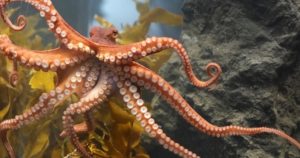
Photo credit: Pseudopanax at English Wikipedia [Public domain], from Wikimedia Commons.

Octopuses Get Emotional About Pain, Research Shows

The smartest of invertebrates, the octopus, once again prompts us to rethink what we believe to be the origin of intelligence. Read More ›
intelligence
Photo credit: ALAN DE LA CRUZ, via Unsplash.

If IQ Is Inherited, Is the Intellect Simply Material?

The widely accepted heritability of IQ — between 57 percent and 80 percent in twin studies — is strong evidence for the materiality of the intellect. Read More ›
clones

Egnor: How to Test Materialist Theories of Mind
A premise here is that abstract thought is a unique human endowment, so our colleague Wesley Smith will also find this of interest as a scientific test of human exceptionalism. Read More ›
alien hand 2

Dr. Egnor on Free Will and the “Alien Hand”

A reader asked whether this disproves the unity and freedom of the will. It appears that the patient wills two things simultaneously: getting dressed and getting undressed. Read More ›
Swan Lake 2

The Chin Enigma

A scientific theory that on principle refuses to see the obvious is an achievement of which only humans are capable. Read More ›
Bonobos_Lana_&_Kesi_2006_CALVIN_IMG_1301

Michael Egnor on Animal Generosity

The failure to understand the gulf that separates humans from animals, and humans from machines, is a source of confusion to rival almost any other. Read More ›
Kater Carlos (geb. 20.10.2011) - Ragdoll - RAG n 21 seal-tabby-c

The Representation Problem and the Immateriality of the Mind

If I think about a particular thing — my cat Tabby, for example — my actual cat Tabby isn’t in my brain. Read More ›

© Discovery Institute