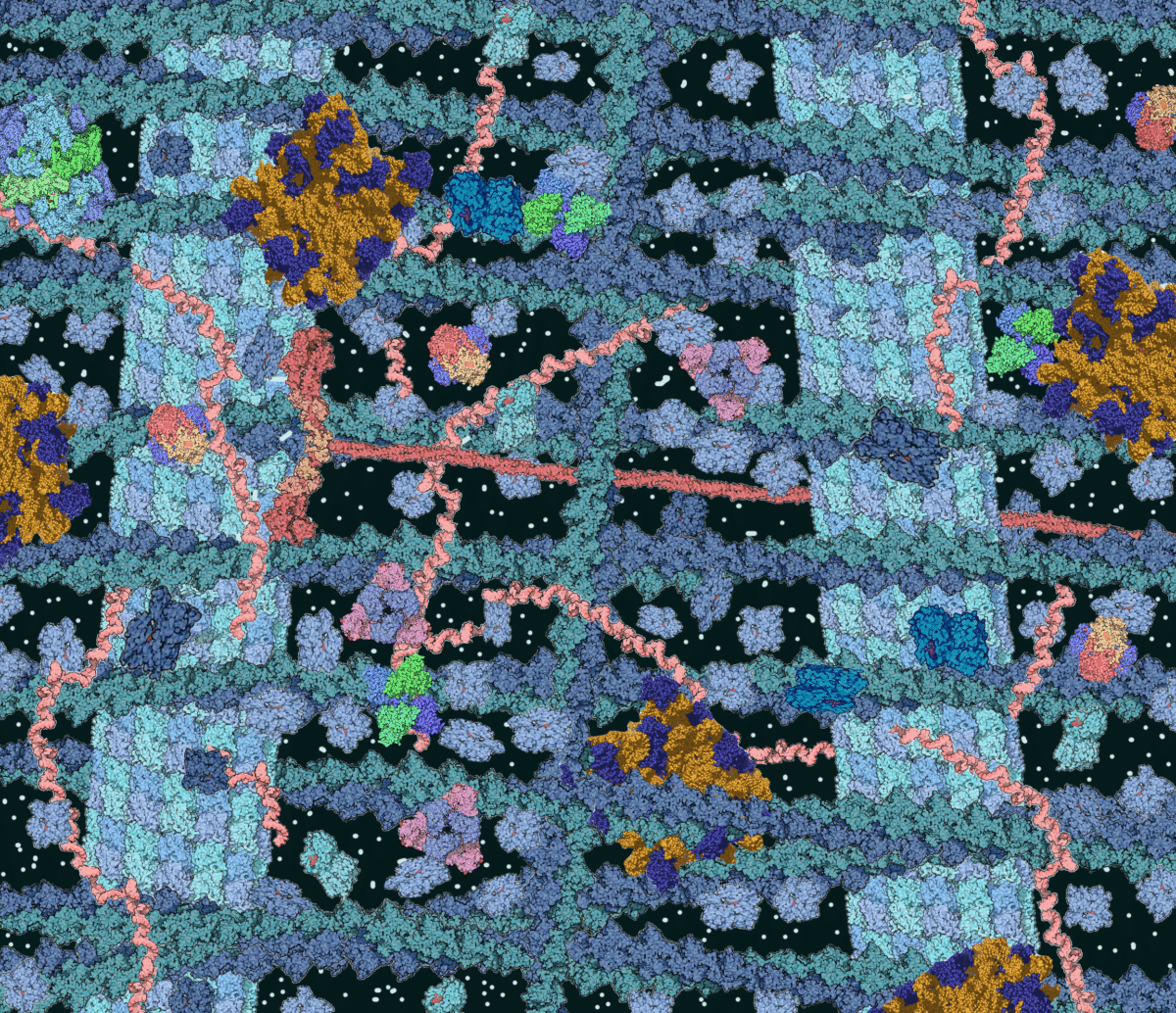
Cytosol Type post Author Stephen J. Iacoboni Date March 18, 2026 CategoriesBiologyIntelligent Design Tagged , 3D spatial organization, active matter, Aristotle, biology, cargo recognition, cascades, cells, condensates, cycles, cytoplasm, Darwin's Black Box, dissipative systems, DNA transcription, droplets, electrolytes, endoplasmic reticulum, Energy, enzyme activity, function, goal-directedness, Golgi bodies, Ilya Prigogine, intentionality, intracellular landscape, living systems, lysosomes, machines, macromolecules, matter, mechanism, medical school, Michael Behe, mitochondria, molecular biology, molecular grammar, naturalism, neo-Darwinian evolution, nucleus, organisms, physics, Riccardo Babic, scaffolding, Science and Culture Today, science of purpose, signaling cascades, St. Thomas Aquinas, structure, TCA cycle, telos, tornadoes, Trends in Biochemical Sciences, Velcro, whirlpools Active Matter: How Function Determines Structure Stephen J. Iacoboni March 18, 2026 Biology, Intelligent Design 8 As always, the approach of naturalism is to reduce the complexity of natural phenomena to basic physical laws. Read More ›
CanineNoseMacroPhoto Type post Author Howard Glicksman Date January 2, 2026 CategoriesIntelligent DesignMedicine Tagged , air, biochemistry, body, breathing, cardiac cycle, cycles, dust, human body, information, Krebs cycle, medical research, medical school, nasal cycle, nose, nostrils, olfaction, physicians, Popular Science, respiratory function, scientists, turbinates Olfaction in Three Dimensions: Introducing the Nasal Cycle Howard Glicksman January 2, 2026 Intelligent Design, Medicine 3 Besides the nose helping the mouth to bring in air, it also screens out dust and pollutants, while warming and adding water to prepare it for the lungs. Read More ›