genetic-science-close-up-dna-sequence-on-black-background-ge-784717212-stockpack-adobestock Type post Author Jonathan McLatchie Date July 29, 2025 CategoriesBiologyEvolutionIntelligent Design Tagged , Arginine, bacteria, bacterial cell, bacterial systems, biosynthesis, conformational change, DNA, enzymes, evolutionary origins, genes, lactose, operons, recurring design logic, regulatory systems, repressor, RNA polymerase, sequence homology, stop codons, structural motif, superfamily, transcriptional hierarchies, tryptophan Recurring Design Logic in Operon Regulation Jonathan McLatchie July 29, 2025 Biology, Evolution, Intelligent Design 3 As we see in these two examples, the design logic is the same. And yet, these two systems are not evolutionarily related to one another. Read More ›
bacterial flagellum Type post Author Casey Luskin Date August 3, 2024 CategoriesEvolutionIntelligent DesignOrigin of LifePhilosophyTechnology Tagged , actuators, bacterial cell, bacterial flagellum, chemotaxis, Discovering Intelligent Design, effectors, feedback, gears, genes, intelligent design, Irreducible Complexity, operating system, propeller, protons, Scott Minnich, sensors, Vanderbilt University, YouTubers Popular YouTube Science Educator Professes “Emotional” Response to “Amazing” Flagellum Casey Luskin August 3, 2024 Evolution, Intelligent Design, Origin of Life, Philosophy, Technology 8 In the video, engineer Destin Sandlin explains how he became captivated after watching an online animation of the bacterial flagellum. Read More ›
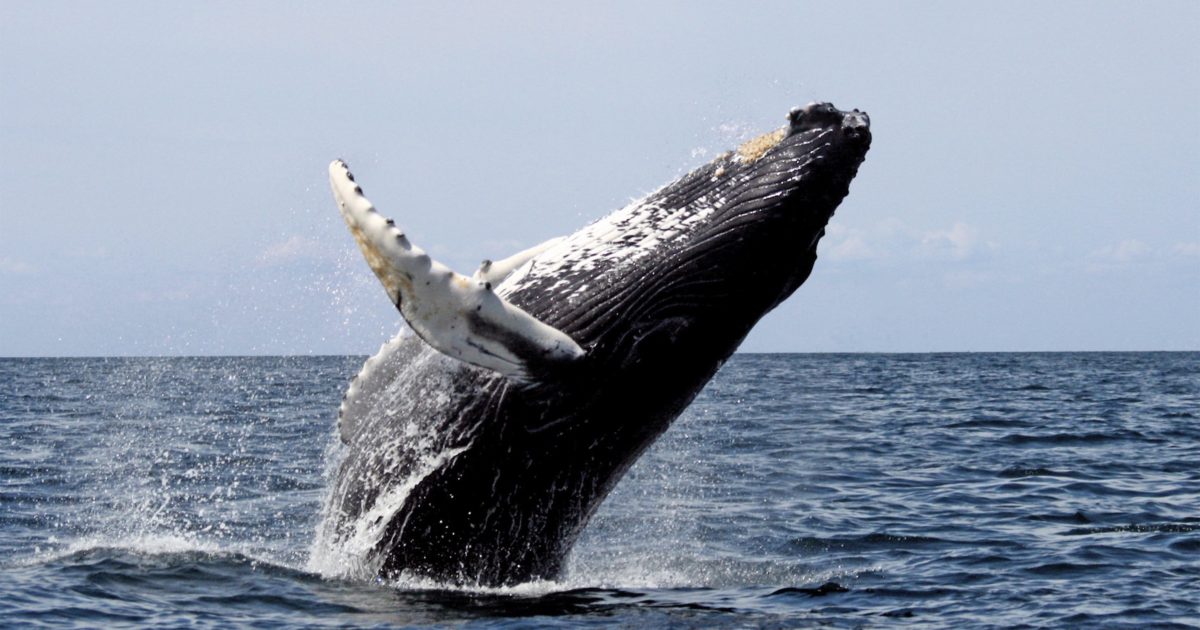
humpback whale Type post Author David Coppedge Date April 3, 2023 CategoriesBiologyEvolutionIntelligent Design Tagged , amino acids, ATP synthase, bacterial cell, cells, complexity, DNA, efficiency, evolution, Evolution: A Theory in Crisis, evolutionary biologists, humpback whale, Illustra Media, ingenuity, intelligent design, Living Waters, Michael Denton, molecular machines, natural selection, PNAS, proofreading, proteins, Richard Sternberg, salmon, Tim Standish, Uppsala University Denton’s “Puzzle of Perfection,” Then and Now David Coppedge April 3, 2023 Biology, Evolution, Intelligent Design 9 The flip side of Darwin’s proposal of natural selection as a designer substitute is that “things look designed — because they are designed.” Read More ›