Science and Culture Today Discovering Design in Nature

Science and Culture Today | Page 195 | Discovering Design in Nature

Tongan island
Photo credit: Miyasige Tosikazu, CC BY 2.0 <https://creativecommons.org/licenses/by/2.0>, via Wikimedia Commons.

Thoughts of Goodness in an Evolutionary World

What you’d expect is humans more or less on the level of animals — not greatly exceeding them in evil, or greatly transcending them in good.  Read More ›
consciousness
Image licensed via Adobe Stock.

The Miracle of Man: Reflections on the Westminster Conference

Dr. Miller gives a brief summary of his talk on the fine-tuning of human vision. We’ll be doing a full episode with him on that subject soon. Read More ›
Brian Miller in Africa
All photos courtesy of Casey Luskin.

Discovery Institute Speakers Get a Hearty Reception in Africa

At the University of Eldoret, in Kenya, we were greeted with — no joke — a band and a red carpet. Read More ›
Middle East from space
Photo credit: Stuart Rankin, via Flickr (cropped).

Thoughts of Evil in a Designed World

Nowhere in the animal world do we see evil that comes anywhere close to comparing with the unfortunate depths of evil displayed by humanity. Read More ›
near-death experience
Photo credit: Jr Korpa via Unsplash.

Are Near-Death Experiences Science Now?

The laughter has died down? Good. It was modern medicine — not religion — that created the hard evidence for credible near-death experiences. Read More ›
Rolex watch
Photo credit: Adam Bignell via Unsplash.

“Astonishing” Clocks Found in Bacteria
How could evolution bestow accurate timepieces on the simplest, most primitive life forms? It sounds like something William Paley would expect. Read More ›
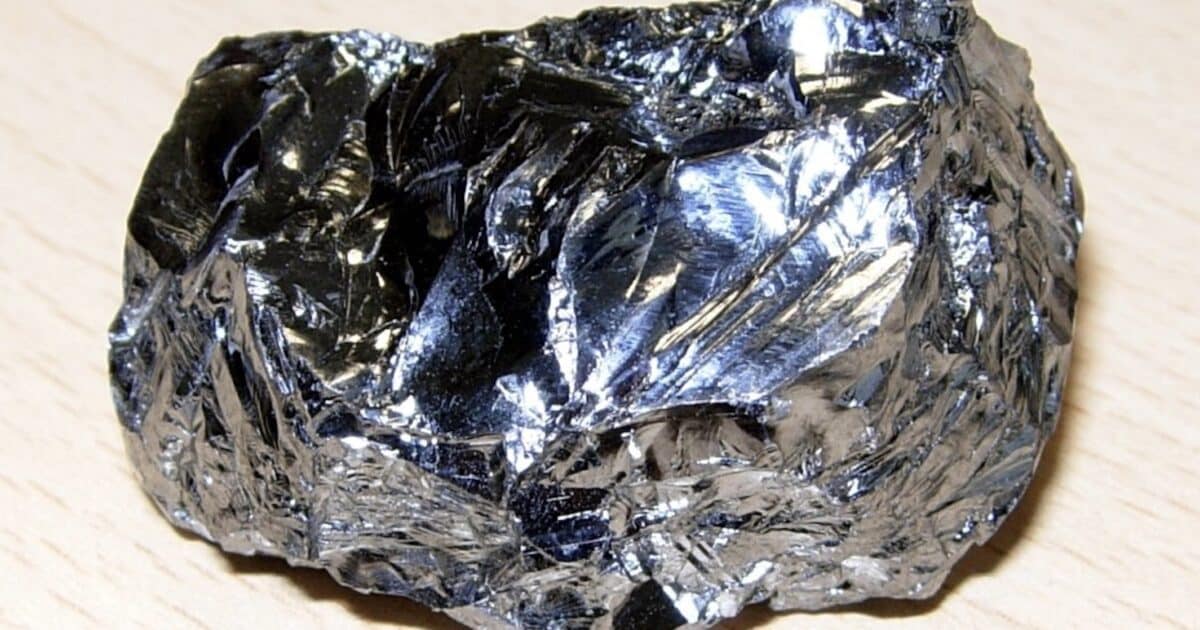
Silicon
Photo: Silicon, by Enricoros at English Wikipedia, Public domain, via Wikimedia Commons.

Electronic Technology Shows Foresight in Nature
The principal semiconductors are silicon and germanium; silicon’s abundance in the Earth’s crust is second only to oxygen. Read More ›
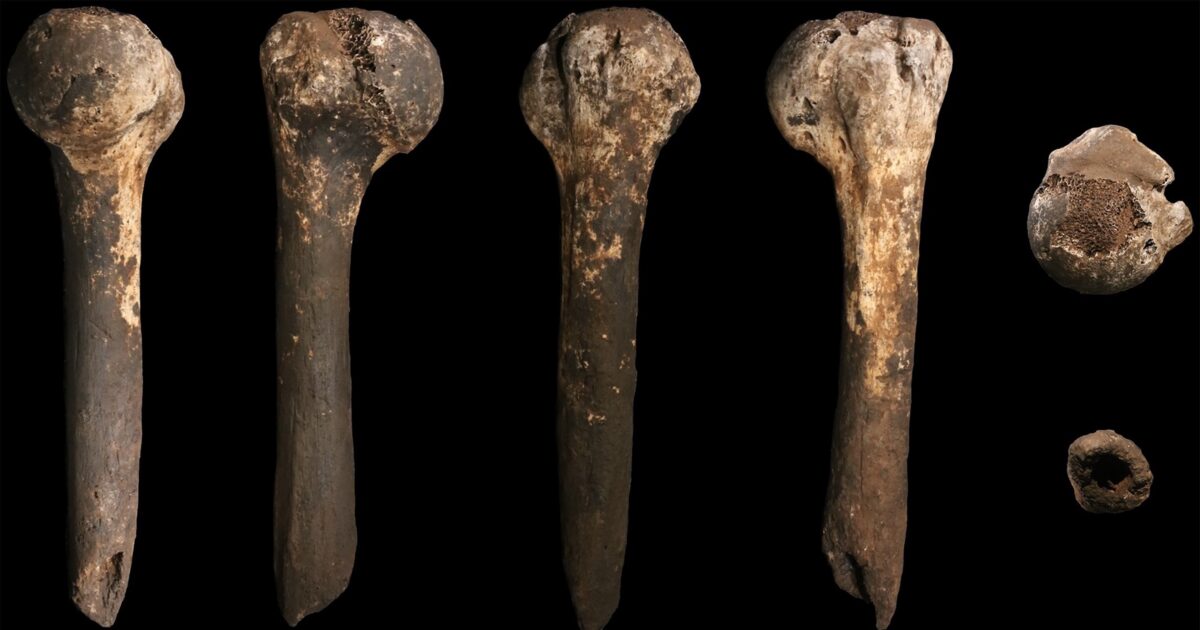
Homo naledi
Photo: A femur, by John Hawks, Marina Elliott, Peter Schmid, Steven E. Churchill, Darryl J. de Ruiter, Eric M. Roberts, Hannah Hilbert-Wolf, Heather M. Garvin, Scott A. Williams, Lucas K. Delezene, Elen M. Feuerriegel, Patrick Randolph-Quinney, Tracy L. Kivell, Myra F. Laird, Gaokgatlhe Tawane, Jeremy M. DeSilva, Shara E. Bailey, Juliet K. Brophy, Marc R. Meyer, Matthew M. Skinner, Matthew W. Tocheri, Caroline VanSickle, Christopher S. Walker, Timothy L. Campbell, Brian Kuhn, Ashley Kruger, Steven Tucker, Alia Gurtov, Nompumelelo Hlophe, Rick Hunter, Hannah Morris, Becca Peixotto, Maropeng Ramalepa, Dirk van Rooyen, Mathabela Tsikoane, Pedro Boshoff, Paul H.G.M. Dirks, Lee R. Berger, CC BY 4.0 <https://creativecommons.org/licenses/by/4.0>, via Wikimedia Commons.

Not Enough Evidence: Casey Luskin on Recent Homo naledi Claims

They claim that the small-brained species had high intelligence and engaged in activities like burying their dead, using fire, and engaging in cave wall art. Read More ›
C elegans
Photo source: Discovery Institute.

How NOT to Argue Against Irreducible Complexity

This roundworm produces non-flagellated sperm, though these sperm cells are amoeboid, meaning that they move by extending and retracting protrusions. Read More ›
covid
Photo credit: Surprising_Shots, via Pixabay.

How Media Helped to Corrupt Science

Traditional popular media, science media, and science journalists have all helped create a situation where we can’t afford to Trust the Science! Read More ›

© Discovery Institute