






































Editor’s note: We are delighted to present a new series by William Dembski, adapted from his Substack. This is the tenth post. Find the full series so far here, “My Personal History with Information.”
As initially proposed, specified complexity, though clearly overlapping my work, focused more on information as such than on statistical inference. Leslie Orgel, the origin-of-life researcher, introduced the term in 1973 in his book The Origins of Life. There he considered three types of situations:
It is possible to make a more fundamental distinction between living and nonliving things by examining their molecular structure and molecular behavior. In brief, living organisms are distinguished by their specified complexity. Crystals are usually taken as the prototypes of simple, well-specified structures because they consist of a very large number of identical molecules packed together in a uniform way. Lumps of granite or random mixtures of polymers are examples of structures which are complex but not specified. The crystals fail to qualify as living because they lack complexity; the mixtures of polymers fail to qualify because they lack specificity… These vague ideas can be made more precise by introducing the idea of information. (pp. 189–190)
Thaxton, Bradley, and Olsen had picked up on this definition in The Mystery of Life’s Origin (1985), likewise treating it in information-theoretic terms.
A Closer Connection
In 1996–97, I was still going through the review process for The Design Inference with Cambridge University Press trying to get it accepted there for publication. During that time, I started to make a closer connection between specified improbability as a statistical inference and specified complexity as a form of information, which at the time and subsequently I came also to call complex specified information.
One thing that helped make that connection was the following thought experiment: What would happen if you saw, as the output at the receiver end of a communication channel, something that was improbable and specified? Any coding function responsible for the output would presumably be simple and straightforward — you wouldn’t want it to require a lot of computation to go from input at one end of the channel to output at the other end. In general, whether for algorithmic coding functions or functions characterizing laws of nature, such as evolution equations for dynamical systems, the functions would be well-defined and simply describable.
Now the interesting thing that happens with functions in general is that if a function f maps a possibility space X to a possibility space Y, probabilities are preserved as they are pushed backward. So suppose some subset B of Y is improbable. Then any subset A of X that maps onto B, i.e., f(A) = B, is going to be at least as improbable. Moreover, because f is simple, if B is specified, then so is A in the sense that both will have short descriptions (there are some mathematical details here that I am eliding, such as that A needs to be the full inverse image of B).
To make this concrete, consider the following symbol string:
TOBEORNOTTOBETHATISTHEQUESTION
It is, at least intuitively, both complex (in the sense of improbable) and specified (in the sense of conforming to a simply described pattern — in this case a sentence from the Shakespeare play Hamlet). Now suppose this symbol string is encrypted as a Caesar cipher:
UPCFPSOPUUPCFUIBUJTUIFRVFTUJPO
In this case, each letter is moved up one notch, T to U, O to P, B to C, etc. The coding function that moves each letter down one notch, call it f, thus maps the second of these symbol strings to the first. The specified complexity of the first string is therefore transferred back to the second string. So, if the output exhibits specified complexity, so does the input.
But That’s Not All
The amount of specified complexity inputted and outputted is the same provided that all inputs that map to the output are accounted for (easy in this case because f is a one-to-one correspondence) and provided the descriptive complexity added by the function f doing the mapping is accounted for. With this accounting, specified complexity is conserved under functional transformation, and it is this that I initially called “conservation of information.” It is conservation of information for specified complexity.
I wrote up some preliminary thoughts in this vein for a paper titled “Intelligent Design as a Theory of Information,” which the American Scientific Affiliation published in its September 1997 issue of Perspectives on Science and Christian Faith. The paper arose out of a presentation I gave earlier that year at a conference in Austin, Texas (February 23–23, 1997), organized by University of Texas philosopher Rob Koons titled “Naturalism, Theism, and the Scientific Enterprise.”
Looking at a report of this event just now for the American Scientific Affiliation, I found this prescient note: “A growing number of young scientists, scholars and philosophers of science are staking their careers on the prospects of an emerging design paradigm, including Dembski at Notre Dame, Nelson at Chicago, Meyer at Whitworth, …, to name a few.” (Tidbit: I sent Noam Chomsky a copy of this paper, and somewhere in my files is a kind reply from him on MIT stationery.)
Conservation of Complex Specified Information
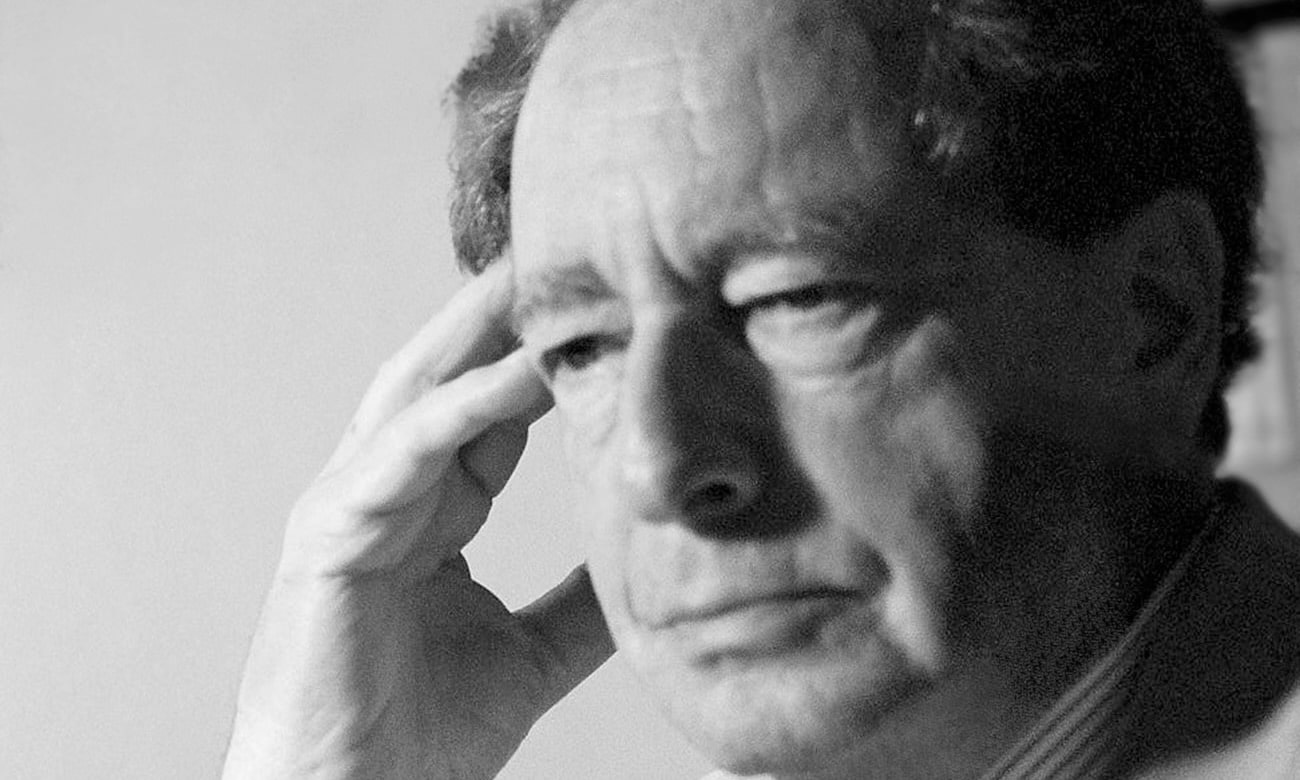
I subsequently expanded the argument in that 1997 paper in my 2002 book No Free Lunch: Why Specified Complexity Cannot Be Purchased Without Intelligence. The result holds up to this day. At least one scholar thought it was a big deal — mathematician, physicist, and philosopher of science Wolfgang Smith (1930–2024), who is pictured at the top — calling this conservation of specified complexity result “Dembski’s Theorem”:
Dembski’s theorem is epochal in its significance: it suffices, after all, to invalidate — in a single mathematical stroke — the mechanistic worldview that has dominated Western civilization since the Enlightenment. But in so doing, it raises a crucial question of its own: if horizontal causation cannot produce CSI, what is it, then, that can? Dembski and his colleagues seem to have opted for the notion of “intelligent design.” Yet one sees, on the basis of (*) [i.e., the claim that horizontal causation cannot give rise to irreducible wholeness], that this does not get to the heart of the matter. The fact is that Dembski’s theorem demonstrates the existence of a causation hitherto unsurmised by the scientific establishment, which in fact does not fit into our “flat” cosmology. The fact is that this hitherto unsurmised causation proves to be none other than what I had termed vertical causality in the context of the quantum measurement problem.
Smith was a friend and Discovery Institute fellow who passed away in 2024 at the age of 94. I always liked him immensely. I recall reading his book Cosmos and Transcendence with great interest early in my philosophy graduate student days, and contacting him about the book. He was helpful and friendly. When Steve Meyer was still teaching at Whitworth College in 1997, Paul Nelson and I visited him there in the fall. Retired from teaching, Smith was living in Idaho at the time, right across the border from Spokane, where Whitworth was. The four of us all had dinner one night. If smart phones had existed then, I’d have a picture of the four of us at the dinner table.
Natural Selection as a Probability Amplifier
Wolfgang Smith’s excitement about conservation of complex specified information or specified complexity was not widely shared. Part of the reason was that this conservation result required a fair amount of bookkeeping — keeping track of input and output probabilities, output specification, and then any pattern complexity being added by the function mapping inputs to outputs. But the bigger reason was that Darwinists regarded natural selection as a probability amplifier, rendering seemingly improbable events as highly probable. As statistician and neo-Darwinist R. A. Fisher put it back in the 1950s, writing about natural selection:
[I]t was Darwin’s chief contribution, not only to Biology but to the whole of natural science, to have brought to light a process by which contingencies a priori improbable, are given, in the process of time, an increasing probability, until it is their non-occurrence rather than their occurrence which becomes highly improbable. [For this quote and the full context and discussion surrounding it, see my Substack piece titled “The Intelligence of Natural Selection.”]
Consequently, no output of Darwinian evolution was ever highly improbable, and so it never produced real specified complexity, complexity here being understood as improbability (the greater the complexity, the smaller the corresponding probability). Supposedly, the improbability was apparent only until we understood the heavy probabilistic lifting that natural selection was doing. Consequently, “conservation of information” in my own writings and that of my colleagues who worked on it with me (Bob Marks, Winston Ewert, and George Montañez) came to mean something different by the term than what I had called conservation of information with respect to specified complexity, and which Wolfgang Smith called “Dembski’s Theorem.”
In effect, there ended up being two conservations of information, one for specified complexity and one for information generally. The one for specified complexity is nowadays largely forgotten because the one for information generally plugs the hole in the first, namely, by making sense of what happens informationally when processes raise probabilities and thereby eliminate what previously would have been specified complexity.
Next, “’Displacement,’ or Offloading, and the Mysterious Million Dollars.”