






































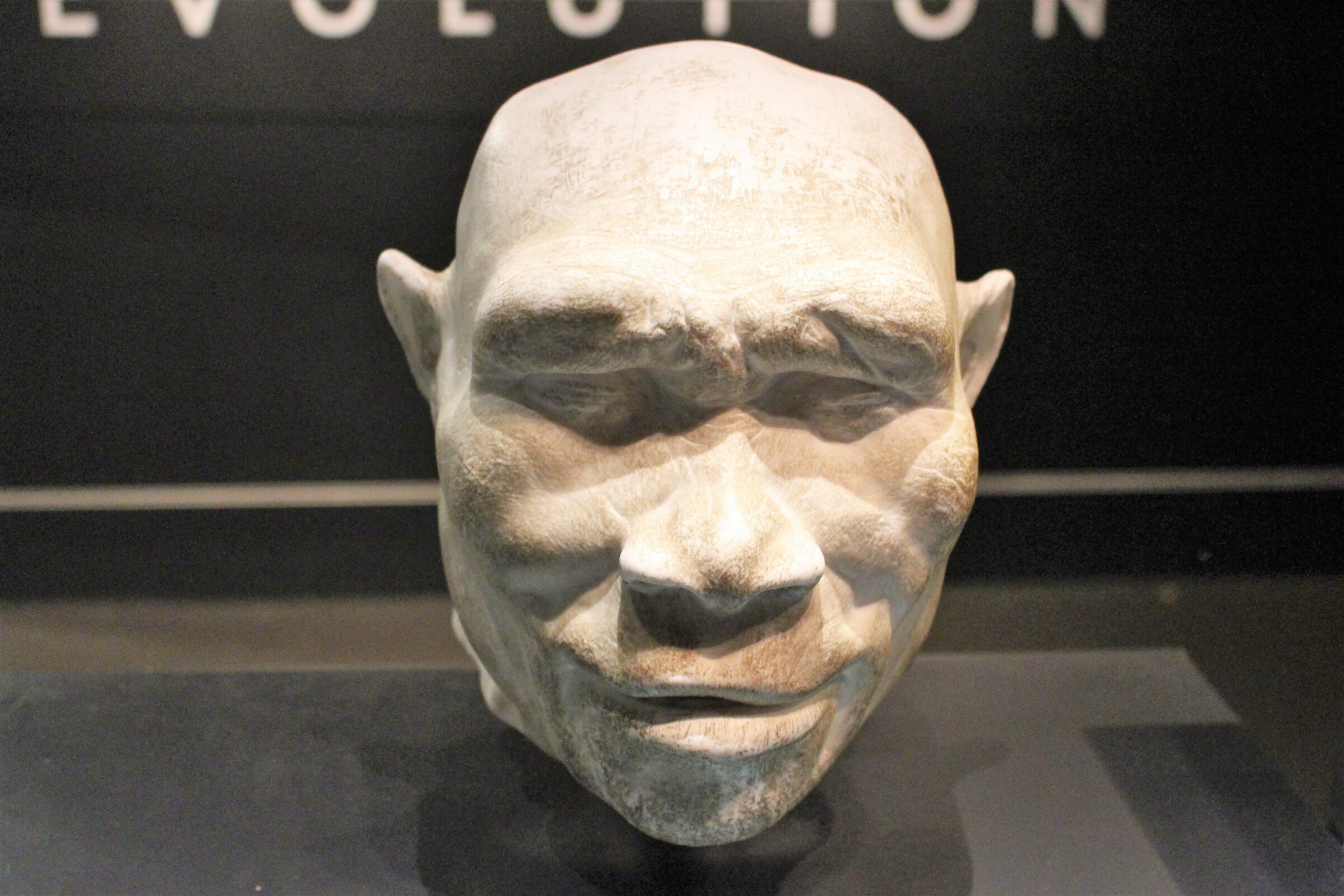
As Casey Luskin reported earlier today: “Paper Defends Spoken Language in Homo erectus.” I love the analysis by Casey. If the paper he writes about is correct, it strengthens the case that Homo erectus were simply human beings, albeit very early ones. The problem is that the next closest species to Homo erectus going back in the geological column is extremely ape-like. Where does this leave us?
The more we learn about Homo erectus, the more human-like they appear; and the more we learn about the most human-like hominids before Homo erectus, the more ape-like they appear. The gulf between the ape-like and human, in other words, is growing rather than shrinking. This trend supports the traditional view that humans were uniquely designed rather than evolving willy-nilly from ape-like ancestors.
For more on the subject, see Science and Human Origins (Discovery Institute Press) and the Science Uprising episode on “Human Evolution: The Monkey Bias,” both of which make this same point that there is a massive and widening gap between ape-like and human-like.