






































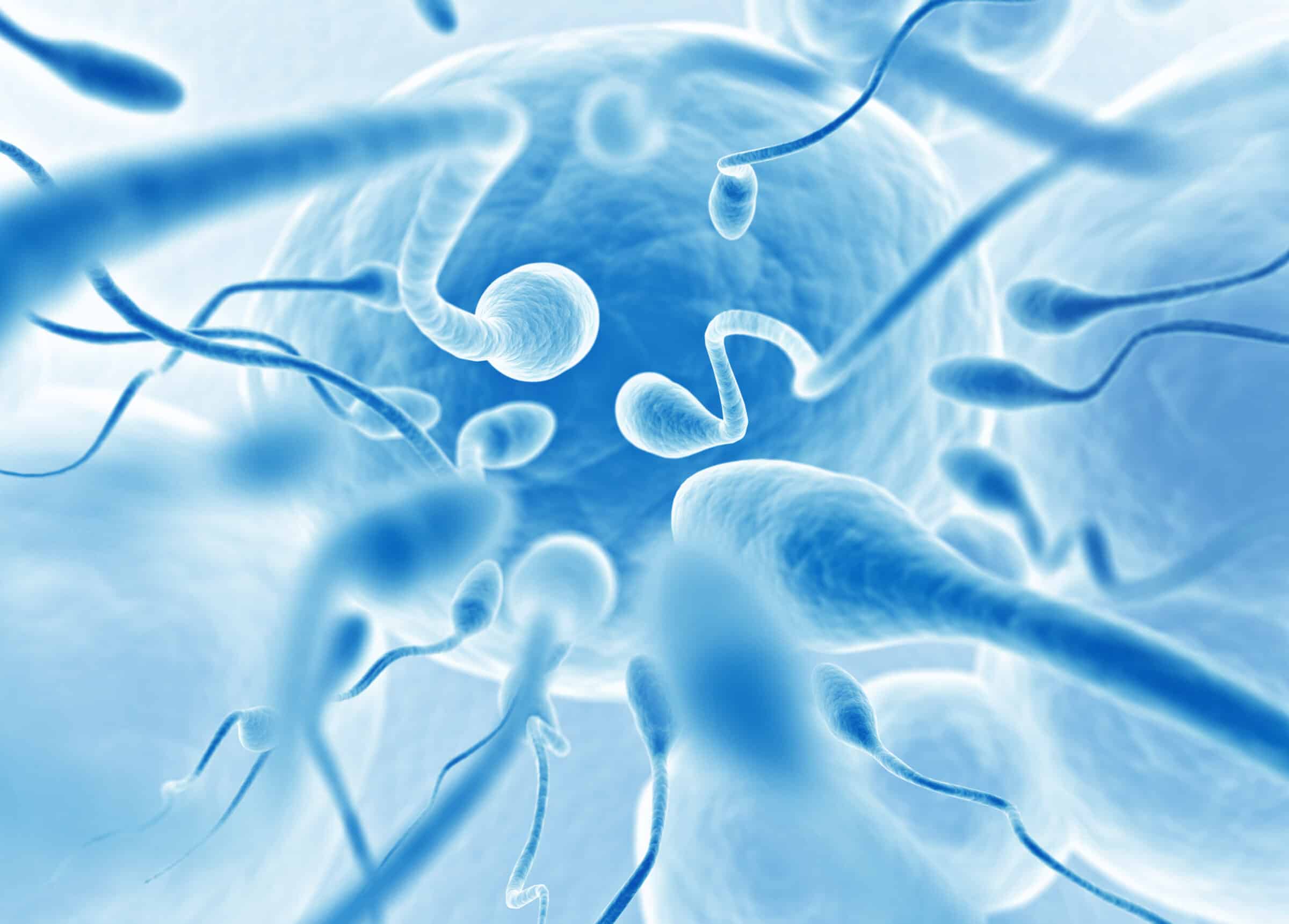
Sexual reproduction depends on an irreducibly complex core of components for its success. But can we really credit a gradual evolutionary process for this remarkable system? On a classic ID the Future episode, I continue a three-part discussion with Dr. Jonathan McLatchie on why sex is the queen of problems for evolutionary theory and why instead it bears the hallmarks of a system governed by forethought and engineering.
In Part 2, Dr. McLatchie delves into two more features of the sexual reproductive process: seminal fluid and sperm capacitation. He explains the role of seminal fluid in fertilization, as well as the critical changes sperm undergo to facilitate connection with an egg. McLatchie and I also review the concept of irreducible complexity and how it applies to sexual reproduction. “In evaluating whether a biological system is irreducibly complex,” I note, “the key is whether a process like natural selection could evolve the system in a gradual manner, or as Darwin put it, ‘by numerous, successive, slight modifications.’” McLatchie agrees, concluding that “the phenomenon of human reproduction points to a cause that possesses foresight, one that can visualize a foreordained outcome and bring everything together that’s needed to actualize that higher level purpose or end goal.”
Before closing, Dr. McLatchie refutes proposals put forth against the argument of irreducible complexity and highlights a helpful Bayesian approach to understanding the likelihood ratio of the argument for irreducible complexity.
Download the podcast or listen to it here. This is Part 2 of a three-part conversation. Listen to Part 1 and look out for Part 3.
Dig Deeper
Read the articles that inspired this interview:
- “The Design of the Seminal Fluid and Sperm Capacitation“
- “How NOT to Argue Against Irreducible Complexity“
Learn more about the concept of irreducible complexity in Michael Behe’s landmark book Darwin’s Black Box: The Biochemical Challenge to Evolution.