






































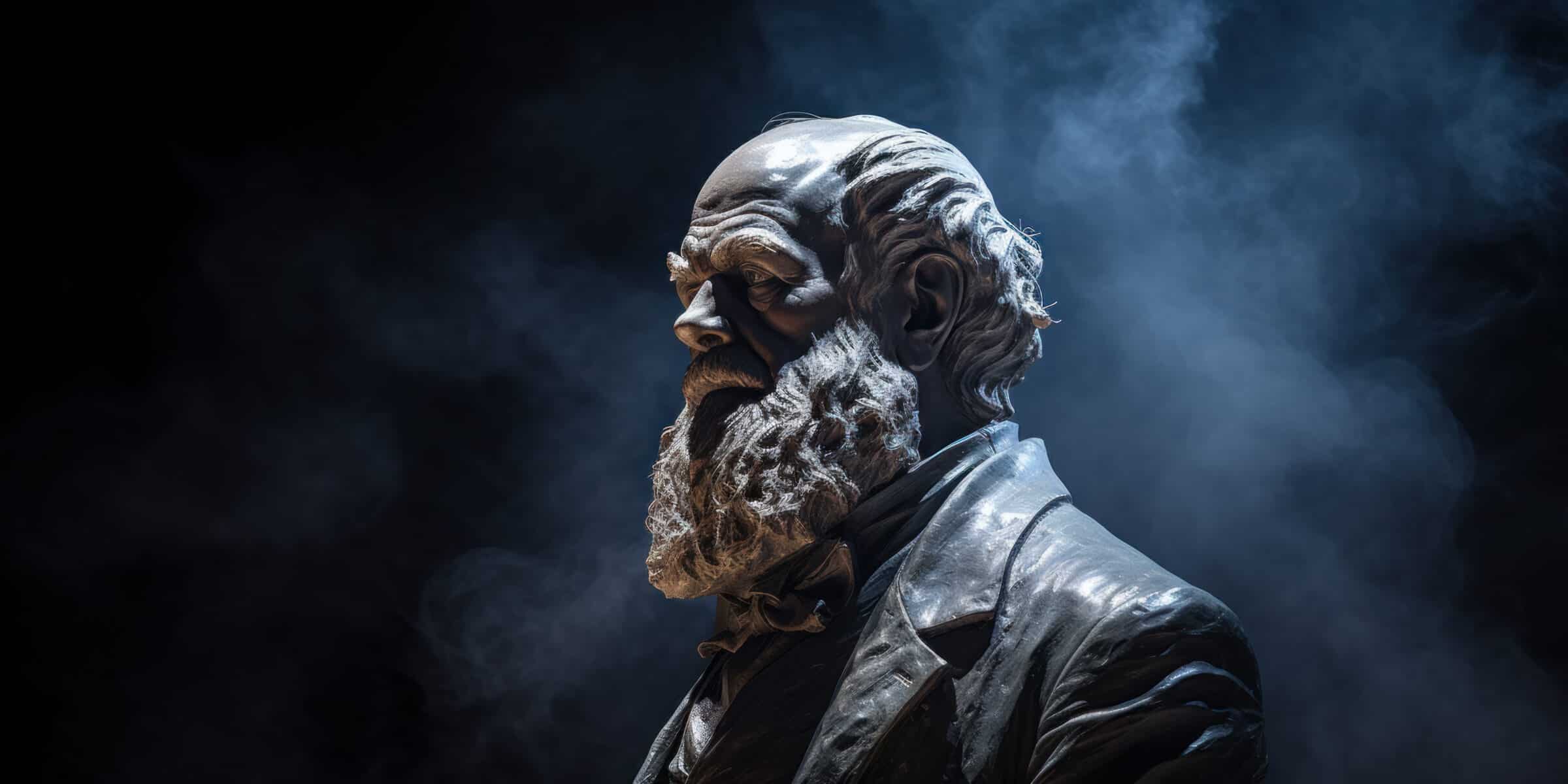
It might surprise you to learn that Charles Darwin’s theory of evolution by natural selection did not triumph on scientific grounds alone. There are other reasons beyond empirical science that gave it broad acceptance and enduring popularity. On a new episode of ID the Future, I explore those reasons as I begin a conversation with professor emeritus and author Neil Thomas about his new book False Messiah: Darwinism as the God That Failed. Over two episodes, Thomas discusses the conceptual flaws and historical roots of the theory, the responses of major early dissenters from it, and how modern science is undermining the Enlightenment worldview upon which Darwinism relies.
Thomas criticizes Darwin’s cardinal principle of natural selection as intellectually incoherent and empty of meaning. He reminds us that the term essentially refers to preservation; it is conservative, cannot create, and certainly cannot select. When Darwin’s mentor Sir Charles Lyell told him as much, Darwin chose not to modify his theory. Thomas says Darwin may have been deluding himself when he ascribed creative powers to natural selection, a deification that certainly does not match the evidence we have today.
 Image source: Discovery Institute Press.
A Wave of Sentiment
Thomas discusses the non-scientific reasons for early acceptance of Darwin’s theory. When it was published in 1859, it was carried by a wave of materialistic sentiment already over a century in the making. “People had somehow closed their account with the traditional God,” explains Thomas. “And when Darwin came along and said, well, there’s a way of explaining creation which bypasses God altogether, they said ‘Yes, yes, yes! That’s what we’re looking for!’” Thomas explains that historical forces, including changes in religious views from theism to deism, and subsequent dissatisfaction with a non-interventionist God, created a buildup that fueled the acceptance of Darwin’s scientific materialism and anti-theism.
The conversation rounds out with mention of the ideas that influenced Darwin’s thinking, including concepts from ancient atomism and Lucritianism as well as the theory of uniformitarianism espoused by Lyell. Add to that the pressure Darwin would have felt following in the footsteps of his naturalist grandfather Erasmus, and the pressing need to uphold the reputation of the Darwin family name. It all adds up to a high-stakes gamble for a man who was determined to make his theory stick despite evidential weaknesses and conceptual flaws.
Download the podcast or listen to it here. This is Part 1 of a two-part conversation. Look for Part 2 next!
Dig Deeper
- Get your copy of Neil Thomas’s new book False Messiah!
- More with Neil Thomas.