































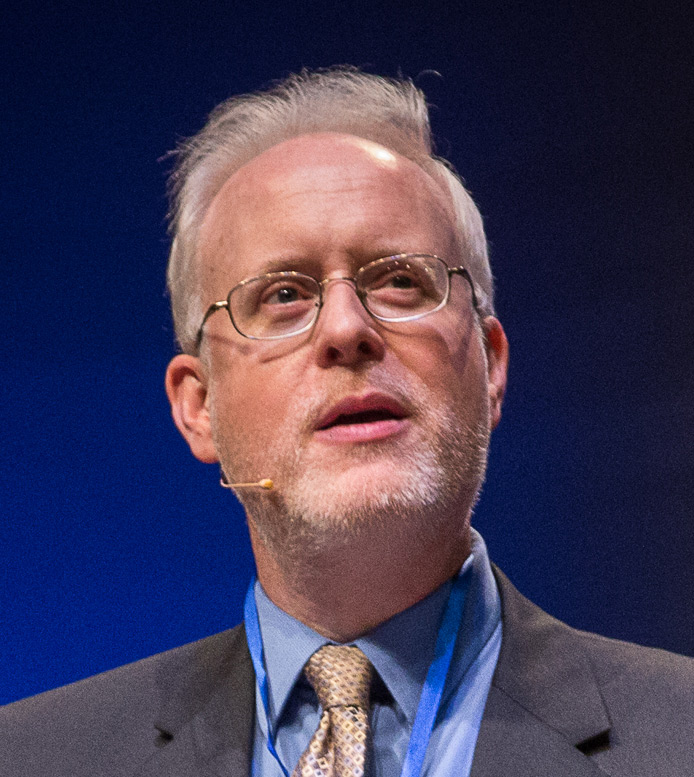



Stephen Meyer and William Lane Craig had a really deep conversation hosted by Frank Turek about the Kalam cosmological argument. (Kalam is a reference to ideas in medieval Islamic philosophy that Craig singlehandedly did much to revive.) How does the argument hold up today? It goes like this:
1. Everything that begins to exist has a cause.
2. The universe began to exist.
3. Therefore, the universe has a cause.
Dr. Meyer and Dr. Craig agree on the logic but take different approaches, in particular to that key second premise. Is the premise more of a scientific proposition, best defended as such (Meyer), or more of a metaphysical one, and best defended that way (Craig). I’m not a philosopher like these two men, but it seems to me that for the layman (who is the person you want to persuade, not the scientist or the theologian who is probably already wedded to a position), scientific evidence of a singular origin of the universe has an objective reality to it, with a consequent power that metaphysical arguments lack. As Meyer shows in Return of the God Hypothesis, despite desperate challenges, the Big Bang indeed seems increasingly well supported by science. In the paperback, out in April, he mentions that he has added a new afterword taking on fresh challenges to the Big Bang. They too fail and, on examination, point to intelligent design.
Watch or listen for yourself and see what you think. At the end, Turek challenges both Meyer and Craig to give their view on Young Earth Creationism. Each offers a very interesting and candid answer. Though many ID proponents, like Craig and Meyer, accept standard dating estimates, one need not do so to accept that presently observable data of nature justify an inference of intelligent involvement.