






































You are hereby double dared to parse the sentence at the end of the indented quote further down in this post, indicated in bold, in relation to the testing of phylogenetic hypotheses, such as:
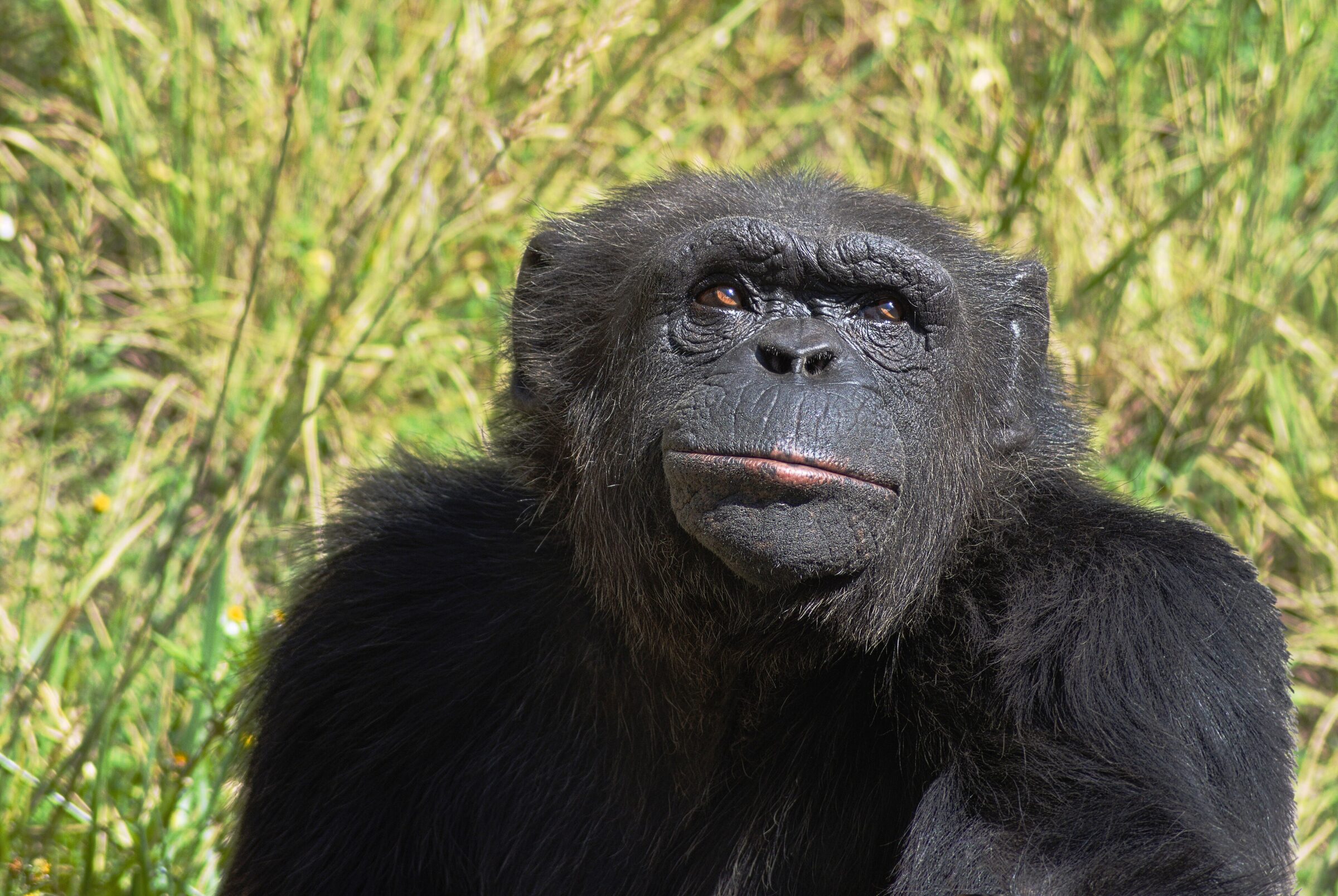
- Homo sapiens and Pan troglodytes share a common ancestor which was neither Homo nor Pan, but recognizably a hominid.
- All mammalian orders share a common ancestor which was itself a mammal.
- The phylum Chordata describes a true clade (i.e., all chordates share a common ancestor which was also a chordate).
- The Metazoa (animals) are monophyletic.
- LUCA, the Last Universal Common Ancestor, existed as an actual cell.
Here are the paragraphs leading up to the sentence, which concludes a recent paper (paywalled, unfortunately) at the journal Systematic Biology. From, “Common Ancestry, Contemporary Phylogenetics, and Process Ontology”:
Systematists have been implicitly operating under a specific theory of phylogeny (common ancestry) for over 150 years (Sober 2009). This Tree of Life paradigm has recently been challenged, with a Network of Life theory offered as a replacement. We argue that this dichotomous framing is unproductive and obscures more substantive, complex, and productive discussions in modern systematics. Instead, we promote a view of phylogeny that comprises both diverging and merging lineage histories — not either, but both. This view resists “flattening” phylogeny to a single dimension, and recalibrates how we empirically study and describe the processes and patterns of divergence and diversification, including where, when, why, and how they occur. For example, rather than treating “fuzzy” element boundaries as statistical noise, it treats them as data about complex causal dynamics and about interactions at all levels: genomes, traits, organisms, species, etc.
The multilevel, multimodal view of phylogeny we promote here is underwritten by an updated process ontology… This theoretical foundation provides resources that promote a richer view than trees vs. networks, and it solves several conceptual issues in phylogenetic theory. Phylogeny should be approached as a multidimensional, multimodal, processual system subject to continuous change and interaction — in other words, a hierarchy of stabilized processes actively maintained over different timescales. [Emphasis added.]
You can read that proposition a dozen times over and still be unable to say what it disallows in phylogenetic inference. That is, what does this definition rule out?