






































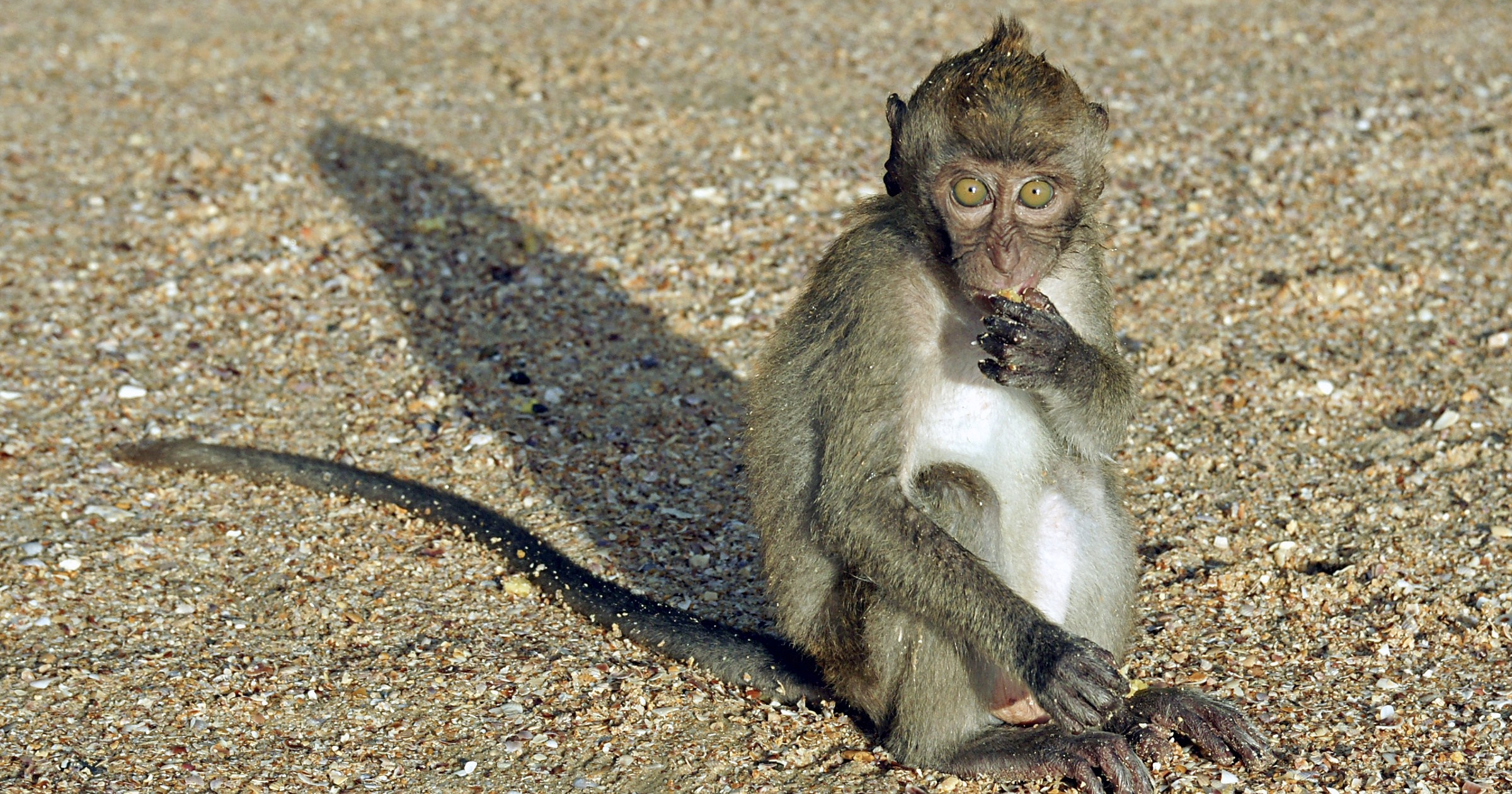
They said they wouldn’t do it, but of course they did. Scientists working in China — where else? — have constructed embryos that are part human and part monkey. From the Nature story:
In the study, researchers fertilized eggs extracted from cynomolgus monkeys (Macaca fascicularis) and grew them in culture. Six days after fertilization, the team injected 132 embryos with human extended pluripotent stem cells, which can grow into a range of cell types inside and outside an embryo. The embryos each developed unique combinations of human and monkey cells and deteriorated at varying rates: 11 days after fertilization, 91 were alive; this dropped to 12 embryos at day 17 and 3 embryos at day 19.
“Outsourcing Ethics”
This is getting far out of hand. First, U.S. and other Western scientists go to China to conduct experiments for which they could not get government funding — a rush to the lowest common denominator that Stanford bioethicist William Hurlbut calls “outsourcing ethics.”
Second, this work cuts across crucial moral boundaries. These human-monkey cells would not have just been bone or kidney tissue, but also brain neurons. Moreover, we are not talking mice or rats but monkeys, which have a much closer genetic affinity with humans. What might result from such a combining? I don’t think we should find out.
Third, even scientists are concerned about the ethical propriety of this work — but they resist binding international regulations. Indeed, the International Society of Stem Cell Research will be publishing new voluntary “guidelines” to steer such work:
Meanwhile, international guidelines are catching up to the field’s advances — next month, the International Society for Stem Cell Research (ISSCR) is expected to publish revised guidelines for stem-cell research. These will address nonhuman-primate and human chimaeras, says Hyun, who is leading an ISSCR committee discussing chimaeras. That group’s guidelines currently prohibit researchers from letting human–animal chimaeras mate. Also, the group recommends additional oversight when human cells could integrate with an animal host’s developing central nervous system.
Do you see how lax those standards are?
Long Past Time
But even these flacid guidelines are worthless if scientists are willing to risk social exclusion from peers to pursue experiments — as with the genetic engineering of born human babies which, not coincidentally, also happened in China.
The time is long past to create binding laws to govern and restrict biotechnology. I am certainly not confident in our political leadership’s willingness to effectively engage the issue or stand for rigorous ethical propriety. But somebody needs to. Otherwise scientists will simply slouch into Brave New World with both predictable and unknowable results.
Cross-posted at The Corner.