






































Science and Culture Today Discovering Design in Nature
ribosome scultupres
ribosome
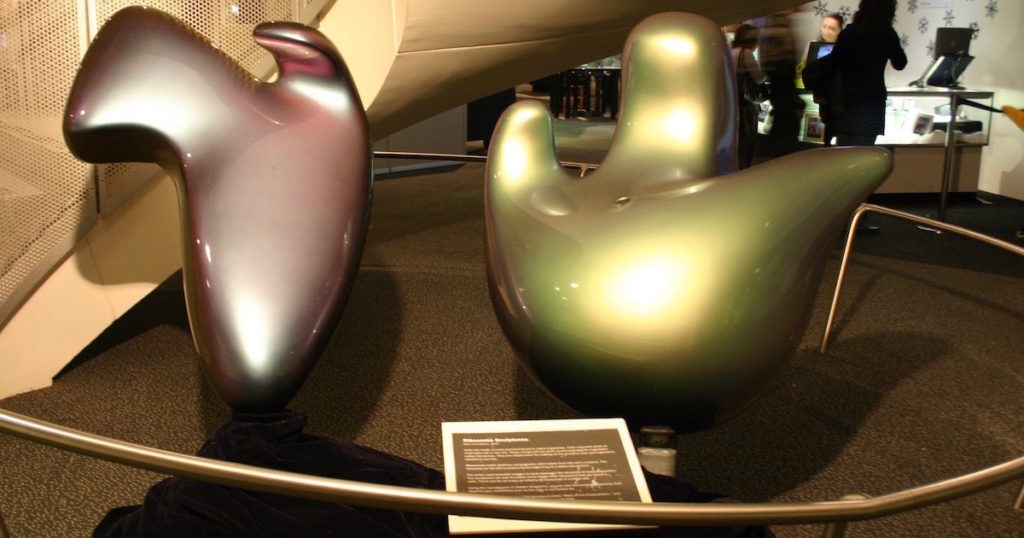
Photo: "Ribosome Sculptures," New York Hall of Science, Ryan Somma via Flickr (cropped).
Latest

A Tweet Representing the Core Challenge We Face

Categories
Evolution
Intelligent Design
Share
Facebook
Twitter/X
LinkedIn
Flipboard
Print
Email

Christian Landry is the Principal Investigator of a lab at Laval University in Quebec, doing really interesting work on cellular networks, the origin of novelties, and evolutionary genomics. Like most academic biologists, he also teaches (cell biology, in his case). Here is a tweet from his Twitter feed, dated April 7:

https://twitter.com/landrychristian/status/1379868460264620035

But why remove “purpose?” Does that word hinder explaining cell function? Likely the answer is no, because Landry clearly loves the textbook.

He doesn’t like what “purpose” may entail philosophically. And there you have it — the challenge we face.

By the way, the purpose of ribosomes is to translate mRNA into protein. That’s an entirely natural use of “purpose,” and makes perfect sense. Try this instead: this large structure (don’t call it a machine, please!) just happens to bind to mRNA, and mirabile dictu, proteins emerge. Through a tunnel in the large subunit which regulates folding — oops, pardon the teleology, just happens to do something related to folding…

Madness.

Science and Culture

Science and Culture Today (SCT) provides original reporting and analysis about evolution, neuroscience, bioethics, intelligent design and other science-related fields, including breaking news about scientific research. It also covers the impact of science on culture and conflicts over free speech and academic freedom in science. Finally, it fact-checks and critiques media coverage of scientific issues.
Benefiting from Science & Culture Today?
Support the Center for Science and Culture and ensure that we can continue to publish counter-cultural commentary and original reporting and analysis on scientific research, evolution, neuroscience, bioethics, and intelligent design.

© Discovery Institute