






































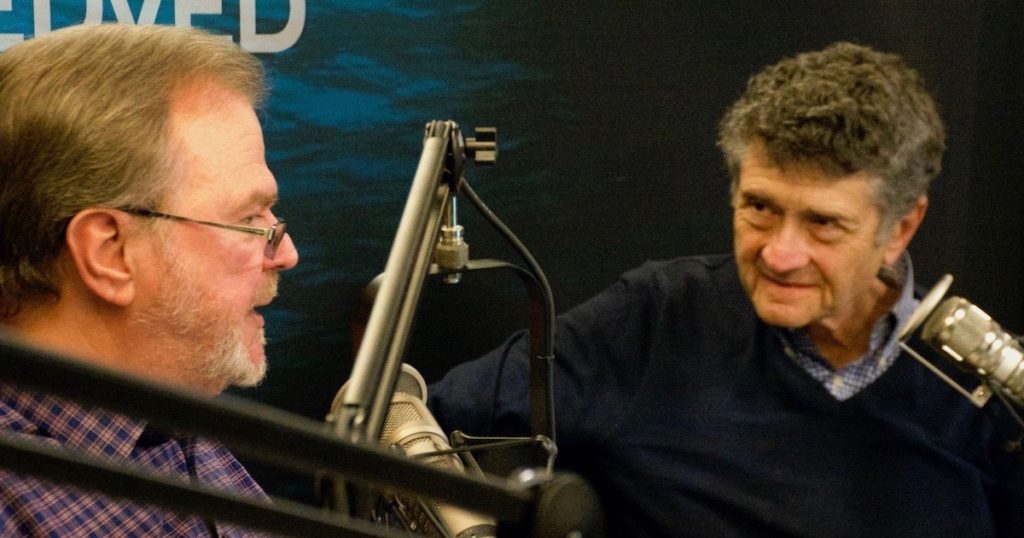
The status of human beings is contested in dual theaters — humans in comparison with computers, and with animals. Michael Medved and Robert Marks consider this double threat. It’s a new episode of Great Minds with Michael Medved, and the second part of a conversation with Dr. Robert Marks of Discovery Institute’s Walter Bradley Center for Natural & Artificial Intelligence. The podcast is up now in audio and video versions.
For all that understanding human exceptionalism is central to Discovery Institute’s mission, I’m not sure that until now I’ve heard a discussion, in one sitting, of the issue with respect to both animals and computers. Because when our contemporary culture seeks to demote humanity, as nothing special, it does so by insisting both that nothing much (other than the chin, that chance evolutionary “spandrel”!) distinguishes us from beasts, and that computers are fast closing in on being able to replicate and exceed any human achievement. We’ll soon be ruled by AI. That is mankind’s future!
Not so fast, explains Dr. Marks. There are fundamental, unbridgeable chasms on either side, animal and machine. The capacity for creativity, for one thing, stands permanently outside the reach of algorithms. This is a really interesting conversation. Wide-ranging, too, as Robert Marks tackles questions like what it means for something to be not just unknown but “unknowable.” If you appreciate in-depth discussion like this, without commercial interruptions, please consider supporting Great Minds with your generous donation now!