






































In the Wall Street Journal, our Discovery Institute colleague Jay Richards writes:
Experts have predicted the looming automation of everything, with machines replacing labor and putting half the population out of work. This forecast seems to follow from basic economic logic:
Economic growth is about getting more output from less input.
Labor is an input.
We are now devising powerful forms of automation, which will dilute our labor to homeopathic levels — especially in middle skill, blue-collar trades.
Therefore, much of the population will soon be jobless.
That inference is too simple. There’s disruption ahead, but other trends may fend off the job famine. Here’s one: As ever more goods become cheap commodities, the economic value of the human touch — of literal labor — goes up.
He asks:
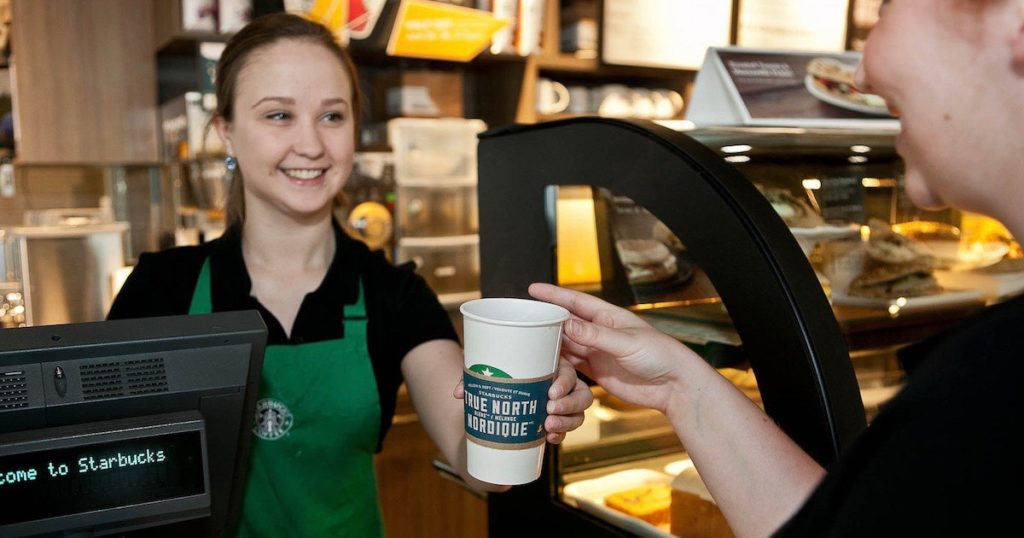
Will [Starbucks] baristas be replaced by robots? I doubt it. There are already excellent machine-made lattes at airline clubs. Yet members buy $5 grande cappuccinos before they enter the club. Clearly, they are buying something more than mere coffee when they do this.
Another example: Forty years ago, who would have predicted that customers at burger joints would want to know the name of the rancher and farmer who supplied their burger and fries? For the previous half-century, small-operation farms were losing out to large industrial farms. The productivity of these farms came at a cost: Hundreds of thousands of smaller family farms failed. But we got more food at much lower prices and more time and resources for other pursuits.
Yet as the price of food dropped, the demand for costly, organic, locally grown products exploded, first as niche luxuries and then as more widely enjoyed indulgences. Necessity no longer compels most people to engage in farm labor. But such work has started to re-emerge on the edges of a diversifying market. Midsize farms are disappearing in favor of giant ones — but also of tiny, off-grid artisanal farms, which for now mostly function as side gigs. That may change. There is growing demand for microbrewed beers, grass-finished beef, pampered pork, free-range chickens, specialty cheeses, small-batch whiskey, urban gardens and farmers markets.
These trends aren’t limited to food and drinks. Nor are they at odds with technology. On the contrary, much of the market for quirky and handmade goods depends on high-tech networks and the platforms that host them.
This is very interesting and testifies, perhaps, to what we’ve observed about the exceptional status of human beings. If we were only meat robots, purely material beings seeking ultimately material ends (or only fooling ourselves into thinking otherwise), this longing for the “human touch” would be difficult to explain.
I’ve seen this in my own family and in myself. As smart devices and glowing screens proliferate, there’s a kind of nausea at the smooth, addictive artificiality of it all that makes you wish for human things, old things, things done by hand. A prediction: For all the effort by foolish educators to push computers into the hands of kids too young to handle them without becoming screen addicts, you wait and see if there doesn’t come a day when many high-end parents will pay a premium for a school with human teachers only, and no damn computers at all to do the teacher’s job.
In fact, that’s already happening. It will spread.
No doubt evolutionary psychologists could a tell a story to explain this. They always can. Something about tribes of hunter-gatherers. The more natural inference is that human beings are special and we all know it. That’s a theme of Jay’s new book The Human Advantage: The Future of American Work in an Age of Smart Machines.