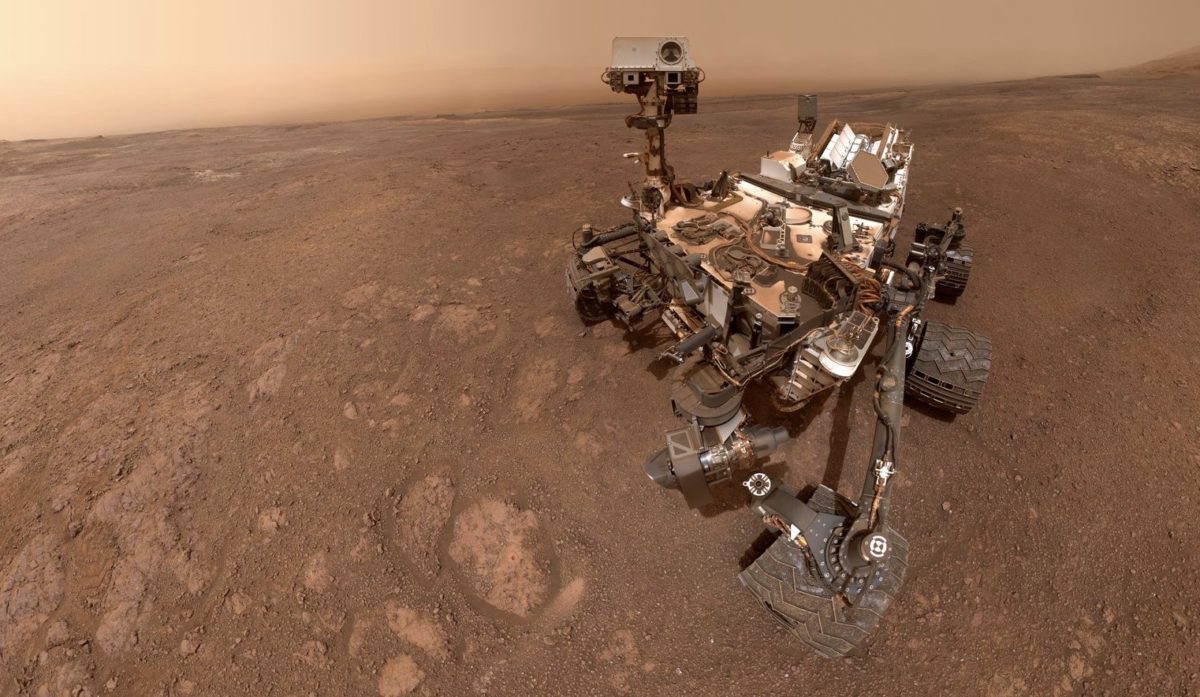
Curiosity rover on Mars Type post Author Michael Denton Date July 20, 2020 CategoriesIntelligent DesignLinguisticsPhysical Sciences Tagged , Boeing 747, Charles Darwin, Curiosity rover, fire, Fire-Maker series, galaxies, Mars, Stone Age Humans Were Designed to Harness Fire Michael Denton July 20, 2020 Intelligent Design, Linguistics, Physical Sciences 3 Of all the discoveries made on mankind’s long march to civilization, there was one primal discovery that made the realization of all else possible. Read More ›
bits and bytes Type post Author Ken Pedersen Date June 22, 2020 CategoriesIntelligent Design Tagged , amino acids, atheism, atoms, DNA, electromagnetism, elementary particles, Energy, Freeman Dyson, galaxies, gravity, human mind, hydrogen, information, intelligent design, matter, multiverse, physical reality, planets, proteins, quantum state, RNA, scientific materialism Bits and Bytes at the Bottom Ken Pedersen and Jonathan Witt June 22, 2020 Intelligent Design 8 A funny thing happened on the way to modern scientific materialism’s victory party. Read More ›
Odometer Type post Author Guillermo Gonzalez Date July 18, 2019 CategoriesAstronomyPhysical Sciences Tagged , __edited, earth, Earth’s crust, fossil fuels, galaxies, Hubble Space Telescope, humans, hydrogen, intelligent design, Milky Way, minerals, Moon, oxygen, solar system, stars Remembering the First Manned Moon Landing at 50; What Does the Future Hold? Guillermo Gonzalez July 18, 2019 Astronomy, Physical Sciences 7 I remember watching the Apollo moon landings on TV from 1969 to 1972 as a child. Read More ›
Hubble Type post Author Guillermo Gonzalez Date January 17, 2019 CategoriesAstronomyCosmologyPhysical Sciences Tagged , __k-review, Alan Guth, Albert Einstein, Alexander Vilenkin, atheism, Big Bang, Fred Hoyle, galaxies, General Theory of Relativity, Proceedings of the National Academy of Sciences, theism, universe Proper Credit — Who Discovered Hubble’s Law? Guillermo Gonzalez January 17, 2019 Astronomy, Cosmology, Physical Sciences 3 Many leading scientists of the day realized the implication of the cosmic expansion — there was a beginning! Read More ›