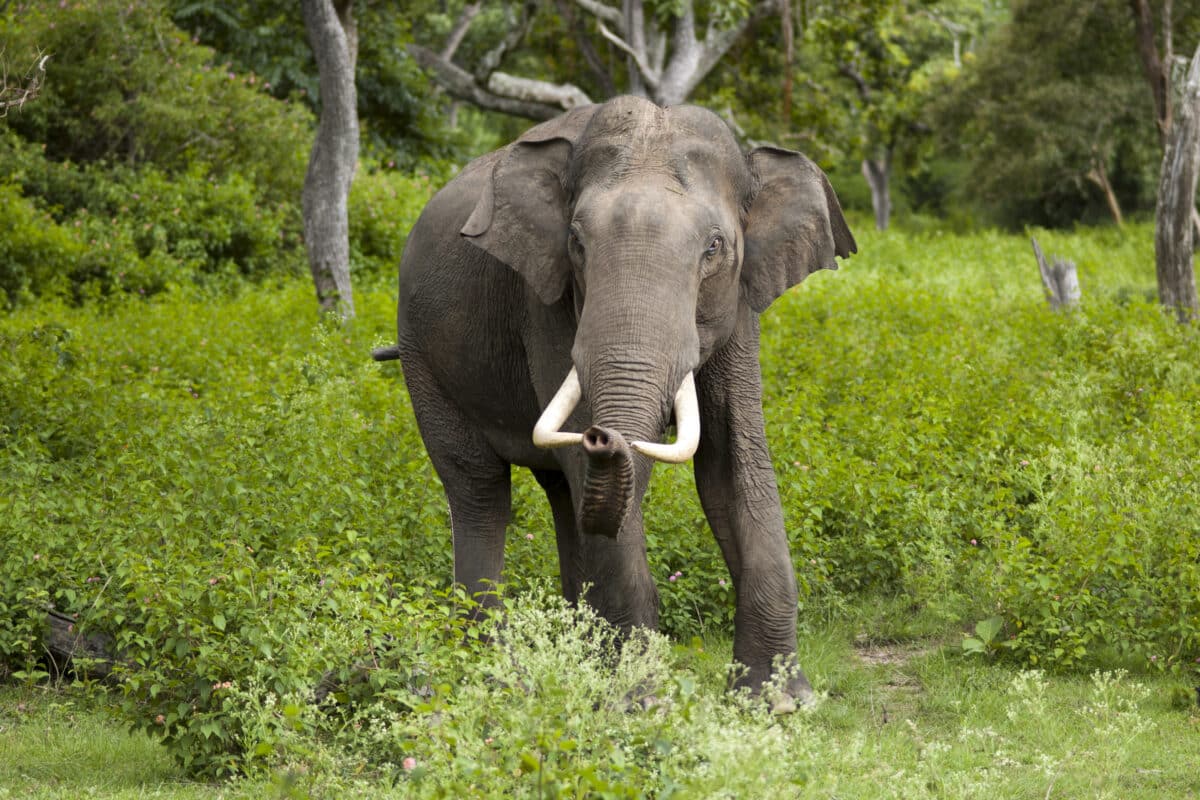
ElephasmaximusBandipur Type post Author Granville Sewell Date June 2, 2026 CategoriesEvolutionIntelligent DesignPaleontology Tagged , A Biologist’s View, African elephants, Asian elephants, Bible, Cambrian Explosion, Charles Darwin, chimps, classes, computers, creations, Darwinism, designs, evolution, Evolution after Darwin, explosions, fossil record, Genesis, George Gaylord Simpson, Gorilla gorilla, Günter Bechly, Homo sapiens, human exceptionalism, humans, intelligent design, Jean Rostand, orders, Pan paniscus, phyla, software, species pair problem, theists, TimeTree.org, University of Chicago Press Günter Bechly and the “Species Pair” Problem Granville Sewell June 2, 2026 Evolution, Intelligent Design, Paleontology 7 Asian elephants (like the one at the top of this page) and their African counterparts apparently diverged about 8 million years ago. Read More ›
Elephanttrunkbythewater Type post Author David Coppedge Date March 16, 2026 CategoriesBiologyIntelligent DesignZoology Tagged , amplitude, Andrew Schultz, Asian elephants, biology, cats, curb feelers, engineering, finite element analysis, frequency, interoception, Katherine Kuchenbecker, Marc S. Lavine, material intelligence, materials, Max Planck Institute, mechanosensors, medical devices, Merkel cells, neuroscience, peanut, potato chip, power, rat whiskers, rats, rodents, Science (journal), sensory neurons, stiffness gradient, vibrotactile signals, whisker breakage, whisker hairs Research Reveals Elephant’s Amazing Sense of Touch David Coppedge March 16, 2026 Biology, Intelligent Design, Zoology 8 Elephants can turn over a jeep and pull down a tree, but they can also pick up a potato chip without breaking it. Read More ›