
Science and Culture Today Discovering Design in Nature
Category

Cosmology

biology
Photo credit: Akin Cakiner, via Unsplash.

Is Fine-Tuning “More Extreme” in Biology or Cosmology?

As authors Thorvaldsen and Hössjer say, “Biology is inherently more complicated than the large-scale universe and so fine-tuning is even more a feature.” Read More ›
Gauger Education Day
Ann Gauger
Photo: ID Education Day, in Seattle.

Taking Applications Now to Be Our New Education and Outreach Coordinator!

What if ID scientists went about their work, uncovering evidence of purpose and meaning in biology and cosmology, but…no one ever heard about it? Read More ›
Stephen Meyer
Stephen Meyer
Photo: Stephen Meyer at the 2020 Dallas Conference on Science and Faith, by Chris Morgan.

Stephen Meyer Gets a Suitably Impressive New Website

By turning to physics and cosmology — the study of the universe and its origins — Meyer brings evidence not just for a designer but for a personal God. Read More ›
Iris Nebula
Photo: Iris Nebula, by NASA/ESA.

Oxford’s John Lennox: Battle Cry of the “Believing Scientist”
Many religiously affiliated people, including clergy, would prefer to let their faith float free of challenging questions about objective evidence. Read More ›
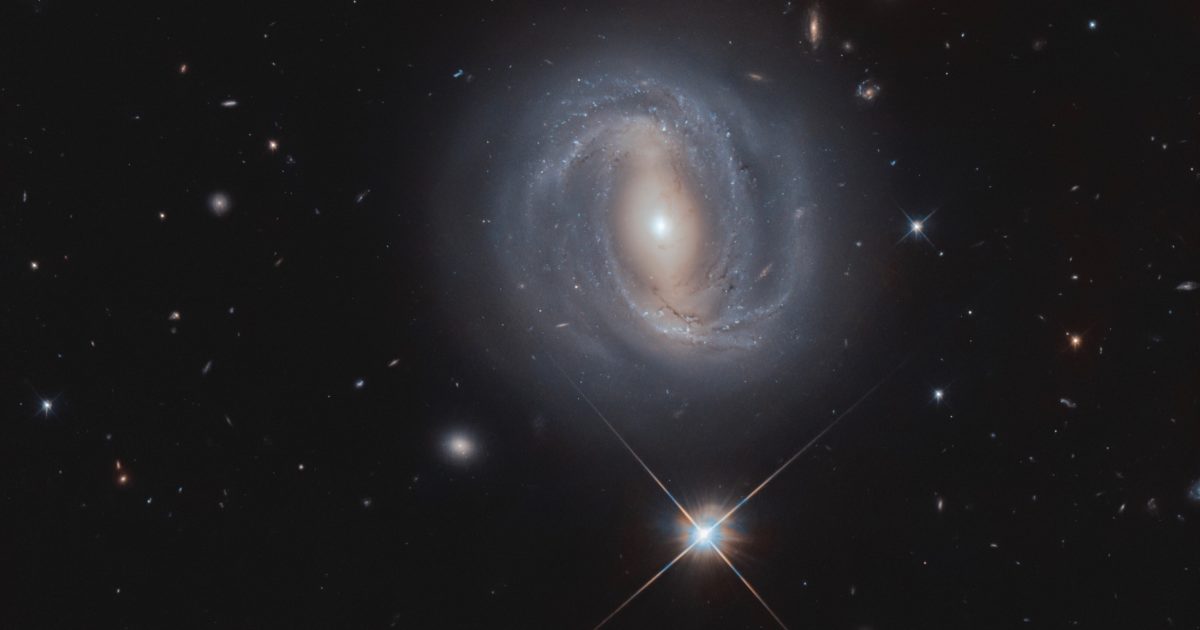
Galaxy NGC 4907
Galaxy NGC 4907
Photo credit: ESA/Hubble & NASA, M. Gregg.

Tour, Meyer on the Multiverse, and More

In this third of three episodes with Stephen Meyer, James Tour draws from questions sent in by listeners to his own podcast. Read More ›
Stephen Meyer
Return of the God Hypothesis

From Evidence of Cosmology and Physics, Meyer’s New Book Points to a Personal God

Good news! We now have a firm publication date of March 30, 2021. Read More ›
nordwood-themes-4z-YCTdvaks-unsplash

A Hot Seller from Discovery Institute Press, New Book Offers Intelligent Design “In a Nutshell”

The genesis of the slim and accessible Nutshell book was at a Discovery Institute Summer Seminar. Read More ›
A new composite image of the Crab Nebula features X-rays from Chandra, optical data from Hubble, and infrared data from Spitzer.
A new composite image of the Crab Nebula features X-rays from Chandra (blue and white), optical data from Hubble (purple), and infrared data from Spitzer (pink). Chandra has repeatedly observed the Crab since the telescope was launched into space in 1999. The Crab Nebula is powered by a quickly spinning, highly magnetized neutron star called a pulsar, which was formed when a massive star ran out of its nuclear fuel and collapsed. The combination of rapid rotation and a strong magnetic field in the Crab generates an intense electromagnetic field that creates jets of matter and anti-matter moving away from both the north and south poles of the pulsar, and an intense wind flowing out in the equatorial direction.

Recommended Reading: A Handbook of the Big Bang
Perhaps the publisher, Cambridge University Press, thought the title might help sales with a younger, hipper generation. Read More ›
DISCO_Foresight_FB_1200x630_2

Message from the Molecules — They Say “Intelligent Design”

You could have an interesting argument about which field of science will ultimately clinch the argument for intelligent design. Read More ›

© Discovery Institute