






































Biology
Not in the Genes: Embryonic Electric Fields
How Good is Phil Johnson’s Biology?
Monarch Butterfly Genome Begins to Open the Black Box
Lynn Margulis, Acclaimed Biologist and Critic of Neo-Darwinism, RIP
Textbooks Cherry-Pick the Evidence for Evolution
Dante on the “Angelic Butterfly”
“Junk DNA” Takes Yet More Heavy Blows
A paper has just been published in Nature which uncovers a host of new coding-independent functions for pseudogene mRNAs, including a role in tumor regulation. More exciting is that Poliseno et al. describe an entirely new regulatory function of RNA. This stands in contrast to conventional wisdom which maintains that the only function of mRNAs is encoding for proteins. According to the abstract, The canonical role of messenger RNA (mRNA) is to deliver protein-coding information to sites of protein synthesis. However, given that microRNAs bind to RNAs, we hypothesized that RNAs could possess a regulatory role that relies on their ability to compete for microRNA binding, independently of their protein-coding function. As a model for the protein-coding-independent role of RNAs, Read More ›
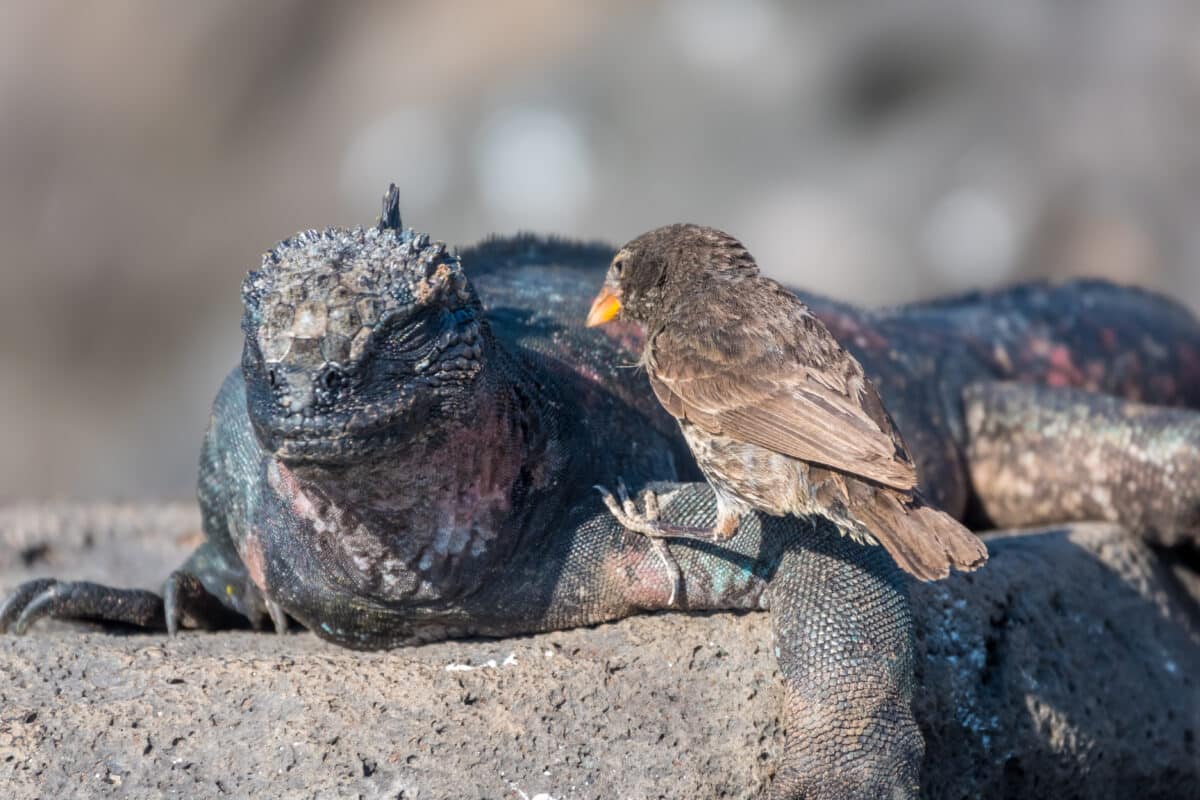
Wired Science: One Long Bluff
According to a recent online report from Wired Science, “On one of the Galápagos islands whose finches shaped the theories of a young Charles Darwin, biologists have witnessed that elusive moment when a single species splits in two.” If it were true, this would be very important news. Evolutionary biologists have long recognized that Charles Darwin (despite the title of his most famous book) failed to solve what he called “the mystery of mysteries,” — the origin of species. Darwin argued that it happens by natural selection acting on small variations, but no one has ever observed the origin of a new species (“speciation”) by this process. Evolutionary biologist Keith Stewart Thomson wrote in 1997 that “a matter of unfinished Read More ›
The Frailty of the Darwinian Hypothesis, Part 2
In the previous post I described the debate among evolutionary biologists over the so-called adaptive hypothesis. Some biologists believe that natural selection has the power to drive evolution in adaptive directions, and that most changes that we observe in organisms are there because they confer some adaptive benefit. Other biologists believe that most of the changes we see in organisms over time are due to neutral, non-adaptive processes. You don’t need to take my word for the existence of this debate. Michael Lynch, an eminent evolutionary biologist, lays out the case against the power of natural selection in a paper called “The Frailty of the Adaptive Hypothesis,” 1 published a few years ago for an evolutionary symposium. In it he Read More ›