






































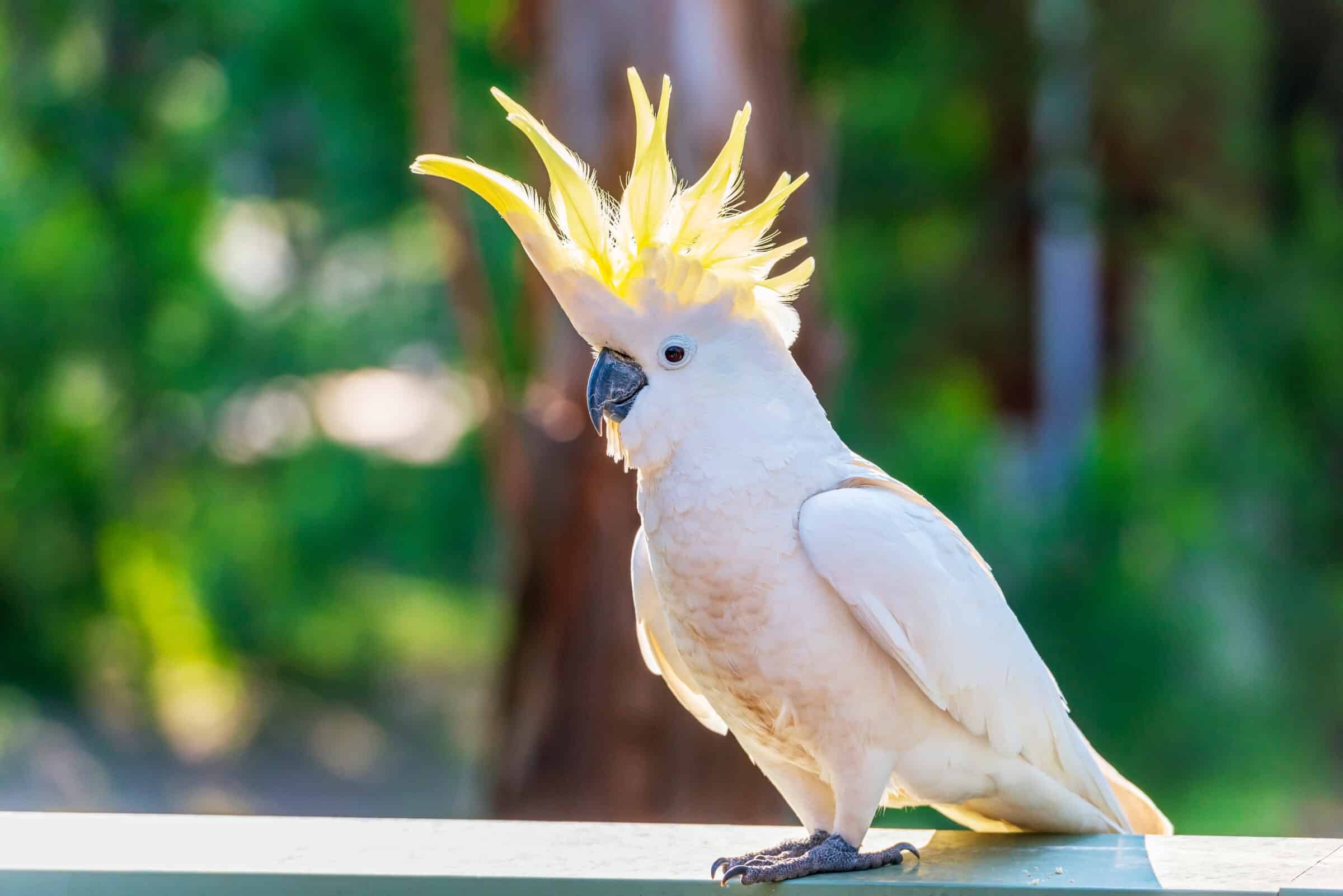
Britain’s Royal Society dedicated its November 2025 issue to a roundup of theories on what consciousness is supposed to have evolved from mud to mind to do — the “evolutionary functions of consciousness”:
Although the scientific study of consciousness has boomed in the past two decades, a central question remains unanswered: what is the function of consciousness? This applies both to the immediate, cognitive functions of consciousness, and the ultimate evolutionary value of consciousness in our ancestors. Answers to these questions are central to understanding why some species (like our own) became conscious, while others (like oak trees) did not. In this special issue, for the first time, a group of international experts from a variety of disciplines — biology, neuroscience, philosophy, and cognitive science — address the functions of consciousness from multiple perspectives. The articles offer a concise introduction to this central problem in the evolution of cognition.
The evolutionary functions of consciousness Fitch, W.T.; Allen, C.; Roskies, A.L. Philosophical Transactions of the Royal Society of London. Series B Biological Sciences 380(1939): 20240299 2025Volume 380, Issue 1939 13 November 2025
It’s worth noting that, as Robert Lawrence Kuhn has pointed out, there are many theories out there about what consciousness even is, never mind what it does or how it originated. He offers a summary:
Materialism Theories (philosophical, neurobiological, electromagnetic field, computational and informational, homeostatic and affective, embodied and enactive, relational, representational, language, phylogenetic evolution); Non-Reductive Physicalism; Quantum Theories; Integrated Information Theory; Panpsychisms; Monisms; Dualisms; Idealisms; Anomalous and Altered States Theories; Challenge Theories. There are many subcategories, especially for Materialism Theories.
Kuhn, Robert. (2024). A Landscape of Consciousness: Toward a Taxonomy of Explanations and Implications. Progress in Biophysics and Molecular Biology. 10.1016/j.pbiomolbio.2023.12.003.
From an Evolutionary Perspective
Given that there is such a wide range of theories about the very nature of consciousness, theories of what it evolved to do seem a bit ambitious. But here are the contenders that found a place in this edition of the journal, along with some preliminary comments. We will look at many of them in more detail later. (The numerals were added for easier scrolling.)
1. This essay articulates three distinct but interrelated challenges facing evolutionary explanations of consciousness. These are: (i) lingering misconceptions about evolutionary explanations that stem from evolutionary progressivism and adaptationism; (ii) the ‘measurement problem,’ or the challenge of gathering comparative data on consciousness, as required by any evolutionary accounts, in the absence of not just a theory of consciousness but uncontroversial meta-strategies for coping without such theory; and (iii) unresolved bio-theoretical challenges about how best to individuate traits for the purpose of functional analysis.
Mikhalevich I. 2025, Consciousness at sea. Phil. Trans. R. Soc. B 380: l1 20240313. https://doi.org/10.1098/rstb.2024.0313
It sounds like we do not really know what we are looking for, which will doubtless complicate efforts to find it.
2. We propose that UAL-based [Unlimited Associative Learning] signal selection, involving for example, predator–prey, sexual and other social interactions, led to the evolution of intricate perceptual, emotional and motor patterns that could not have existed before consciousness evolved. These patterns, which can be thought of as signatures of consciousness, first appeared in the Cambrian era and scaffolded the evolution of imaginative animals and reflective humans.
Eva Jablonka, Simona Ginsburg; Consciousness: its goals, its functions and the emergence of a new category of selection. Philos Trans R Soc Lond B Biol Sci 13 November 2025; 380 (1939): 20240310. https://doi.org/10.1098/rstb.2024.0310
We’ve talked about Jablonka’s idea that consciousness originated in the Cambrian Explosion: “If the life forms’ brains are anatomically very different, it makes more sense to track consciousness by evidence from behavior, as the researchers are doing, than by the long-sought evidence from anatomy. But that entails decoupling consciousness from a specific physical structure.” We’ll have a look at the new paper.
3. I propose a step-by-step sequence by which the mental representation of sensory stimulation could have acquired phenomenal content through small changes in the brain. Also—addressing the question of evolutionary function—I point to the crucial psychological benefits to an animal of having a ‘phenomenally conscious self’.
Nicholas Humphrey; Phenomenal consciousness: its scope and limits. Philos Trans R Soc Lond B Biol Sci 13 November 2025; 380 (1939): 20240306. https://doi.org/10.1098/rstb.2024.0306
Phenomenal consciousness is “what it feels like to be you.” But whether this is a “crucial psychological benefit” surely depends on the type of animal we are talking about. It’s not clear how self-awareness would generally help a garter snake or a frog. We’ll see.
4. Here, we … defend the claim that phenomenal experience broadens an organism’s ability to act in a manner that is not merely responsive to the objective value of an extrinsic evolutionary cost function but is also shaped by the preference-driven subjective value associated with items, situations, events or other agents.
Léa Moncoucy, Krzysztof Dołęga, Catherine Tallon-Baudry, Axel Cleeremans; The value of consciousness: experiences worth having. Philos Trans R Soc Lond B Biol Sci 13 November 2025; 380 (1939): 20240303. https://doi.org/10.1098/rstb.2024.0303
Death of a Dog
If a life form can recognize “subjective value associated with items, situations, events or other agents,” the quality may or may not have an adaptive value. But the life form is stuck with it anyway and does not care. For example, it is not “evolutionarily adaptive,” to use the jargon, for a dog to die to save his human master. But neither the dog nor the human, who makes a huge memorial donation to the Humane Society, cares about that.
5. We present the social origins of consciousness hypothesis, according to which the ability to coordinate with group members was the original adaptive function of consciousness.
Kristin Andrews, Noam Miller; The social origins of consciousness. Philos Trans R Soc Lond B Biol Sci 13 November 2025; 380 (1939): 20240300. https://doi.org/10.1098/rstb.2024.0300
It’s an interesting idea but the life forms that cooperate most fully (ants and bees come to mind) probably don’t have much individual consciousness. We humans have lots of consciousness and it is precisely at that point that co-operation becomes a challenge.
6. An important feature of conscious experience is the subjectivity of time. Even within short durations, ranging from milliseconds to a few seconds, time slows down in threatening situations, while it compresses during familiar tasks. Do these temporal distortions have a function? In this article, I argue that they do.
Antonella Tramacere; Phenomenal consciousness as an efficiency amplifier of agency: insights from time perception. Philos Trans R Soc Lond B Biol Sci 13 November 2025; 380 (1939): 20240316. https://doi.org/10.1098/rstb.2024.0316
Yes, we humans do see time as running fast or slow depending on how we feel. Do we know whether that is true of horses or anole lizards? If not, it may be just the sort of thing that is an artifact of human consciousness that did not and cannot “evolve.”
7. By examining the (1) mechanisms, (2) development, (3) adaptive functions and (4) evolutionary origins of consciousness, we can move beyond a human-centric focus to explore its diversity across life forms. Most investigators now accept that consciousness is not confined to humans alone but that some other animals have it, and it is a continuum shaped by evolutionary pressures. By adopting this broader approach, consciousness studies can better investigate and understand consciousness in its various forms and contexts, with significant scientific, ethical and societal implications.
Yuranny Cabral-Calderin, Julio Hechavarria, Lucia Melloni; Towards a neuroethological approach to consciousness. Philos Trans R Soc Lond B Biol Sci 13 November 2025; 380 (1939): 20240307. https://doi.org/10.1098/rstb.2024.0307
Yes, a number of life forms other than humans seem to have consciousness. But it is not apparent that the ones that have it have a selective evolutionary advantage over the ones that don’t. And the gap between human and any other consciousness is stark. The smart dog, for example, knows that his food tastes good but he never wonders whether it is good for him. The parrot asks “How are you?” but doesn’t expect a response and probably could not process an informative one. Studying animal consciousness is rewarding and useful but it’s not obvious that evolution theory sheds any light on how even animal consciousness arises.
8. Motivational trade-off behaviours, where an organism behaves as if flexibly weighing up an opportunity for reward against a risk of injury, are often regarded as evidence that the organism has valenced experiences like pain. This type of evidence has been influential in shifting opinion regarding crabs and insects.
Simon Alexander Burns Brown, Jonathan Birch; When and why are motivational trade-offs evidence of sentience?. Philos Trans R Soc Lond B Biol Sci 13 November 2025; 380 (1939): 20240309. https://doi.org/10.1098/rstb.2024.0309
Fascinating Studies
The nature of consciousness in crabs and insects makes for fascinating studies. The difficulty with assessing pain though is at heart philosophical: Is anyone actually feeling the pain or is this an alarm system that triggers certain outcomes? For example, in an industrial park, an alarm can go off in an empty building and trigger an electronic fire alert system several blocks away — without any life form feeling anything yet. Similarly, the fact that pain causes a life form to react may or may not say anything about consciousness.
9. Because there are no agreed upon empirical approaches to investigate subjective experiences in non-humans, efforts to develop animal models of episodic memory have focussed on the contents of episodic memory. I review experiments using rats which suggest that, at the moment of a memory assessment, the animal remembers back in time to an earlier event or episode. I conclude by evaluating implications of episodic memory in rats as a functional window into the evolution of consciousness.
Jonathon D. Crystal; Episodic memory in non-humans: an approach to understand an evolutionary function of consciousness. Philos Trans R Soc Lond B Biol Sci 13 November 2025; 380 (1939): 20240304. https://doi.org/10.1098/rstb.2024.0304
This raises an interesting question: What is subjective consciousnessness needed for? How much consciousness does a rat need to learn from experience? Couldn’t simple aversion, coded in memory, work without consciousness?
10. There can still be no formal certainty about consciousness in insects; even in humans, there is currently no agreement over the particular combination of cognition and neural function that produces consciousness. Nonetheless, evidence from all the lines of investigation summarized here builds up to an increasing probability that insects might possess some form of subjective experience.
Lars Chittka, Sarah Skeels, Olga Dyakova, Maxime Janbon; The exploration of consciousness in insects. Philos Trans R Soc Lond B Biol Sci 13 November 2025; 380 (1939): rstb.2024.0302. https://doi.org/10.1098/rstb.2024.0302
Lars Chittka is well-known as an insect biologist and we will certainly come back to this paper, as well as others. But subjective experience means that insects must have some sense of “I”, the first person singular. The famous hive mind of insects wouldn’t really qualify surely. If subjective experience really evolved, what selective advantage would it give an insect that the hive mind does not?
11. Self-awareness in animals is often documented by showing evidence for mirror self-recognition (MSR), which is confirmed by the mirror mark-test. … We propose that the many negative MSR results are potentially false-negatives, and that self-awareness does not require a large brain. We posit a new hypothesis: self-awareness was already present in the early shared ancestors of modern vertebrates.
Masanori Kohda, Shumpei Sogawa, Redouan Bshary; On the mirror test and the evolutionary origin of self-awareness in vertebrates. Philos Trans R Soc Lond B Biol Sci 13 November 2025; 380 (1939): 20240312. https://doi.org/10.1098/rstb.2024.0312
A critical issue here is, what do we mean by self-awareness? Famously, a fish called the cleaner wrasse recognizes itself in a mirror, as the authors point out, but does it ever do anything else that implies self-awareness? Dogs do poorly at the mirror test but few doubt that they are self-aware. That raises the question, if “self-awareness was already present in the early shared ancestors of modern vertebrates,” what difference did it make to their history?
12. In this article, we show that there is growing evidence that (i) birds have sensory and self-awareness, and (ii) they also have the neural architecture that may be necessary for this. We present behavioural studies and recent neurobiological data and discuss them in relation to three major theories of consciousness: the Global Neural Workspace Theory (GNWT), the Recurrent Processing Theory (RPT) and the Integrated Information Theory.
Gianmarco Maldarelli, Onur Güntürkün; Conscious birds. Philos Trans R Soc Lond B Biol Sci 13 November 2025; 380 (1939): 20240308. https://doi.org/10.1098/rstb.2024.0308
Yes, We All Love the Smart Birds
We’ll come back to this paper in a later article but this for now: The authors are clearly tying their findings to some of the foremost of the many disputed theories of human consciousness that have, bluntly, shed no light whatever. They might be better off to stick with the well-known behavior of smart birds. While we are here, there are, of course, many dumb birds out there too. Any claims about the evolution of smart behavior in birds needs to address the fact that most birds missed the train.
13. The word ‘consciousness’ is often used as if it is a single thing, and as if everyone knows, in a general sense, what that thing is. The very notion of a theory of consciousness implies that someday this thing will be accounted for. But suppose that multiple kinds of consciousness exist. If so, an adequate theory of consciousness would have to be multifaceted rather than unitary. And, accordingly, an account of the function or functions of consciousness would depend on the kind or kinds of consciousness one is referring to.
Joseph E. LeDoux; What the functions of consciousness are depends on what one thinks consciousness is. Philos Trans R Soc Lond B Biol Sci 13 November 2025; 380 (1939): 20240311. https://doi.org/10.1098/rstb.2024.0311
There may indeed be multiple types of consciousness. Just for example, the social insect hive mind has next to nothing in common with human consciousness, yet it behaves like a mind of some sort. Pufferfish build complex sand sculpturesbut do they really even know that they are sculptures? We will come back to this paper too.
Refreshing Skepticism
14. An increasing number of authors are willing to attribute phenomenal consciousness to relatively simple organisms like insects. Yet it is not at all clear what functional role the substrates of consciousness would play. Here, we argue phenomenal consciousness is a consequence of how mobile animals with spatial senses and a capacity for goal-directed behaviour resolve the complex problem of action selection.
Colin Klein, Andrew B. Barron; Phenomenal interface theory: a model for basal consciousness. Philos Trans R Soc Lond B Biol Sci 13 November 2025; 380 (1939): 20240301. https://doi.org/10.1098/rstb.2024.0301
Yes, another paper we will look at in more detail. It is refreshing to see skepticism directed at the claim that insects are conscious. While the thesis is very interesting, a serious risk is run here: Many of us want to believe that butterflies care and that bees think. But do they?
15. In order to dissolve some of the contradictions among these views [of consciousness] and to constrain the rival theories, we propose to distinguish three core phenomena of phenomenal consciousness: basic arousal, general alertness and reflexive (self-)consciousness. The central aim is to show that we can fruitfully distinguish specific functions for each of the three phenomena.
Albert Newen, Carlos Montemayor; Three types of phenomenal consciousness and their functional roles: unfolding the ALARM theory of consciousness. Philos Trans R Soc Lond B Biol Sci 13 November 2025; 380 (1939): 20240314. https://doi.org/10.1098/rstb.2024.0314
Actually, the only one of these three phenomena that clearly exemplifies consciousness (as we usually think about it) is “reflexive (self-)consciousness.” It’s not clear that basic arousal and general alertness require much consciousness; they are essential features of the survival kits of many animal life forms.
A Reasonable Approach?
16. We propose that by continuously representing the body’s state, spontaneously conscious homoeostatic feelings constitute the foundational substrate of subjectivity and the grounding for consciousness. This idea builds on our prior work, which grounds consciousness in core biology rather than high-level cognition. Consciousness enables adaptive and protective responses that maintain homeostasis and secure life.
Jacques Singer, Antonio Damasio; The physiology of interoception and its adaptive role in consciousness. Philos Trans R Soc Lond B Biol Sci 13 November 2025; 380 (1939): 20240305.
This may be a reasonable approach to some kinds of consciousness, for example, that of worms. But it may prove hard to apply to humans. Our body’s states are important but they are hardly most of what we observe most of the time.
All these academics have put a lot of thought into the topic of how or why consciousness evolved from mud and it will be useful to look more deeply at some of these papers. But it is still true that so far no serious central theory of the evolution of consciousness is anywhere near the horizon.
In fact, the best inference is that consciousness in general did not randomly evolve from mud. For that matter, there is no good reason for doubting that human consciousness is quite unique. And it most definitely did not evolve from mud. None of these science papers came from mud. We cannot escape the immaterial nature of the human mind, though we can keep trying to define or research it out of our awareness.
Never fear, as T. S. Eliot said, “”We shall not cease from exploration and the end of all our exploring will be to arrive where we began and to know the place for the first time.”
Stay tuned for a closer look at some of the papers, especially the ones on topics we love, like smart birds, canny insects, sensitive lobster and amazing dogs.
Cross-posted at Mind Matters News.