






































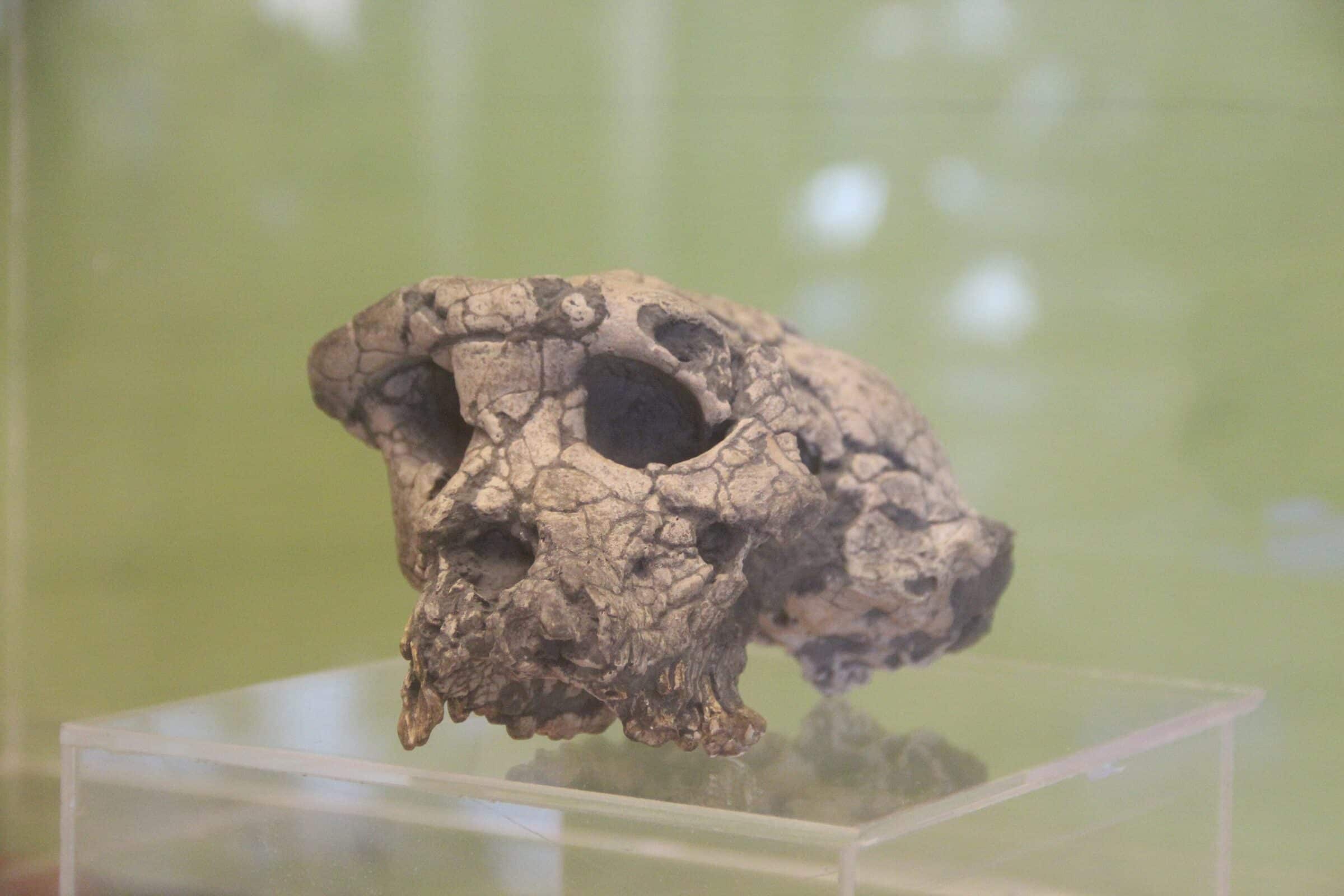
How do you separate the facts from the narrative? That can be challenging these days, and the realm of science is no exception. On a new episode of ID the Future, enjoy the second half of a conversation with Dr. Casey Luskin that originally aired on the Come Let Us Reason Together podcast hosted by Lenny Esposito. Casey discusses the growing controversy surrounding Sahelanthropus tchadensis, a fossil often described as one of the earliest human ancestors. But what began as a celebrated evolutionary discovery has now sparked open disagreement among evolutionary scientists themselves.
In this concluding segment, Dr. Luskin discusses the telling researcher-to-specimen imbalance in the field of paleoanthropology, the nuance between error and deception in human origins narratives, and the broader implications of the controversy around the Sahelanthropus fossil. Host Lenny Esposito begins by commenting on the mainstream media acknowledgement of the internal conflict around this fossil and asks Casey for his thoughts on the causes of that conflict.
As noted, one problem Luskin highlights is a significant imbalance in the field of paleoanthropology, where the number of researchers far exceeds the available fossil specimens. This scarcity of data creates a competitive environment where fame, grant money, and research prestige are often tied to whether a fossil can be framed as a bipedal human ancestor. Such high stakes can lead to protectionism: original discoverers reportedly limit access to fossils, preventing independent researchers from conducting their own assessments and challenging established narratives. And then there’s the mainstream media, which can add to the problem by exaggerating finds to promote an evolutionary narrative. Luskin discusses examples.
Download the podcast or listen to it here. This is Part 2 of a two-part conversation. Listen to Part 1.
Enjoy the conclusion to this engaging conversation about human origins. We’re grateful to Lenny Esposito for allowing us to share the interview here.
Dig Deeper
- Watch the full interview on the Come Let Us Reason Together podcast channel at YouTube.
- More conversation with Dr. Luskin.