






































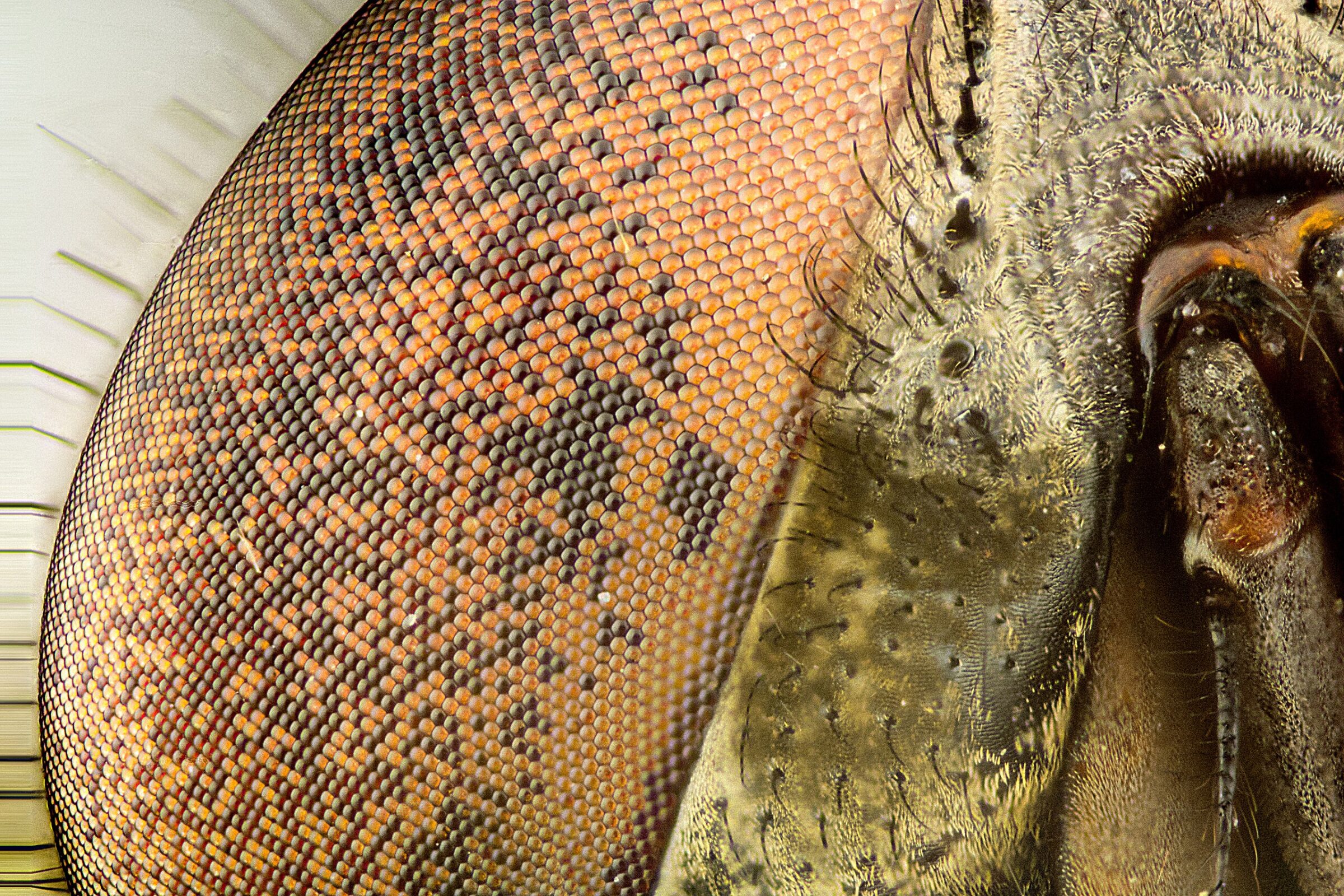
Humans have long been drawn to tessellated patterns: “repeated pattern of geometric, discrete elements bound by a joint material.” A brick wall bound by mortar is a simple example; tiles and mosaics are more sophisticated. Artists have incorporated tiles into their creations. The drawings of M. C. Escher reached sublime levels, often including biological figures like birds. But why would living organisms, whose purpose is to survive and reproduce, form tessellated patterns? Is something going on more than mere consequences of natural laws? Are they mere spandrels of survival?
Functional Needs, Repeating Patterns
This question attracted the attention of nine international scientists writing in PNAS Nexus, representing “a diversity of disciplines involving biologists, computer scientists, engineers, and designers, allowing us to examine biological tilings from a range of perspectives.” In their paper, “Tiled material systems: Exploring biodiversity and multifunctionality of a universal and structural motif,” Jana Ciecierska-Holmes et al. asked why functional needs of organisms would result in repeating patterns that humans find beautiful.
Humans are drawn to patterns and hierarchies in nature, mimicking them particularly in decoration and architecture. Natural patterns, however, are never purely esthetic and, since evolution works on a variety of factors simultaneously, natural structural systems are intrinsically multifunctional. In order to understand the roles that structural patterns play in biology (and therefore their potential capabilities and utilization in design, architecture and engineering), we need to catalog and encapsulate the diversity of examples and the materials involved. Here, we provide a first classification of biological “tilings,” tessellated natural architectures that involve the repeated pattern of geometric, discrete elements bound by a joint material. By examining 100 examples across the Tree of Life, we reveal this natural structural motif is unexpectedly prevalent: we cover a huge taxonomic diversity, eight orders of magnitude in size scale, and myriad morphologies and functions ranging from optics to armor, allowing us to construct a hierarchical system of eight variables to classify form, function, and materiality in biological tilings. [Emphasis added]
From their investigation of these 100 examples, they created a database “as a multidisciplinary meeting point (e.g. for biologists, designers, engineers, architects)” that could be used “exploring selective pressures and trade-offs and a launchpad for future research and collaborative, cross-disciplinary, bioinspired projects.” How does their project impinge on questions of Darwinism vs. design? Is there any conceivable “selective pressure” for tiled patterns? And wouldn’t consideration of trade-offs presuppose the foresight to choose the best set of options?
Some examples from their database “Tessellated Materials” can help answer these questions.
- Compound eyes in insects
- Beehive hexagonal honeycombs
- Overlapping scales on butterfly wings
- Pinecone scales
- Tortoise shells
- Sunflower florets
The Scale Is Astonishing
The database organizes these and many other examples by tile shape (simple, complex, polygonal, or non-polygonal), tile-tile interaction, granularity, pattern and layout, tile material, and joint material. Viewers can select these criteria to see photographs of animals and plants exhibiting them.1 Tessellations are found in everything from virus capsids to reptile skin, presumably all the way up to the extinct sauropods.
From the well-known examples listed above, we can evaluate potential functional benefits of tessellation that — for whatever reason — we humans find attractive. Beehive hexagons (made by bees but external to their bodies) are stackable, using the least amount of beeswax and the greatest area.2 Some butterfly scales produce optical effects for mimicry or mate attraction. The overlapping scales on armadillos and some reptiles and arthropods maintain mobility for the animal while shielding the interior.3 The possible functions of biological tiles are listed in the database:4
- Structural support
- Shielding
- Surface interaction (adhesion, grip)
- Sensing
- Separation (regulating inside/outside flux)
- Mobility (e.g., armored animals that roll)
- Optic (e.g., structural color)
A Classification Scheme
The authors were engaged in a classification scheme, not necessarily seeking familial relationships as in Linnaean taxonomy, but looking for a pattern classification scheme.
They built their database from scientific literature, discussions with scientific experts, and from diverse nonspecialist sources, including photos available on the internet. From this they collected 120 biological examples of tessellated structures at scales covering 8 orders of magnitude, arranging them according to the criteria described above. Interested viewers may enjoy searching through the database, selecting criteria, and viewing examples from biology.
A Strong Biomimetic Thread
The Tessellation Archive “grew out of conversations and interactions in the Tessellated Material Systems group of the Cluster of Excellence ‘Matters of Activity. Image Space Material.’” The cluster of projects, funded by the German Research Foundation, seeks “to rediscover the analog in the activity of images, spaces, and materials in the age of the digital.” There is a strong biomimetic thread in the Cluster:
Biology and technology, mind and material, nature and culture intertwine in a new way. In this context, the interdisciplinary research and development of sustainable practices and structures is a central concern in areas such as architecture and soft robotics, textiles, materials and digital filters, and surgical cutting techniques.
It should be noted that function and beauty are not mutually exclusive. Human architectural projects, including concert halls, bridges, and art galleries often exhibit both. Many of the magnificent Gothic cathedrals have stood for centuries with their intricate sculptures and decorations intact. The authors understand the human attraction to functional beauty:
Biological architectures are often hierarchical, constructed from repeating patterns of smaller components. Humans have been drawn to natural patterns since antiquity and our conceptualizations remain especially dominated by particular forms. Designers and architects, for instance, are fascinated by spirals (e.g. of fern fiddleheads, nautilus shells, reptile tails) and “cellular foams,” arrays of compartmentalized closed- or open-celled voids (e.g. of honeycombs, wood, and cancellous bone). Cellular foams are prized in architecture and mechanical engineering for their combination of esthetics, high strength, and low weight.
Their project understates, but acknowledges, the human appreciation of beauty over mere function:
Human efforts at biomimicry have often led to myopic pursuits of natural “optimization” of single performance traits (e.g. strong adhesion, high stiffness, iridescence, superhydrophobicity). In this way, we can lose sight of what makes biology inspiring: the organism and its natural context, the complex and diverse interactions of physiology, evolutionary history, and environment.
Inspired architecture, therefore, can mimic the solutions from biology. Whether an organism’s “evolutionary history” bears on this inspiration, however, readers can judge. Yes, they mention evolution a dozen times, and phylogeny a dozen more. Those tiles could be removed or replaced with no loss of function, and with improved aesthetics. Browse through the biological examples in the database. They work. And they’re beautiful.
Notes
- The authors note that pure mathematical tessellations (geometric shapes covering a curve, like pentagons on a soccer ball) share edges with no gaps, whereas biological tessellations often have gaps or overlaps. For this reason, they prefer the term tilings.
- Honeycombs are called “cellular foams” by the authors, “arrays of compartmentalized closed- or open-celled voids,” rather than tessellations, which are “tilings of solid subunits rather than arrays of compartments.” They explain that “Tessellations are effectively the structural inverse of cellular foams” but share aspect of geometric patterning. Other cellular foams include wood and cancellous bone.
- Overlapping tiles have an advantage of mobility, as in fish and reptile scales, which combine flexibility and shielding. Humans have imitated these advantageous overlaps in chain mail armor and roof tiles.
- A functional advantage does not confer upon an organism the desire or power to innovate a solution providing the advantage. Darwinian innovations, remember, are based on chance variations, not foresight. In his new book False Messiah, Neil Thomas discusses at length how Darwin’s chance-based theory deified “Mother Nature” as Lady Luck with imagined causal powers to engineer any advantageous variation. See an excerpt at Science and Culture Today.