






































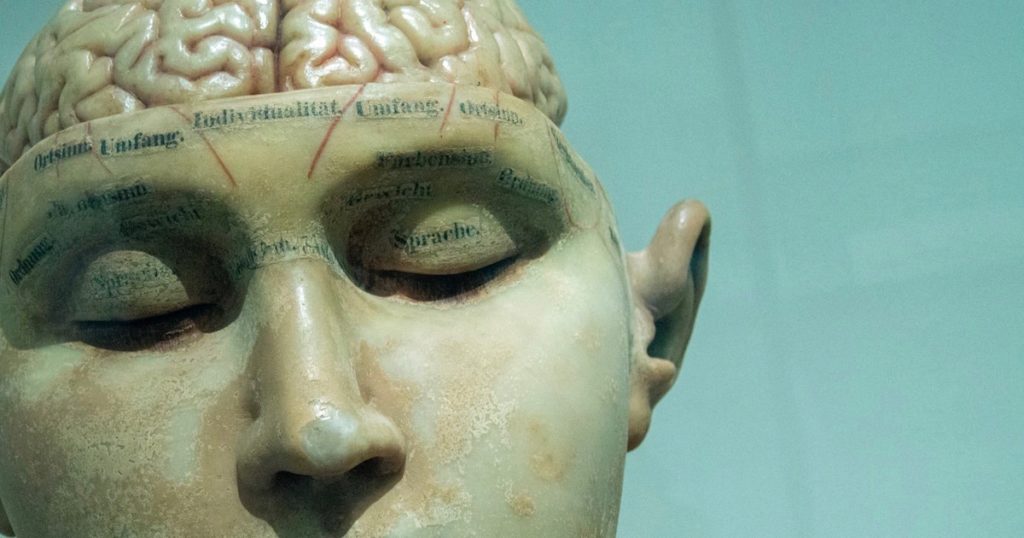
The question was asked — and answered — by Central University of Venezuela psychology student Jaimar Tuarez:
Astronomist Carl Sagan said: “The total number of stars in the universe is greater than all the grains of sand on all the beaches on planet earth.” We are talking about ten sextillion stars, a 1 followed by 22 zeros (1×10²²). In size, the universe studied ranges, according to estimates, between 13 and 48 million light year
In comparison, the human brain has approximately 1×10¹¹ neurons that interconnect with each other 1×10¹⁵ times (in a changing manner). All this with a weight of around 1.5 kg and a volume of 1,300 cubic centimeters. That is enough to tell us who we are: beliefs, political preferences, sports predilections and who we fall in love with.
In parallel to its most important function, guaranteeing the survival of the body that houses it, its exponential development has led it to the paradox of being an organ that tries to understand itself. This is what we do, among others, neuroscientists, who try to answer the question that poses perhaps the greatest scientific challenge in history: how does the brain work?
JAIMAR TUAREZ, “IS THE HUMAN BRAIN THE MOST COMPLEX THING IN THE UNIVERSE?” AT NEUROTRAY (OCTOBER 28, 2020)
But here’s the really remarkable thing about the human brain: People can survive and get on with their lives just fine with a split brain, only half a brain, or much less. Not only that but our brains have actually shrunk by 10 percent over the last 40,000 years, coinciding with spectacular intellectual achievements.
“Speech Is a ‘Superpower’”
A couple of other unusual facts about the human brain: It is prewired to recognize speech and language. That’s important because, as Peter Augustine Lawler comments, while reviewing Tom Wolfe’s The Kingdom of Speech, “Speech is a ‘superpower’ whose origin no scientist can explain, one that has allowed the beast with it to control or own every other animal there is. It isn’t merely ‘an ingenious tool for communication,’ says Wolfe; it’s a ‘nuclear weapon’ with unlimited transformative power.’”
Read the rest at Mind Matters News, published by Discovery Institute’s Bradley Center for Natural and Artificial Intelligence.