







































Science and Culture Today Discovering Design in Nature
dog
dog
Photo credit: James Barker via Unsplash.
Latest

Michael Medved Talks with Michael Behe About “Mere Evolution”

Categories
Evolution
Intelligent Design
Share
Facebook
Twitter/X
LinkedIn
Flipboard
Print
Email

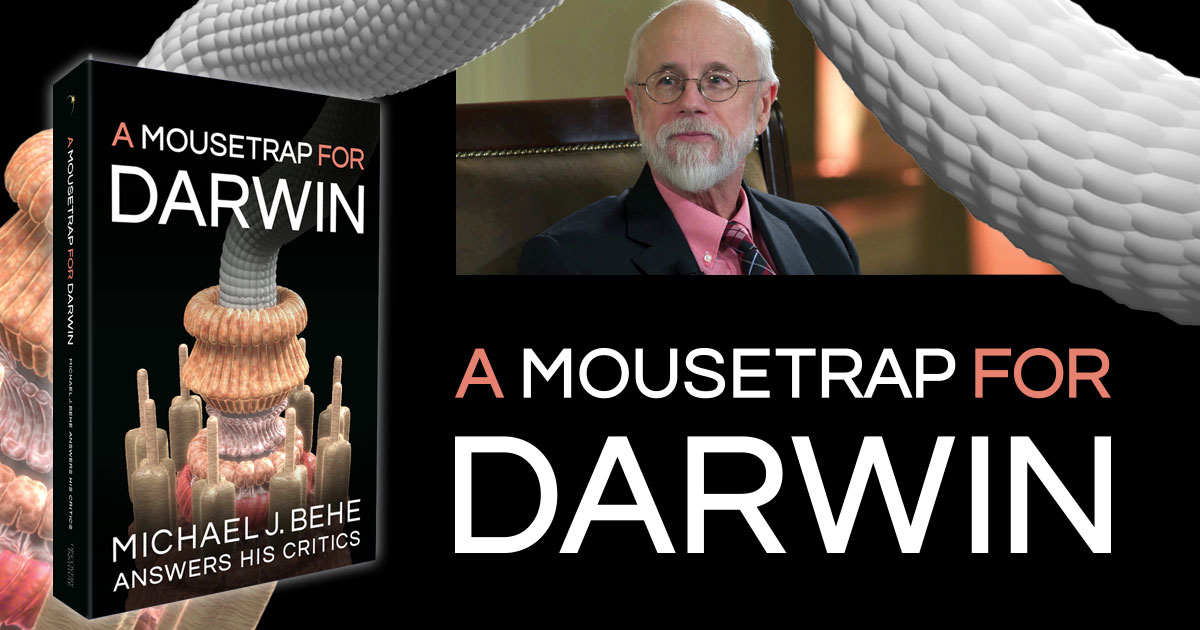
Radio host Michael Medved did a really nice interview with biochemist Michael Behe about Professor Behe’s new book, A Mousetrap for Darwin. Behe confirms he is not saying Darwin is a mouse! I like the phrase he uses, “mere evolution,” by which he means the idea that organisms descend with modifications going back to other organisms long ago. That is always conflated by Darwinists with Darwin’s theory of how evolution took place. If you want to point someone to a concise discussion of the difference, they should listen to this new ID the Future podcast with Medved and Behe.

Among Behe’s most telling points, made here, is that insofar as we can track evolution as it has happened, for example in dog breeds, it consists overwhelming of breaking genes, the degradation of biological information. You don’t build organisms that way. You only break them, which is why dogs — wonderful though they are — if released into the wild would make such poor substitutes for wolves. Download the podcast or listen to it here.
David Klinghoffer

Senior Fellow and Editor, Science and Culture Today
David Klinghoffer is a Senior Fellow with Discovery Institute’s Center for Science and Culture. He is the author of seven books including Plato’s Revenge: The New Science of the Immaterial Genome and The Lord Will Gather Me In: My Journey to Jewish Orthodoxy. A former senior editor at National Review, he has contributed to the New York Times, Wall Street Journal, and other publications. He received an A.B. magna cum laude from Brown University in 1987. Born in Santa Monica, CA, he lives on Mercer Island, WA.
Benefiting from Science & Culture Today?
Support the Center for Science and Culture and ensure that we can continue to publish counter-cultural commentary and original reporting and analysis on scientific research, evolution, neuroscience, bioethics, and intelligent design.

© Discovery Institute