






































Science and Culture Today Discovering Design in Nature
Alex Filippenko
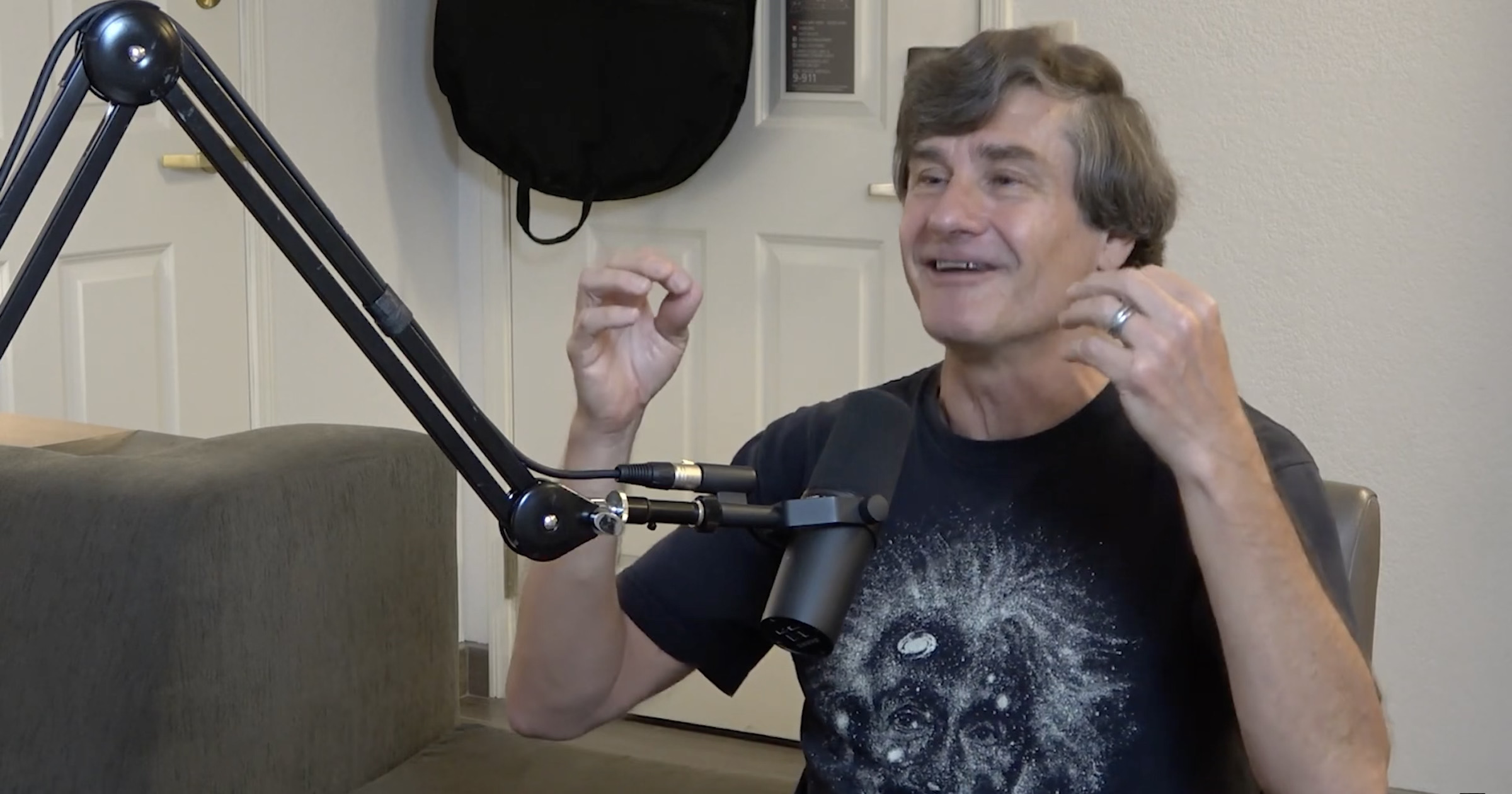
Photo: Alex Filippenko (screenshot).
Latest

“Our 20th- and 21st-Century Ptolemaic Epicycles”?

Categories
Philosophy of Science
Physical Sciences
Physics
Share
Facebook
Twitter/X
LinkedIn
Flipboard
Print
Email

Here is some refreshing philosophical candor from Alex Filippenko, professor of astronomy at UC Berkeley, as he describes his “wake up in the middle of the night screaming” worries that dark energy and dark matter might be theory-driven devices to accommodate the data. “Band-Aids to explain the data,” he wonders, “but they’re just completely wrong.”

He remarks, “Maybe these are our 20th- and 21st-century Ptolemaic epicycles… I take no position on the physics and astronomy questions raised (because I can’t), but am fascinated by the philosophy of science parallels to similar moves in molecular phylogenetics and systematics.

Go here, at about 9 minutes into his interview with Lex Fridman:

Click here to display content from YouTube.
Learn more in YouTube’s privacy policy.

Fridman is a first-rate interviewer. I love his stuff. On a recent drive to and from Pittsburgh, I listened to his four-hour+ long interview with Stephen Wolfram. Compelling.

Paul Nelson

Senior Fellow, Center for Science and Culture
Paul A. Nelson is currently a Senior Fellow of Discovery Institute’s Center for Science and Culture and Adjunct Professor in the Master of Arts Program in Science & Religion at Biola University. He is a philosopher of biology who has been involved in the intelligent design debate internationally for three decades. His grandfather, Byron C. Nelson (1893-1972), a theologian and author, was an influential mid-20th century dissenter from Darwinian evolution. After Paul received his BA in philosophy with a minor in evolutionary biology from the University of Pittsburgh, he entered the University of Chicago, where he received his PhD (1998) in the philosophy of biology and evolutionary theory.
Benefiting from Science & Culture Today?
Support the Center for Science and Culture and ensure that we can continue to publish counter-cultural commentary and original reporting and analysis on scientific research, evolution, neuroscience, bioethics, and intelligent design.

© Discovery Institute