






































While most people roll their eyes and laugh that “it can never happen here,” the “nature rights” movement is increasing in visibility and establishment acceptance. The journal Science has favored the concept. So too has liberal activist Jim Hightower.
Now, that bastion of respectability — NPR — has done a big, friendly story on the movement, reporting that Bangladesh just proclaimed all rivers to be living entities with human-type rights. Yippee!
Not About Pollution
The problem, according to NPR’s story, isn’t that nature rights laws would thwart human thriving substantially by requiring that all of nature be given equal consideration with the needs, wants, and intentions of people. (Remember, “nature rights” isn’t about pollution.) Nor do the bounteous reasons for retaining “rights” exclusively in the human realm rate a single mention. In fact, no critics of the concept are quoted.
Rather, the only real downsides mentioned are difficulties in enforcement. From the story:
The idea of what these laws hope to accomplish is where the similarities stop, as their legal bases and the range of socio-environmental and economic problems they’re meant to solve vary from country to country. Many of the laws have also been met with resistance from industry, farmers and river communities, who argue that giving nature personhood infringes on their rights and livelihoods.
Imagine that! People want to thrive off the land and the development of resources.
This inconsistent patchwork of approaches has inevitably led to difficulties in enforcement, says Erin O’Donnell, an academic fellow at the University of Melbourne Law School in Australia. “It becomes everybody’s responsibility and then, possibly, nobody’s responsibility,” she tells NPR. “So the question of enforcement then becomes who actually has the funding, usually, to run a lawsuit. Lawsuits are very expensive.”
Don’t Fall for That One
The environmental movement is rolling in dough. If “nature rights” laws become widespread, there will be plenty of money to pay lawyers to sue developers and resource-using enterprises into the dirt — including as part of activist pro-bono programs that large corporate law firms dangle in front of woke law school graduates from elite law schools to get them to work for them.
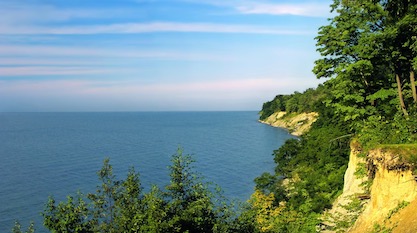
Readers may recall that Lake Erie was recently granted rights in a special election, including the right to “evolve naturally.” The Ohio Legislature hurriedly passed a provision as part of a budget deal to block the lake’s “rights” from being enforced.
Before that, the owners of a large farm felt compelled to sue to in order to continue operating. Back to NPR:
The ordinance’s constitutionality was immediately challenged by a farm in a federal lawsuit. The farm argued the ordinance made it vulnerable “to massive liability” when it fertilizes its fields “because it can never guarantee that all runoff will be prevented from entering the Lake Erie watershed.” Then the state of Ohio joined that lawsuit, arguing it — not the citizens of Toledo — has the “legal responsibility” for environmental regulatory programs.
“What’s interesting is the state of Ohio intervening on behalf of the polluter, not on behalf of the people who passed the law,” says Tish O’Dell, the Ohio community organizer for the Community Environmental Legal Defense Fund.
The lawsuit is ongoing, though O’Dell predicts the ordinance will ultimately be overturned.
Let us hope so.
A Weak Reed
State preemption is a weak reed. Besides, what would happen if, say, California passed such a law? How would the farmers in the Central Valley fare if activists sued them for interfering with the “rights” of the Sacramento River to flow freely rather than have its water used for irrigation? Or what about timber companies near Eureka? It wouldn’t just be “old growth” forests that would be protected by “nature rights,” but potentially all forests.
The NPR story puts this issue more squarely into the progressives’ political playbook. If this keeps up, good luck with applying a simple statutory prophylactic to prevent these laws from proliferating.
Photo: Lake Erie, by Nicholas [CC BY 2.0], via Wikimedia Commons.

Cross-posted at The Corner.