






































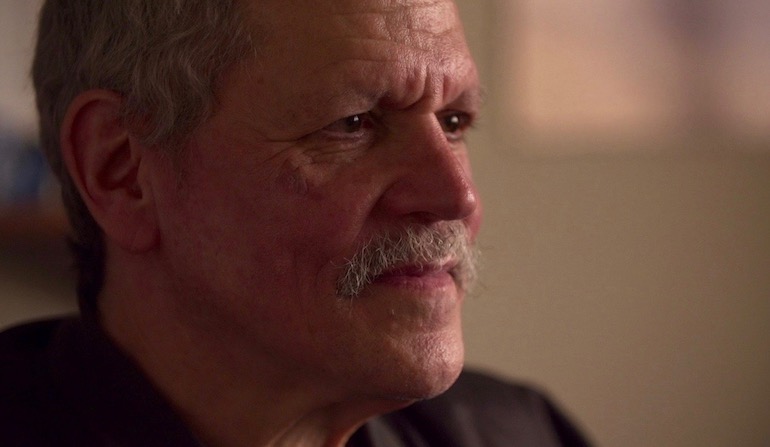
Watch this 26-minute lecture (basically) by UCLA neuroscientist Jeffrey Schwartz, who appear in the Science Uprising episode, “The Inescapable I.” Schwartz appears here in outtakes, where he can expand further on his thoughts. It’s very powerful stuff:
The episode itself begins with a statement from evolutionist Jerry Coyne, “We are robots made out of meat, which is what I’m going to try to convince you of today.” Coyne seems to be chuckling as he says this, maybe at the absurdity of it. After all, the statement is paradoxical at best. How does one “convince” a robot of anything, when changing your mind about an issue implies free will, which materialists are impelled to deny?
Dr. Schwartz takes on the materialist challenge with his own well-known research on obsessive-compulsive disorder. Patients with OCD are under the command of the brain — to wash their hands obsessively, for instance, fearing they never quite get them clean. But using techniques that Jeffrey Schwartz pioneered, they can choose to train themselves to reinterpret their compulsive impulses, and, remarkably, change the structure of the brain itself.
How is this possible? As Schwartz describes, a “wise advocate” or (quoting Adam Smith) “impartial spectator” stands outside and above the brain (not spatially but conceptually). This personality is the true self, and can objectively evaluate messages from the brain, because it is not the brain!
“Free Won’t”
In the same episode of Science Uprising, neurosurgeon Michael Egnor tells about the results of research by Benjamin Libet demonstrating the capacity for “free won’t.” That is, a power not in the brain to say “no” to impulses. Schwartz and Egnor are talking about the same thing.
Of course these powers are easier characterized, and demonstrated, than they are to enact. This is why there is such a thing as moral struggle, and why we often fail in it. But the fact that they exist at all is strong evidence that, as Schwartz put it in a book title, You Are Not Your Brain. Denying this, he says, as Coyne and others do, reflects the scientistic habit in our culture, the idea that naturalistic science can answer all questions. It’s a form of “fundamentalism,” he notes, that blinds us to the truth about ourselves.
If you haven’t caught up with Science Uprising yet, you should do so now: