







































Some Twitter correspondents objected to my comment, in connection with our new book The Unofficial Guide to Cosmos, that “Cosmos is not appropriate for public schools, where you’re not supposed to advocate any religion, including atheism.”
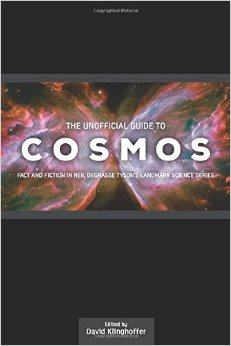
But of course Tyson-style atheism counts as a religion. As I’m hardly the first to say, it has almost all the trimmings that religions commonly do: An account of origins (panspermia and Darwinian evolution), a philosophical commitment to a certain way of understanding of what the fundamental substrate of reality is (materialism), a conversionary agenda (the whole point of Cosmos, now launched into the public schools), warnings of an apocalyptic future for the unrepentant (see our chapters on Episodes 11 and 12 of Cosmos).
Atheist counselors in the role of clergy are rare, but they exist. “Humanist chaplain” Bart Campolo at the University of Southern California has praised Neil deGrasse Tyson for being as “inspiring as any preacher I’ve heard.”
A primary purpose behind the Cosmos series was to cast a rival faith, Christianity, in a bad light, as “anti-science.” One religion throwing dirt at another faith — you’ve never heard of such a thing before? Not least when it comes to science, atheists have increasingly assumed the role of censors and inquisitors — even as other religions in the West have learned to live tolerantly, even lovingly with fellow citizens who disagree with them.
Every religion tells a story that frames its worldview. So does atheism. Cosmos unspools that narrative over the course of its 13 episodes. What’s missing?
A stand-in for God, a god, or gods? Not every religion has one. So again, what exactly qualifies atheism for an exemption here? That it’s proved by science? That is the claim of atheist apologetics, but the fact that some people claim it doesn’t make it true. You don’t get to cite one dubious atheist assertion as evidence in support of another dubious atheist assertion.
As Casey Luskin has shown in the past, courts have treated atheism as religion as well, and reasonably so (“For First Amendment Purposes, Is Atheism a Religion?“).
Atheists who think their faith deserves the special treatment of being exempted from categorization among other faiths need to argue more persuasively for their insistence on that point.