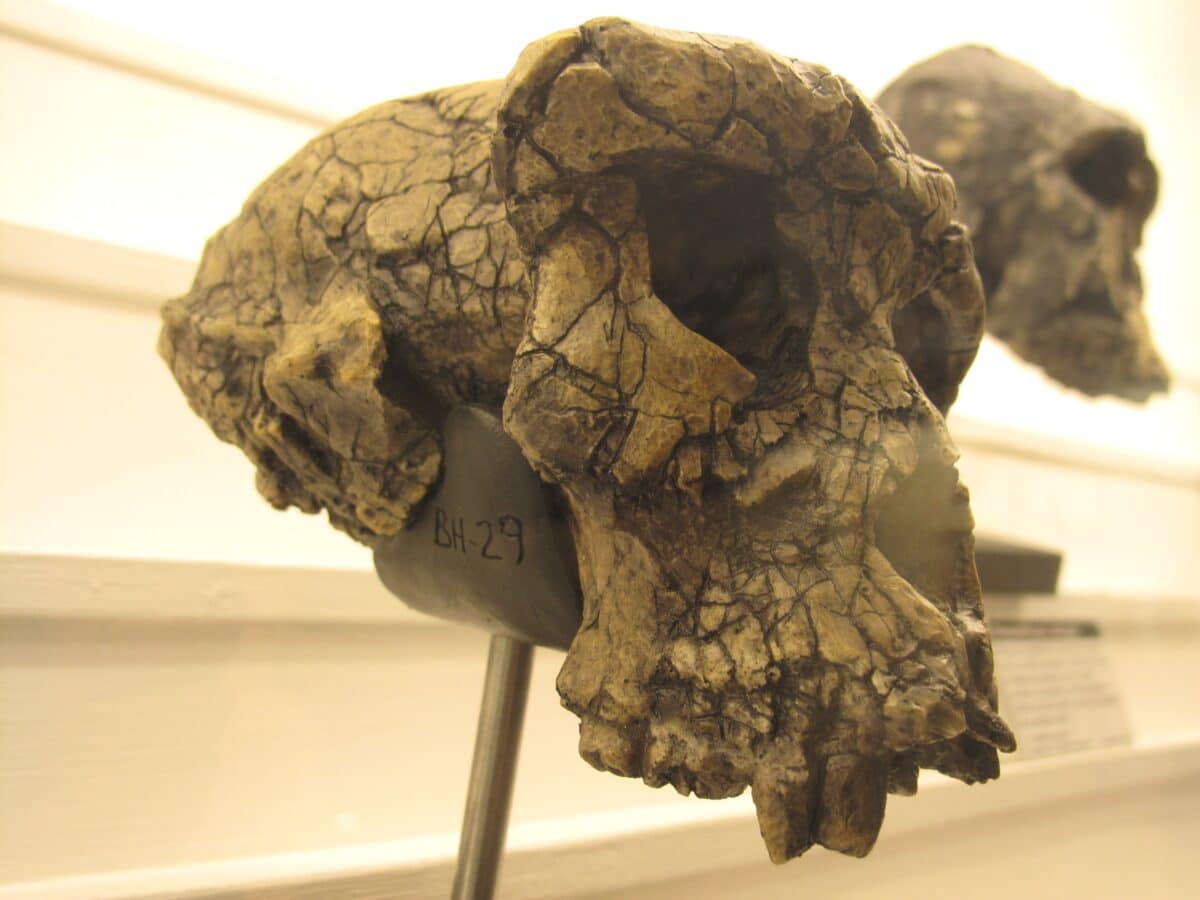
SahelanthropustchadensisIMG2949 Type post Author Casey Luskin Date January 13, 2026 CategoriesHuman Origins and AnthropologyPaleontology Tagged , Africa, bipedalism, bones, Clément Zanolli, competition, Djurab (desert), femur, fossil record, fossils, France, Franck Guy, Guillaume Daver, human origins, Jean-Jacques Jaeger, Jerry Coyne, Journal of Human Evolution, Michael Brunet, Nature (journal), New York University, paleoanthropology, Politics, Roberto Macchiarelli, Sahelanthropus tchadensis, Science Advances, Scott Williams, skull, The Guardian, Toumaï, University of Poitiers, War and Peace, Washington Post, Why Evolution Is True “Competition and Politics” Complicate Debate Over Sahelanthropus tchadensis Casey Luskin January 13, 2026 Human Origins and Anthropology, Paleontology 12 It seemed like lots of people wanted to forget about the femur, because years went by and nothing was published about the bone. Read More ›
digital-illustration-dna-structure-in-blue-background-stockp-133644977-stockpack-adobestock Type post Author Jonathan Witt Date October 17, 2025 CategoriesEvolutionGeneticsIntelligent Design Tagged , adenine, Ann Gauger, California, Cambridge, cytosine, Dartmouth College, Darwinists, DNA, England, evolution, genes, Genesis, genetic similarity, guanine, Hebrews, ID the Future, intelligent design, mutations, non-coding DNA, orphan genes, Paul Nelson, PLOS ONE, proteins, salvo, Stephen Meyer, thymine, War and Peace Darwin’s Orphan Foe: A Gene Army Comes for Darwinism Jonathan Witt October 17, 2025 Evolution, Genetics, Intelligent Design 9 Evolutionary theory led evolutionists to expect these genes to be rare. As it turns out, they aren’t. Read More ›
Middle-earth Type post Author Peter Biles Date November 2, 2024 CategoriesArtsBioethicsNeuroscience & Mind Tagged , algorithms, books, cathedrals, ChatGPT, creativity, human beings, intelligence, large language models, materialism, music, nature, Oxford University, sentience, soul, The Lord of the Rings, theists, Turing test, War and Peace Putting AI to the “Tolkien Test”: Could It Pass? Peter Biles November 2, 2024 Arts, Bioethics, Neuroscience & Mind 3 Could ChatGPT ever hope to get close to the creative depth found in Tolkien’s Middle-earth? Read More ›
Gray220 Type post Author Steve Laufmann Date June 18, 2018 CategoriesAnatomyBiologyIntelligent DesignLife Sciences Tagged , __k-review, "God of the gaps", "poor design", bones, cartilage, constraints, Darwinists, Douglas Axe, evolution, global warming, Günter Bechly, human body, Human Errors, intelligent design, ligaments, Michael Behe, Nathan Lents, Neo-Darwinism, physiology, Royal Society, Scott Minnich, tendons, Wall Street Journal, War and Peace, wrist The “Botched” Human Body, Revisited Steve Laufmann June 18, 2018 Anatomy, Biology, Intelligent Design, Life Sciences 11 As a systems architect, I’ve spent decades designing and implementing large and complex systems of information systems. Read More ›