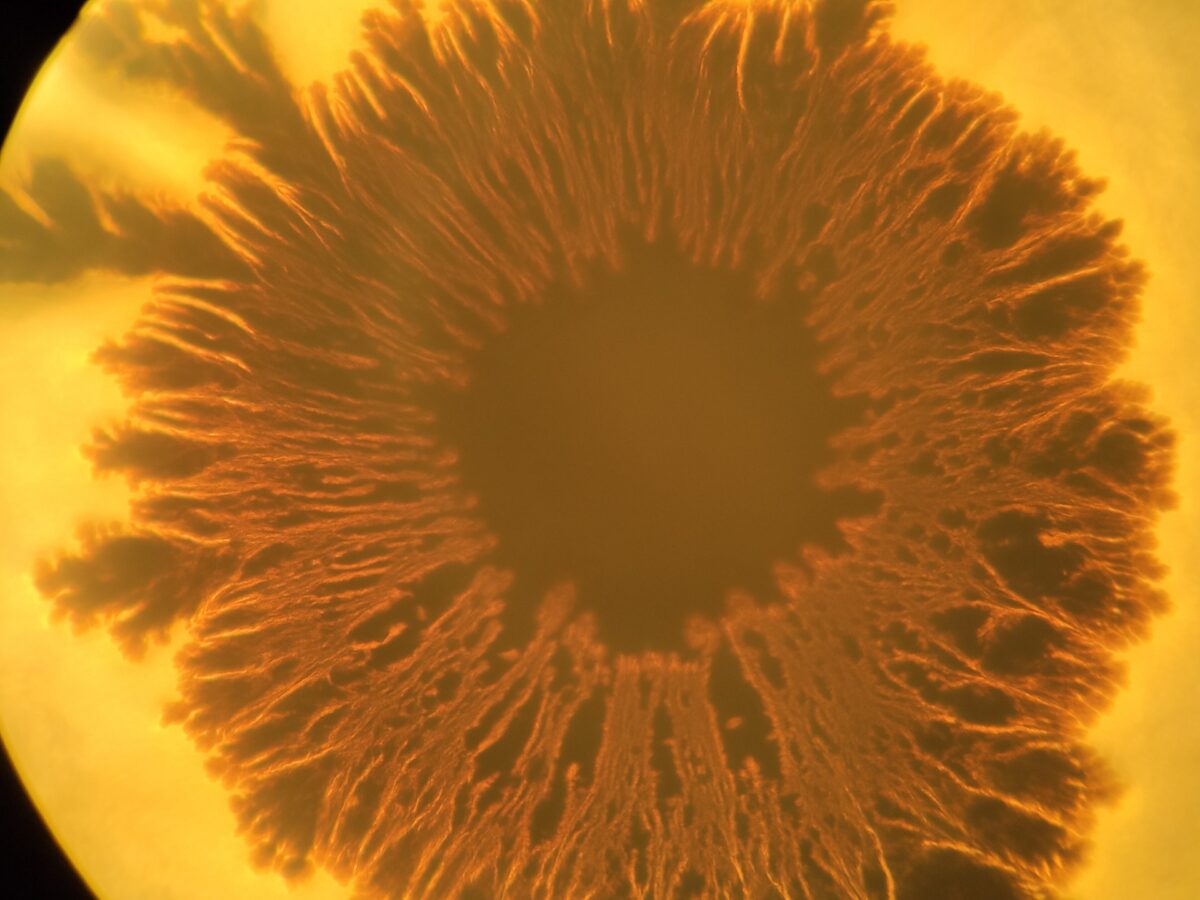
BeautifuleyeshapedBacillussubtilisbacterialgrowthunde Type post Author Emily Reeves Date July 14, 2026 CategoriesBiologyIntelligent Design Tagged , Bacillus subtilis, biology, chromosome, ComK, competence, ComS, ComX, crowdsourcing, CSF, developmental state, DNA, DNA expression, environment, exogenous DNA, genes, genetic material, genome, information, intelligent design, mRNA, nutrient status, pheromone, population signals, promoters, regulation, regulatory feedback, Sigma-H, sporulation, Theodosius Dobzhansky, transcription, xenogenic DNA Crowdsourcing DNA: Sophisticated Biological Information Processing Emily Reeves July 14, 2026 Biology, Intelligent Design 8 To adapt the words of Theodosius Dobzhansky, I’m persuaded that nothing in biology makes sense except in light of intelligent design. Read More ›
BeautifulBacillussubtilisbacterialgrowthunderthemicro Type post Author Emily Reeves Date July 13, 2026 CategoriesBiologyIntelligent Design Tagged , AbrB, antibiotics, autoregulation, Bacillus subtilis, bacteria, biology, cassettes, cell fate, chemotaxis, CodY, ComK, competence, crowdsourcing, DegU, dense overlapping regulons, DNA, Energy, environmental conditions, exponential growth, feed-forward loops, gene expression, gene regulatory network, graduate school, housekeeping, intelligent design, isoleucine, leucine, metabolic pathways, metabolism, microorganisms, principal investigator, Rok, Sigma-H, single input modules, sporulation, stress, superintellect, transcription, valine, virulence To Crowdsource DNA, or Not to Crowdsource DNA: A Microbe’s Decision Pathway Emily Reeves July 13, 2026 Biology, Intelligent Design 10 These are the same type of understandable and logical computation circuits that humans design. What can we learn from observing this similarity? Read More ›