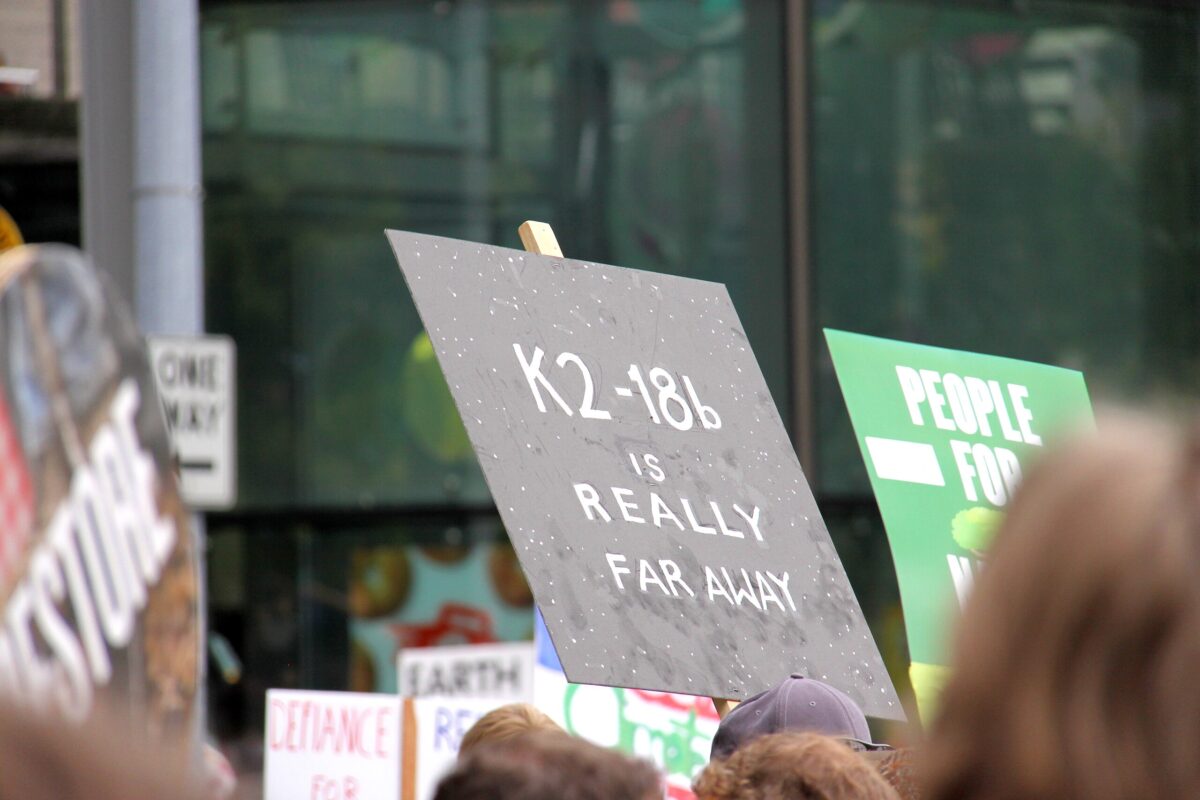
K2-18b_is_really_far_away_(48767211447) Type post Author Denyse O’Leary Date April 27, 2025 CategoriesEvolutionIntelligent DesignPlanetology Tagged , Ars Technica, BBC News, cabbage, Casey Luskin, Charles Darwin, Evolution News, exoplanets, extraterrestrials, Francis Crick, genes, Gizmodo, Human Genome Project, James Webb Space Telescope, K2-18b, Matt Ridley, mouse, Nicolaus Copernicus, Open University, The Guardian, Wesley J. Smith, ZME Science To Do His Real Job, ET Doesn’t Need to Exist Denyse O’Leary April 27, 2025 Evolution, Intelligent Design, Planetology 6 The only possible conclusion to draw is this: What gives humans importance is not found in our genes. Read More ›
exoplanet Type post Author David Coppedge Date November 1, 2022 CategoriesIntelligent DesignPhysical Sciences Tagged , ammonia, astrobiology, astrology, Australia, biosignatures, carbon dioxide, Carl Sagan, Casey Luskin, Douglas Axe, habitability, ID the Future, James Webb Space Telescope, meteorites, methane, Michael Denton, molybdenum, Open University, oxygen, ozone, polypeptides, Privileged Species, protein space, SETI, solar system, The Conversation, The Privileged Planet, UFOs Search for Habitable Planets Is a Design Detection Exercise David Coppedge November 1, 2022 Intelligent Design, Physical Sciences 7 The extent of habitable space within all space can serve as a determinant of the plausibility of naturalism vs intelligent design. Read More ›
ingredients for life Type post Author David Klinghoffer Date January 11, 2018 CategoriesOrigin of LifePhysical Sciences Tagged , __k-review, amber, CNN, extraterrestrial life, fly, life, meteorites, News, Open University, science, Science Advances, solar system From CNN, Vapid Science News Headline of the Day: “Ingredients for Life Found” in Space Rocks David Klinghoffer January 11, 2018 Origin of Life, Physical Sciences 2 “Not exactly proof” of extraterrestrial life, they say? It’s not a “proof” at all. Read More ›