







































Science and Culture Today Discovering Design in Nature
Topic

Michael Keas

Murchison Widefield Array
Photo: A portion of the Murchison Widefield Array, Australia, by Pete Wheeler, ICRAR, via EurekAlert!

Ouch, Huge Sky Survey Shows No “Alien Technosignatures”

I say “ouch” on behalf of materialists, atheists, and Darwinists. Ten million stars and not a hint of alien civilization. Read More ›
Neil deGrasse Tyson
Image: Host Neil deGrasse Tyson glimpsed in a screenshot from the trailer for Cosmos 3.0, “Possible Worlds.” 

When Cosmos Brought Pantheist-Atheist Mythology into the Open
Everything comes together in a message that includes a creation myth, a story of sin (ecological sin), a salvation story, and even resurrection and ascension. Read More ›
Copernicus
Copernicus
Image: Nicholas Copernicus, via Toruń Regional Museum / Public domain.

Copernican Revolution Promoted Man’s Place in the Cosmos
In Copernicus’ day, the Earth was thought to be at the bottom of the universe, the “sump” where all the filth collected. Read More ›
rings of Saturn
rings of Saturn
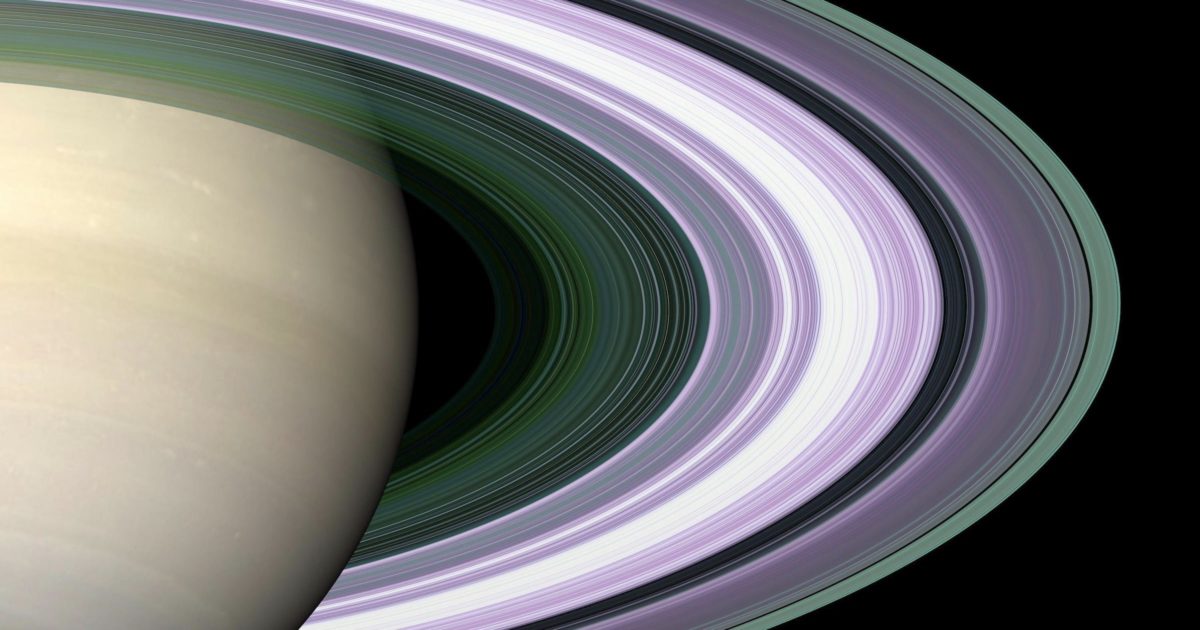
Photo: Rings of Saturn, by NASA / JPL / Public domain.

Mistakes Our Critics Make: Information In and Information About

Is there information actually in Saturn’s rings, or is that information produced by intelligent agents studying Saturn’s rings? Read More ›
portrait-of-galileo-galilei-and-his-telescope-stockpack-adob-754495895-stockpack-adobestock
Portrait of Galileo Galilei and his telescope
Image Credit: Aleksandra - Adobe Stock

Zombie History — Using Galileo to Whack Intelligent Design

As a top science journal tells the story, the Galileo myth is relevant only to attack those who challenge the establishment consensus. Read More ›
Collegium Maius

Neil Tyson Gets Ancient and Modern Medicine Wrong

Curiously, Tyson has a future, quasi-religious myth of his own to promote: personal immortality through futuristic technology. Read More ›
A new composite image of the Crab Nebula features X-rays from Chandra, optical data from Hubble, and infrared data from Spitzer.
A new composite image of the Crab Nebula features X-rays from Chandra (blue and white), optical data from Hubble (purple), and infrared data from Spitzer (pink). Chandra has repeatedly observed the Crab since the telescope was launched into space in 1999. The Crab Nebula is powered by a quickly spinning, highly magnetized neutron star called a pulsar, which was formed when a massive star ran out of its nuclear fuel and collapsed. The combination of rapid rotation and a strong magnetic field in the Crab generates an intense electromagnetic field that creates jets of matter and anti-matter moving away from both the north and south poles of the pulsar, and an intense wind flowing out in the equatorial direction.

Recommended Reading: A Handbook of the Big Bang
Perhaps the publisher, Cambridge University Press, thought the title might help sales with a younger, hipper generation. Read More ›
Enceladus 2

From Cosmos: Possible Worlds — “Most Plausible” Creation Myths

Dr. Tyson’s imagination wanders from Enceladus, a moon of Saturn, to the Cambrian explosion. Read More ›
Spinoza

Clever Move — Cosmos Pushes Pantheism

Easier for slipping it into the public schools! It won't alarm the parents nearly as much as an all-out siege on theism. Very clever, Dr. Tyson. Read More ›

© Discovery Institute