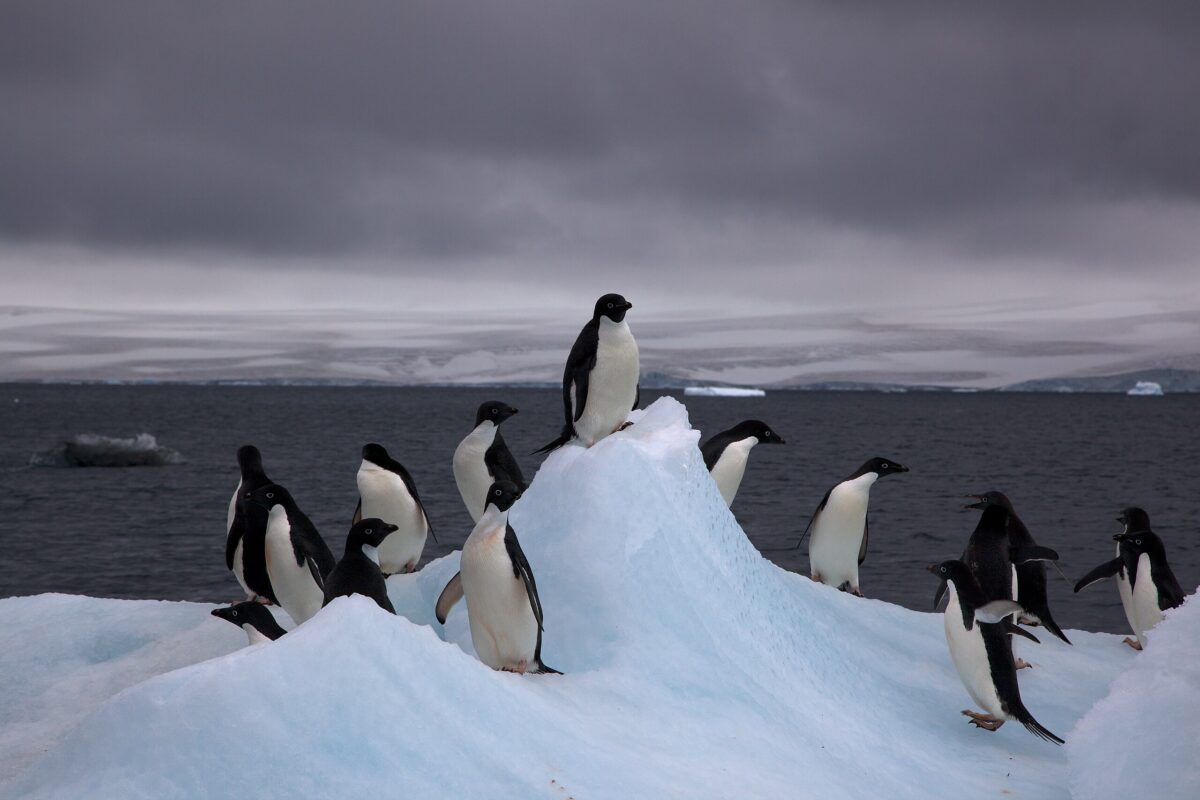
AdeliePenguinsoniceberg Type post Author Stephen J. Iacoboni Date December 4, 2025 CategoriesBiologyIntelligent Design Tagged , Antarctica, Arctic, Aristotle, bacterial flagellum, bats, biology, biosphere, blood-clotting cascade, blubber, cetaceans, Chance and Necessity, CHNOPS, complementarity, Darwin's Black Box, duality, emergence, Erwin Schrödinger, feathers, function, Jaques Monod, language, marine iguanas, Mass, Michael Behe, penguins, physical reality, property, science of purpose, scientism, specified irreducible complexity, structure, structure-function relationship, telos, Thomas Aquinas, Thomistic Aristotelianism How Life Becomes Comprehensible: A New Scientific Framework Stephen J. Iacoboni December 4, 2025 Biology, Intelligent Design 7 The duality of emergence and specified irreducible complexity must be discarded. In doing so, we create a framework compatible with Thomistic Aristotelianism. Read More ›
CaptiveRed-tailedHawkatBacara Type post Author Stephen J. Iacoboni Date October 29, 2025 CategoriesEvolutionIntelligent Design Tagged , abstraction, airfoil, Albert Einstein, anatomy, antennae, Aristotle, biology, duality, emergence, engineering, Erwin Schrödinger, evolution, function, intelligent design, Isaac Newton, mathematicians, Michael Behe, molecular biology, physics, physiology, Pierre-Simon Laplace, propellers, René Descartes, Return of the God Hypothesis, rockets, science of purpose, scientism, specified irreducible complexity, Stephen Meyer, structure, structure-function relationship, Werner Heisenberg, What Is Life? Emergence and Irreducible Complexity: A Unified Theory Stephen J. Iacoboni October 29, 2025 Evolution, Intelligent Design 7 We are all familiar with the duality — structure and function — from both technology and biology. Read More ›