






































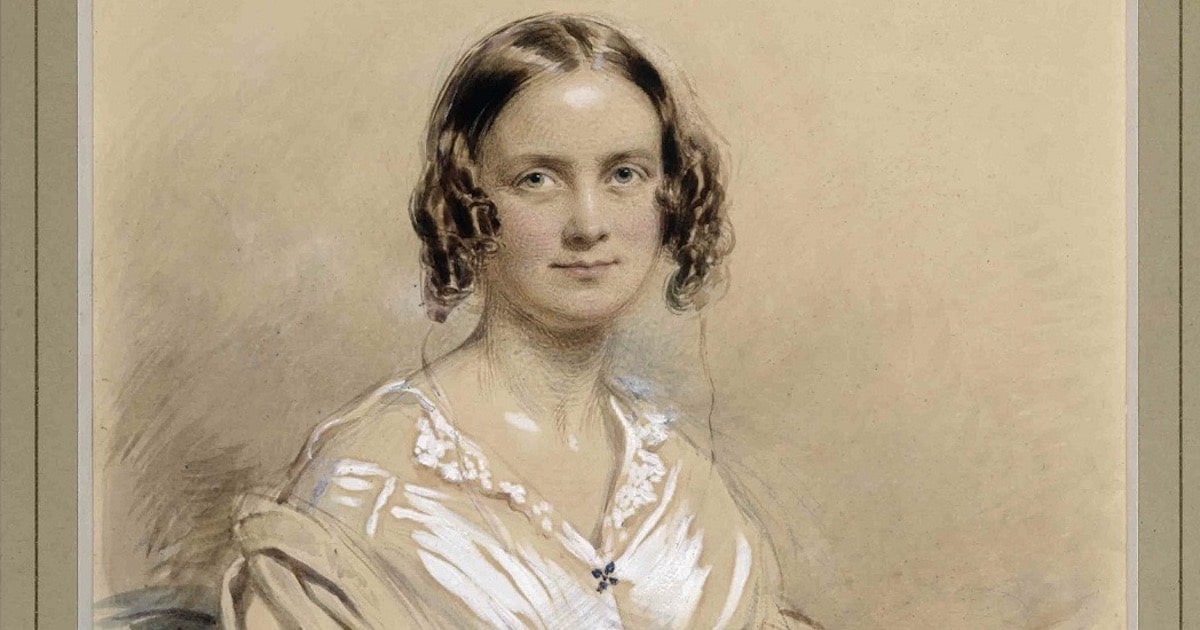
beauty
In Cosmology, There’s a Free Lunch After All
Beauty Explained in Literally Cartoon Darwinist Terms
Intelligent Design and the Artist’s Soul (Part 3)
Editor’s Note: This is crossposted at Professor Scot McKnight’s Beliefnet blog, Jesus Creed. The first post in this series is found here, and the second here.
The Origin of Beauty
Benjamin Wiker and Jonathan Witt’s masterful book A Meaningful World: How the Arts and Sciences Reveal the Genius of Nature gives the following illustration of how modern scientific reductionists treat nature and the arts:
Imagine hearing the following account of one of Wolfgang Amadeus Mozart’s symphonies: ‘We have been able to prove that this particular symphony is actually reducible to a series of notes that happen to be played both at the same time in chords and one after another, creating a string of disturbances in the air caused by different frequencies. We realize, of course, that these disturbances cause further disturbances in the audience, due in part to the presence of Earth’s particular atmosphere and in part to the effect such disturbances have on the apparatus of the ear as transmitted by neurons to the brain–so disturbing, in fact, that some break into voluntary tears, remarking that they seemed to be hearing the very harmonies of heaven. Happily, we now know that there is nothing more to Mozart’s work in particular and to music in general than mere notes, themselves reducible to waves disturbing air.’
When Christian intellectuals hear such things, their general response is to think that they can have their Darwinian cake and merely scrape off the reductionist icing. But Darwinism, if I may continue the strained metaphor, is, it turns out, a layered cake with icing all throughout.
Read More ›AP Texas Spins Story About Scientists Uniting Against Teaching the Controversy
The latest from the Associated Press out in Texas (via Houston Chronicle) reports that “Scientists from Texas universities on Tuesday denounced what they called supernatural and religious teaching in public school science classrooms and voiced opposition to attempts to water down evolution instruction.”
We covered the Texas science standards last week, noting that Darwinists there oppose teaching the strengths and weaknesses of evolution.
In the AP article, no explanation is given for their opposition to the “strengths and weaknesses” language except the unsupported claim that thoroughly examining Darwin’s theory in the classroom is something only creationists do.
Actually, AP reporter Kelley Shannon is pretty sure that the whole thing is a creationist ploy to teach religion in our schools. That’s why she makes a point of giving credibility to the several Darwinists in the story before calling McLeroy a creationist, then discrediting the position she assigned him:
Read More ›On Non-Nihilistic “Scientific” Atheism
Nobel laureate in physics Steven Weinberg recently revamped his 2008 Phi Beta Kappa Oration at Harvard University for an essay entitled “Without God” in The New York Review of Books. As the essay moves toward a close, Weinberg tells us:
the worldview of science is rather chilling. Not only do we not find any point to life laid out for us in nature, no objective basis for our moral principles, no correspondence between what we think is the moral law and the laws of nature, of the sort imagined by philosophers from Anaximander and Plato to Emerson. We even learn that the emotions that we most treasure, our love for our wives and husbands and children, are made possible by chemical processes in our brains that are what they are as a result of natural selection acting on chance mutations over millions of years. And yet we must not sink into nihilism or stifle our emotions. At our best we live on a knife-edge, between wishful thinking on one hand and, on the other, despair.
What, then, can we do?
Answering his own rhetorical question, Dr. Weinberg believes
Read More ›